Slip and Fall Prevention Sidewalk Property Manager Guide
Updated: Oct 12
A cracked or uneven sidewalk can become a daily safety risk long before anyone reports it. For property managers, preventing incidents means identifying hazards early, documenting conditions, and coordinating repairs without disrupting tenants, visitors, or operations.
Effective slip and fall prevention sidewalk property manager programs combine routine sidewalk inspections, clear documentation, ADA-aware repair planning, and prompt trip hazard removal. The goal is to reduce exposure while keeping walkways open and maintenance budgets under control.
A structured approach also gives teams a practical way to prioritize repairs across one property or a larger portfolio. That starts with understanding why a documented prevention strategy matters, especially when safety, compliance, and operational continuity must be managed together.
Why Property Managers Need a Slip and Fall Prevention Strategy
The cost of inaction is not limited to repairing one uneven walkway. A preventable fall can create medical expenses, insurance claims, liability exposure, and safety concerns for tenants, visitors, and staff. For property managers, sidewalk maintenance is therefore an operational responsibility, not a task to address only after an incident.
The CDC reports that about 3 million older adults visit emergency departments each year because of falls. Falls are also the most common cause of traumatic brain injuries. These statistics do not describe every commercial-property incident, but they show why a seemingly minor walkway defect deserves prompt attention. A raised section, cracked surface, or uneven transition can become one factor in a serious event.
Fall risk is rarely tied to one condition alone. The CDC notes that most falls result from a combination of risk factors. On a commercial property, those factors can include an uneven sidewalk, poor visibility, weather, foot traffic, and the mobility of the person using the walkway. A practical prevention strategy addresses the site as a system instead of waiting for someone to report a single defect. See these slip and fall prevention strategies for a property-focused approach.
Safety and continuity are connected
Property managers are expected to protect people while keeping daily operations moving. Closing a walkway or coordinating a major replacement project can disrupt tenants, customers, deliveries, and scheduled activities. At the same time, leaving known hazards unresolved can increase concern among occupants and make incident response more difficult.
A documented prevention plan helps balance those demands. Managers can identify hazards across one property or a portfolio, prioritize repairs by severity and location, and schedule work in phases that limit disruption. This approach supports operational continuity while giving stakeholders a clearer explanation of what will be addressed, when, and why.
Documentation supports better decisions
Budget efficiency and ADA compliance documentation are central concerns for managers overseeing large infrastructure assets. A strategy should create a usable record of sidewalk conditions, recommended actions, completed repairs, and verification. That information helps managers defend maintenance decisions, plan spending, and communicate with owners, tenants, boards, and insurers.
Property managers also prioritize operational continuity, insurance claim reduction, and minimal disruption. Regular review and timely hazard removal support all three goals. The strongest plan is not a one-time inspection. It is a repeatable process that turns sidewalk observations into prioritized work, documented completion, and safer access throughout the property.
The Leading Causes of Sidewalk Slip-and-Fall Accidents on Commercial Properties
Commercial sidewalk accidents rarely come from one isolated defect. A raised panel, poor drainage, or a slick surface can combine with limited visibility, rushed foot traffic, or an unfamiliar route. The CDC notes that most falls result from a combination of risk factors, and the more factors present, the greater the chance of falling. Review the CDC's fall-risk guidance when building a property maintenance program.
Uneven or broken walkway surfaces
Broken concrete, cracked panels, and uneven steps create conditions where a person's foot catches instead of moving smoothly through a stride. These defects are especially important at entrances, curb connections, loading areas, and pedestrian routes between parking lots and buildings. The CDC identifies broken or uneven steps and sidewalks as significant fall hazards.
On commercial properties, even a modest change in elevation can become a recurring problem. Employees may cross the same route several times each day. Customers, delivery workers, and visitors may not know where the defect is located. A property manager should track the location, size, and progression of each defect rather than relying on occasional visual checks.
Vertical displacement and trip hazards
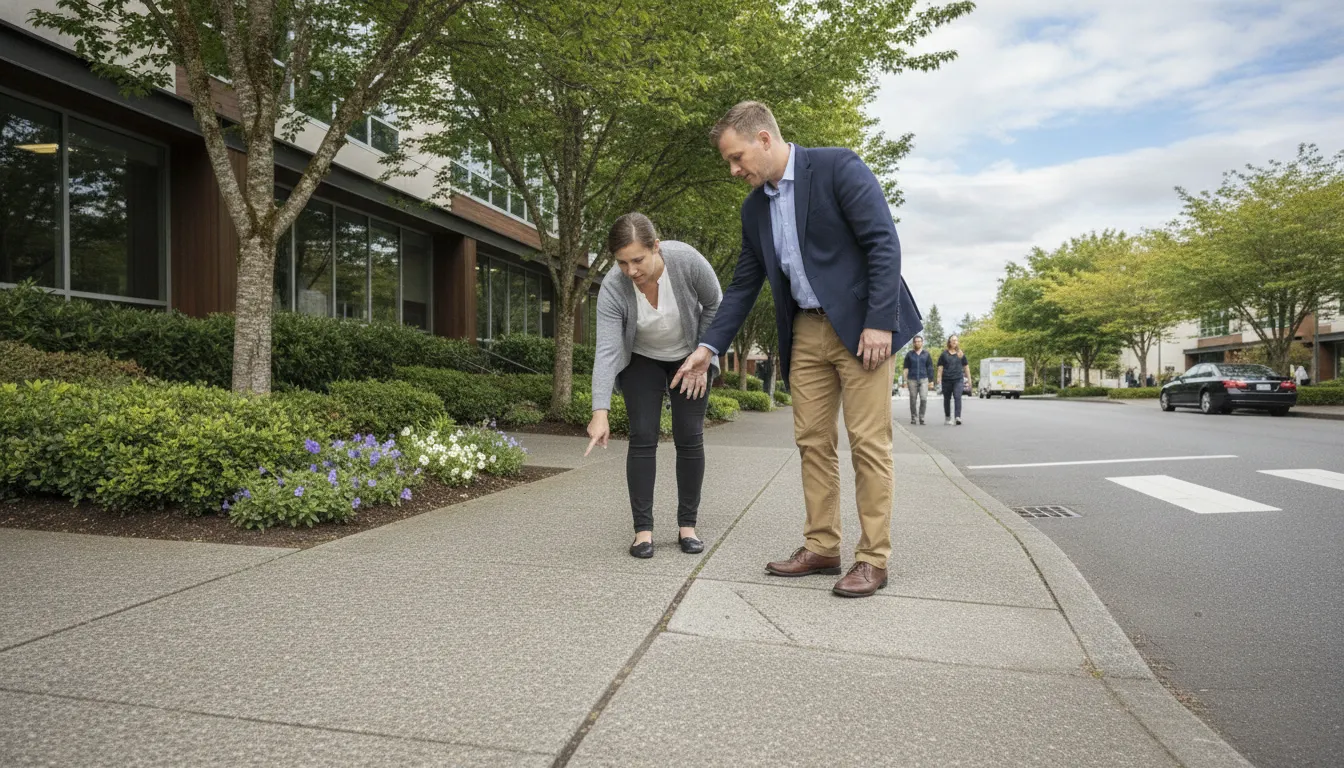
Vertical displacement occurs when adjacent concrete panels no longer meet at the same height. Settlement, tree-root pressure, soil movement, freeze-thaw cycles, and repeated traffic can all contribute to this condition. The resulting lip is a trip hazard, particularly where shadows, parked vehicles, landscaping, or poor lighting make the change difficult to see.
Trip hazards also develop around utility covers, drainage structures, transitions between materials, and temporary repairs. A patch that does not restore a smooth walking surface may reduce the appearance of damage without removing the underlying risk. Documented measurements and photographs help prioritize repairs across multiple properties and support a consistent maintenance decision.
Cross-slopes, drainage, and weather-related conditions
A sidewalk can be free of obvious cracks and still create difficulty when its cross-slope is too steep or inconsistent. Excessive cross-slope can affect balance and make wheelchair travel harder, especially where pedestrians must move around obstacles. Poor drainage adds another layer of risk by leaving water, mud, or algae on the walking surface.
Rain, snow, ice, and freeze-thaw conditions can temporarily increase slip risk while also accelerating concrete deterioration. Leaves and other organic debris can conceal vertical displacement or hold moisture against the surface. Commercial property managers should inspect high-traffic routes after severe weather, confirm that snow and water are cleared, and flag defects that worsen seasonally.
The scale of the problem explains why routine prevention matters. One competitor summary cites National Floor Safety Institute research estimating nearly 8 million fall-related hospital visits annually. While another reports more than $70 billion paid each year for workplace slip-and-fall incidents. These figures are broad industry estimates, not a forecast for any individual property, but they reinforce the value of identifying sidewalk hazards before someone is injured.
What ADA Standards Apply to Commercial Sidewalk Safety?
For property managers, ADA compliance is not limited to entrances, ramps, or interior routes. The accessible path across a commercial property includes sidewalks, walkways, curb ramps, and connections between parking areas and building entrances. These elements should be reviewed together when planning maintenance or repairs.
The governing federal reference is the 2010 ADA Standards for Accessible Design. The standards establish enforceable scoping and technical minimums for newly designed, constructed, or altered public accommodations and commercial facilities. They are not a substitute for a site-specific evaluation, but they give property teams a practical baseline for accessible design and maintenance decisions.
Understand slope requirements before approving sidewalk work
Slope is one of the most important measurements in an accessible pedestrian route. A cross slope of 1:20, or 5 percent, is commonly used as the maximum threshold for a walking surface that is not intended to function as a ramp. Excessive cross slope can make a route difficult to navigate, especially for people using wheelchairs, walkers, or other mobility devices.
Running slope also matters. PCC uses a 1:12 running slope for its precision concrete cutting work, the same slope standard the ADA sets for ramps. The goal is not simply to remove a visible height difference. The repaired route must remain usable and consistent with the applicable accessibility requirements.
Measurements should be taken across the full path, including transitions near driveways, parking lots, drainage areas, and building approaches. A walkway can appear level at one point while still creating an accessibility problem several feet away.
Account for curb ramps when walkways are altered
Sidewalk resurfacing and other substantial work can trigger additional accessibility responsibilities. Federal guidance indicates that pedestrian walkways and roadways should generally be considered altered when they have been resurfaced since January 26, 1992. When an altered route connects to a street crossing, curb ramp compliance should be evaluated as part of the same project.
That means a property team should not approve a walkway repair in isolation. Review the adjacent curb ramps, detectable warnings where applicable, transitions, landings, and route continuity. A smooth sidewalk that ends at a noncompliant or difficult-to-navigate curb ramp still leaves an access barrier.
For a property manager, the most useful process is to document the existing condition. Measure the relevant slopes, identify affected routes, and retain records of the repair and verification. This creates a clearer basis for budgeting and scheduling while reducing tenant disruption. It also helps coordinate work across multiple properties when the same sidewalk conditions appear in several locations.
ADA standards provide the minimum framework. Regular inspections and precise trip hazard removal help turn that framework into a safer, more accessible route for daily users.
Sidewalk Slip and Fall Prevention for Property Managers
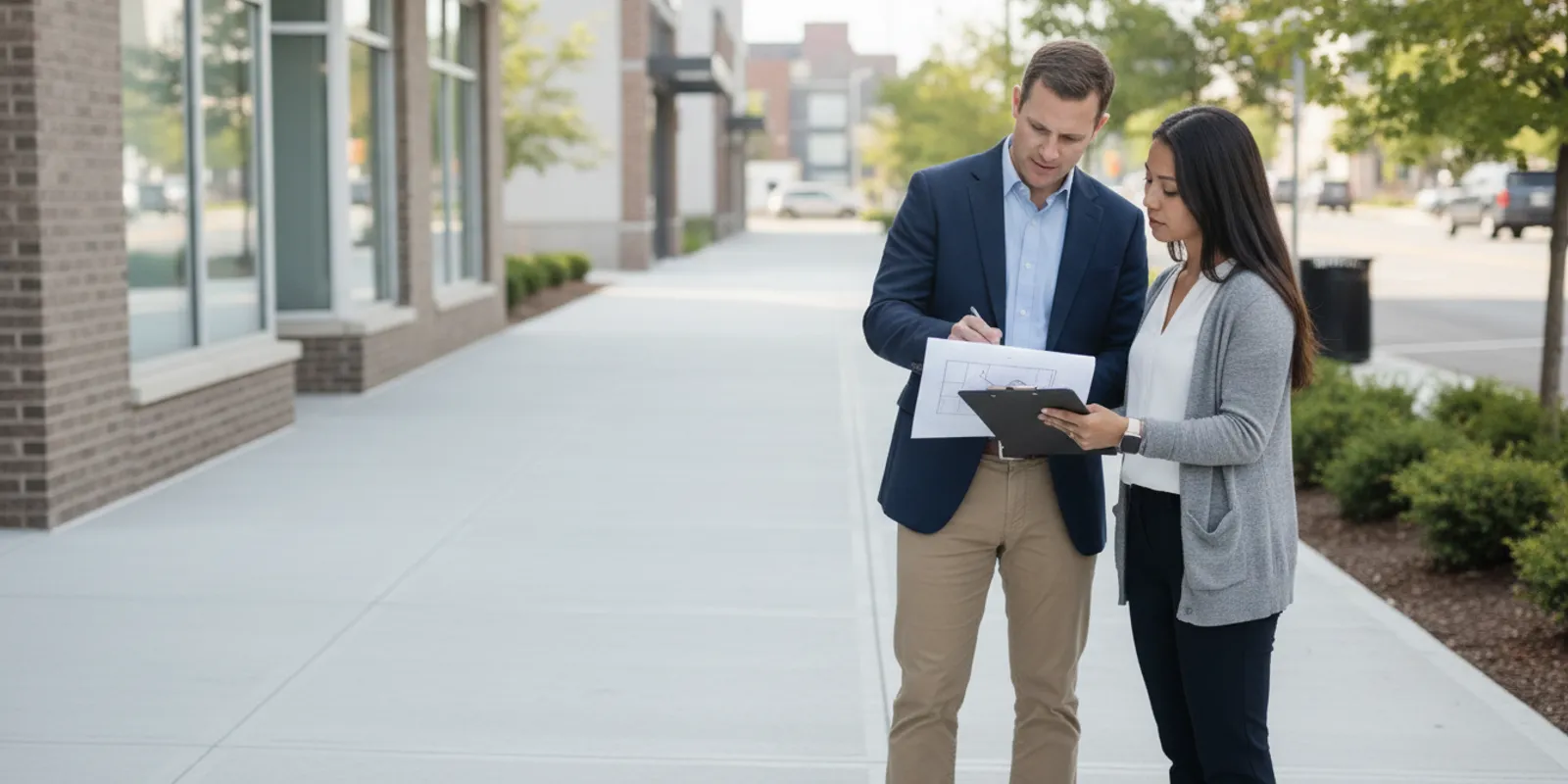
A proactive sidewalk risk assessment gives property managers a repeatable way to identify hazards before they become incidents. The goal is not simply to walk a site and note visible damage. It is to create a current, usable record of walkway conditions, prioritize repairs, and confirm that corrective work was completed.
Start by defining the inspection area. Include entrances, accessible routes, loading zones, parking-lot walkways, ramps, drive aisles, and transitions between walking surfaces. Review each route at different times when practical. Lighting, weather, deliveries, landscaping, and tenant traffic can change how a hazard affects pedestrians.
1. Assess the entire pedestrian route
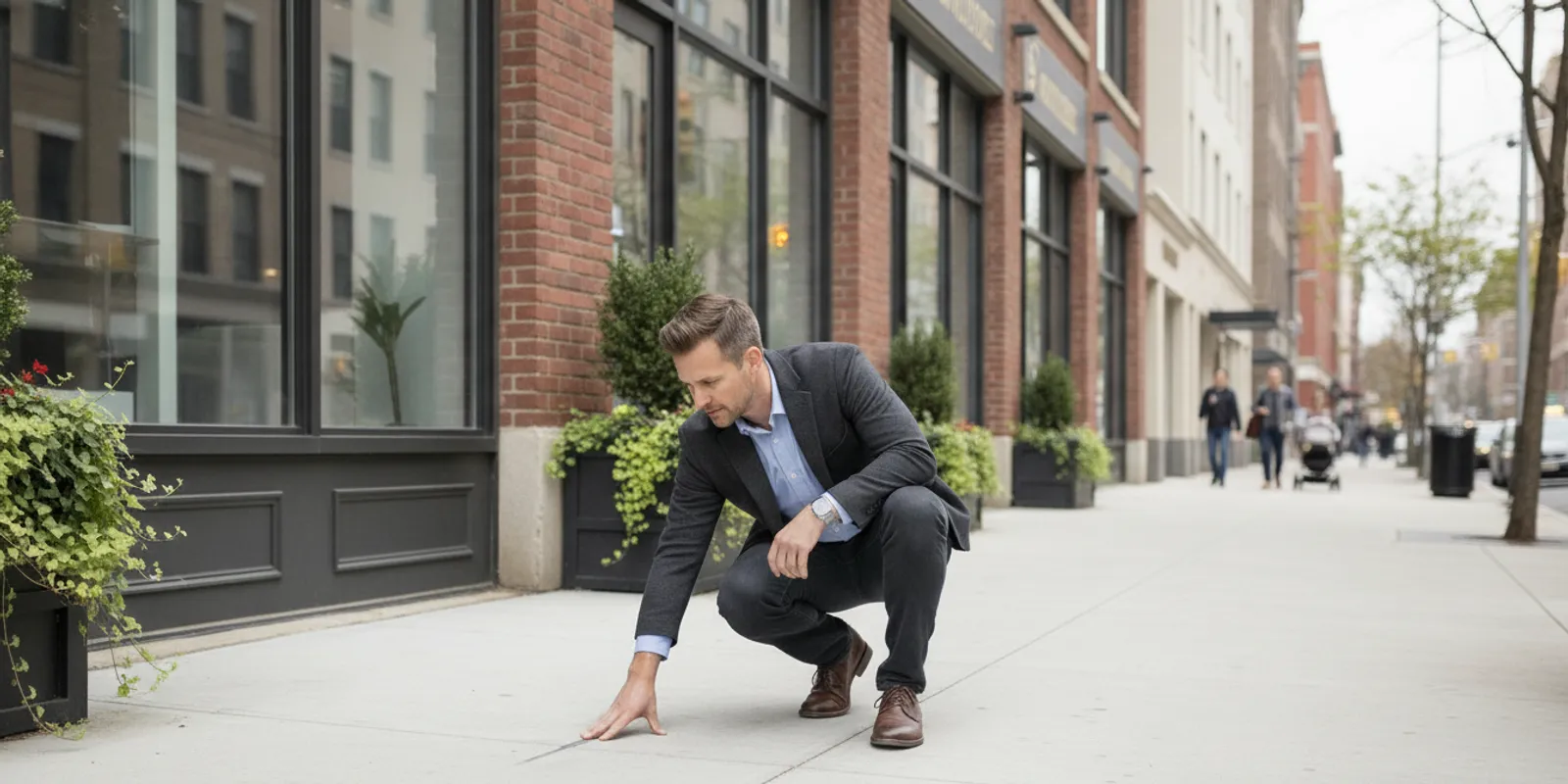
Walk every accessible path and look for uneven sidewalk panels, cracked concrete, abrupt changes in elevation, worn surfaces, and drainage problems. Check for loose materials and obstacles that could cause a person to trip, slip, or change direction unexpectedly. Uneven or broken sidewalks are recognized fall risk factors by the CDC, and many falls result from multiple risk factors rather than one isolated defect. Review the CDC fall-prevention guidance when building a broader site-safety process.
Record each finding with its location, condition, dimensions when relevant, nearby asset or building entrance, and a photograph. A consistent naming system makes it easier to compare inspections across multiple properties. It also helps maintenance teams understand which issue requires attention first.
2. Map hazards and assign priorities
Use a site plan, spreadsheet, or GIS-based system to map each hazard. Prioritize defects on heavily used routes, accessible paths, entrances, and areas where pedestrians are likely to encounter poor lighting or visual distractions. Consider severity, exposure, and the likely consequences of leaving the condition unresolved.
Property managers should also connect the map to operational planning. Group repairs by location when that reduces mobilization time, and schedule work to limit tenant disruption. A documented priority list supports budget requests and creates a clearer record of why specific repairs were addressed first.
3. Apply a four-stage maintenance method
A structured program can follow PCC's four-stage method. Assess & Map identifies and records hazards. Remove Hazards addresses conditions that create trip risks. Verify & Report confirms the work and preserves completion records. Data Management keeps the information available for future inspections and planning. This approach turns a one-time walkthrough into an ongoing sidewalk asset-management process.
Documentation matters after the inspection as much as during it. Keep dated photographs, inspection findings, work orders, repair details, and verification notes together. PCC identifies this documentation as a tool designed to protect against trip-and-fall litigation. For a practical field reference, use this proactive slip and fall prevention checklist for commercial properties.
Repeat the assessment on a defined schedule and after major weather, construction, resurfacing, or landscaping changes. Consistent inspections help property managers catch new hazards early, maintain accessible routes, and make repair decisions based on current site data.
The Role of Timely Repairs in Preventing Litigation
For property managers, a sidewalk defect can become a liability issue when it remains visible, accessible, and unaddressed. Timely trip hazard removal reduces the opportunity for an incident and demonstrates that sidewalk safety is being managed through a defined maintenance process. That proactive approach can mitigate liability and help reduce the frequency of insurance claims.
The potential cost of one incident makes delay difficult to justify. One competitor-cited estimate places the average premises-liability slip-and-fall claim above $50,000 when legal fees, medical expenses, and settlements are included. The figure is reported with reference to the National Safety Council, which identifies falls as a leading cause of preventable injury in the United States. Review the National Safety Council's safety resources for broader injury-prevention context.
Sidewalk conditions also affect the seriousness of the underlying injury. The CDC reports about 3 million emergency department visits each year due to falls among older adults. It also identifies falls as the most common cause of traumatic brain injuries. These facts do not determine liability in a particular case. But they show why a property manager should treat uneven walking surfaces as a priority rather than a cosmetic maintenance item.
Repair before a defect becomes evidence
When a trip hazard is reported, the response should be more than a work-order note. A manager should confirm the location, assess the walking route, determine whether temporary controls are needed, assign a repair, and record the completed work. This creates a defensible timeline showing when the issue was identified, what action was taken, and how the condition was verified afterward.
That record matters because documentation can protect property owners against trip-and-fall litigation. Photos, location data, inspection dates, repair details, and post-repair verification help connect the maintenance decision to the physical condition of the site. For portfolios with multiple properties, a consistent documentation process also gives regional teams a common standard for prioritizing repairs and tracking unresolved hazards.
Property managers can strengthen this process by pairing routine inspections with targeted repairs. A recurring sidewalk audit can identify raised joints, broken pavement, and other conditions before a resident, tenant, or visitor reports an injury. For a practical framework, use this guide to slip and fall accident prevention on commercial properties.
Timely action does not require a disruptive replacement project for every defect. Precision concrete cutting can address eligible trip hazards through a focused repair approach. Allowing managers to reduce risk while keeping attention on tenant operations, budget control, and documented follow-through.
How Precision Concrete Cutting Reduces Slip-and-Fall Liability
For commercial property managers, reducing sidewalk liability requires more than reacting after an incident. The repair method also affects tenant access, operating schedules, budgets, and the quality of compliance records. Precision Concrete Cutting uses a patented precision cutting process to remove trip hazards while preserving much of the existing sidewalk infrastructure.
This approach supports practical sidewalk trip hazard mitigation without automatically turning a localized defect into a full replacement project. It gives property managers a targeted way to address hazards before they contribute to an injury claim.
Consideration | Precision concrete cutting | Full demolition and replacement |
Cost | On average 80% less costly than demolition and replacement. | Higher cost because the affected sections must be removed, hauled away, and rebuilt. |
Tenant disruption | Targets the specific height difference and limits the work area, helping reduce disruption around entrances and walkways. | Creates a larger construction zone that may affect access, circulation, and daily property operations. |
Downtime | Allows immediate surface reopening after the cutting work, supporting continued access. | Usually requires the replacement area to remain unavailable through demolition, preparation, placement, and curing. |
Existing infrastructure | Preserves the surrounding sidewalk and addresses the hazard without replacing sound concrete unnecessarily. | Removes and replaces broader sections, including concrete that may remain serviceable. |
The liability benefit comes from combining hazard removal with operational control. A shorter closure reduces the chance that tenants, customers, or visitors will encounter an unfamiliar detour or an active work area. Targeted repairs also make it easier to prioritize multiple locations across a commercial portfolio instead of waiting for a large capital project.
Compliance is another part of the risk picture. PCC states that its process leaves an ADA-compliant 1:12 slope, the same slope standard the ADA sets for ramps. The result is a more accessible transition and a documented repair decision that property teams can retain with their maintenance records.
Property managers can further strengthen their program by pairing cutting with condition assessments, location records, and post-repair verification. That creates a repeatable process for identifying hazards, correcting them, and showing what action was taken. It is a more defensible approach than relying on occasional visual checks or postponing repairs until a complaint occurs.
Frequently Asked Questions
What is the property manager's responsibility for sidewalk slip-and-fall prevention?
Property managers should inspect walking routes, document hazards, prioritize repairs, and communicate work plans to owners and tenants. A repeatable process helps maintain safe access, support budget decisions, and preserve records showing when risks were identified and addressed.
How can property managers effectively prevent sidewalk slip and fall accidents?
Start with scheduled audits of sidewalks, entrances, ramps, and parking-lot connections. Record uneven joints, broken concrete, drainage issues, poor lighting, and temporary obstructions. Rank each finding by severity and pedestrian exposure, then complete repairs and verify the finished surface. Regular inspections matter because falls often result from multiple risk factors, not one isolated condition. The CDC identifies broken or uneven walking surfaces as fall hazards.
How do you maintain ADA compliance to prevent sidewalk slip and fall liabilities?
Review accessible routes, curb ramps, cross slopes, running slopes, detectable warnings, and clear widths during each major audit or alteration. The 2010 ADA Standards establish enforceable minimum requirements for many commercial facilities. Keep measurements, repair records, photographs, and verification notes together so accessibility decisions are traceable.
What is the best way to repair sidewalk trip hazards for property managers?
Choose a repair method based on the hazard, surrounding concrete, access requirements, and disruption tolerance. Precision concrete cutting can remove many vertical trip hazards while allowing the surface to reopen quickly, which helps limit tenant and resident disruption. For each repair, document the location, completed work, and post-repair condition.
Ready to strengthen sidewalk safety?
A focused sidewalk safety assessment can help you identify trip hazards, prioritize repairs, and plan work with minimal disruption for tenants and visitors. It also gives your team a clearer basis for documenting maintenance decisions across one property or multiple sites.
Precision Concrete Cutting can help you identify trip hazards, prioritize repairs, and plan work with minimal disruption for tenants and visitors.

Comments