Sidewalk Safety Audit Checklist for Properties
Updated: 1 day ago
A single sidewalk trip hazard can lead to a six-figure legal settlement for a commercial property owner. A structured sidewalk safety audit checklist helps commercial property teams find risks before they turn into costly claims or accessibility failures.
Schedule a professional sidewalk assessment to identify, measure, and prioritize trip hazards across your property.
A sidewalk safety audit checklist is a vital tool for property managers to find and fix trip hazards. This process involves checking for vertical offsets, gaps, and cracks that do not meet ADA standards. Most experts suggest that walkways stay free of heaved sections taller than 1/4 inch to keep pedestrians safe and reduce liability risks. Using a structured list ensures you do not miss hidden dangers like loose pavers or uneven curb ramps during your walk-through. According to CNA insurance guidelines, regular inspections are the best way to maintain a safe path for all visitors. By keeping records of what you find, you create a paper trail that proves you follow public safety and ADA rules for your commercial site.
You need a clear and thorough plan to spot every concrete risk before it causes a painful injury or a legal claim. This guide will walk you through the key parts of a sidewalk safety audit checklist: what to inspect. Finding these hazards early keeps your property safe, and the path begins with
Sidewalk safety audit checklist: what to inspect
Inspect walking surfaces, joints, curb ramps, stairs, drainage, lighting, and route obstructions. Measure height changes instead of relying on sight alone, then document each issue with a location, photo, severity rating, and recommended action.
Site teams must start with the ground itself. A good regular sidewalk safety inspections plan looks for small changes in height. Concrete slabs often shift over time because of tree roots or soil changes. If a slab rises more than 1/4 inch, it becomes a trip hazard. This small lip is enough to catch a toe and cause a fall. You must map these spots to plan for future work.
Teams should also look for cracks and holes in the concrete. Potholes or cracks wider than 1/2 inch can trap a heel or a cane tip. These gaps make the path unsafe for many people who walk on your site. You should check for loose pieces of concrete or gravel too. A clean, flat surface is the key goal for every path on your site. Small cracks can grow fast, so catching them early saves money.
Check the path surface
Walk each foot of the path to find hidden risks. Tree roots often push up slabs and create uneven joints. These joints are the main cause of trip and fall claims. Use a tool to check the height of every rise. If you find a heave, mark it with bright paint. This helps people see the danger until you can fix it. Cutting the concrete can remove these lips to make the path flat again. Early care like this keeps the site safe and lowers risk.
Check the edges of the sidewalk too. If the dirt has washed away, there may be a drop-off. A person could step off the edge and twist an ankle. Ensure the grass or dirt is level with the concrete. This support keeps the slab from cracking and keeps the walker safe. Look for any metal plates or drain covers that might be loose or slick. Every detail counts when you want to avoid a fall.
Check ramps and stairs
Paths must be easy to use for everyone. This means following the 2010 ADA Standards for safe access. Check where the sidewalk meets the street or a parking lot. These spots need curb ramps that are wide and clear. The slope should be gentle so a person in a wheelchair can move with ease. If the ramp is too steep, it does not meet the law and must be fixed.
Look at the stairs on your site as well. Each step must be the same height to keep a safe gait. If one step is 3/8 inch higher than the others, people may trip and fall. This is a common flaw that basic checks often miss. A steady rhythm in the steps keeps people safe as they move between levels. Check the handrails to ensure they are firm and at the right height for all users.
Check drains and lights
Water can damage concrete and hide risks. Low spots that collect water can grow slick moss or turn into ice in the winter. Your sidewalk safety audit checklist must include a look at drainage. Ensure water flows away from the path and into the right drains. Clogged drains can cause water to pool and wear down the slabs over time. This leads to more cracks and higher repair costs for the site.
Lighting is another key part of a safe path. Walk the site at night to find dark spots where shadows hide hazards. Bright lights help people see height changes or debris on the walkway. Also, look for short-term hazards like tall bushes or stray trash cans. Keeping the path clear of all blocks is a simple way to cut down on risk for your site. Good lights and clear paths make the site feel safe at all hours.
Check Points | Basic Sight Check | Expert Safety Audit |
Surface Heaves | Finds large, clear breaks | Catches tiny 1/4-inch lips |
Curb Ramps | Simple walk-through | Full check of all slopes |
Site Drainage | Notes large pools | Checks flow to drains |
Path Lighting | Checks for burnt bulbs | Finds all dark shadows |
Path Debris | Picks up big trash | Clears all small blocks |
Data Tracking | Hand-written notes | Web-based maps |
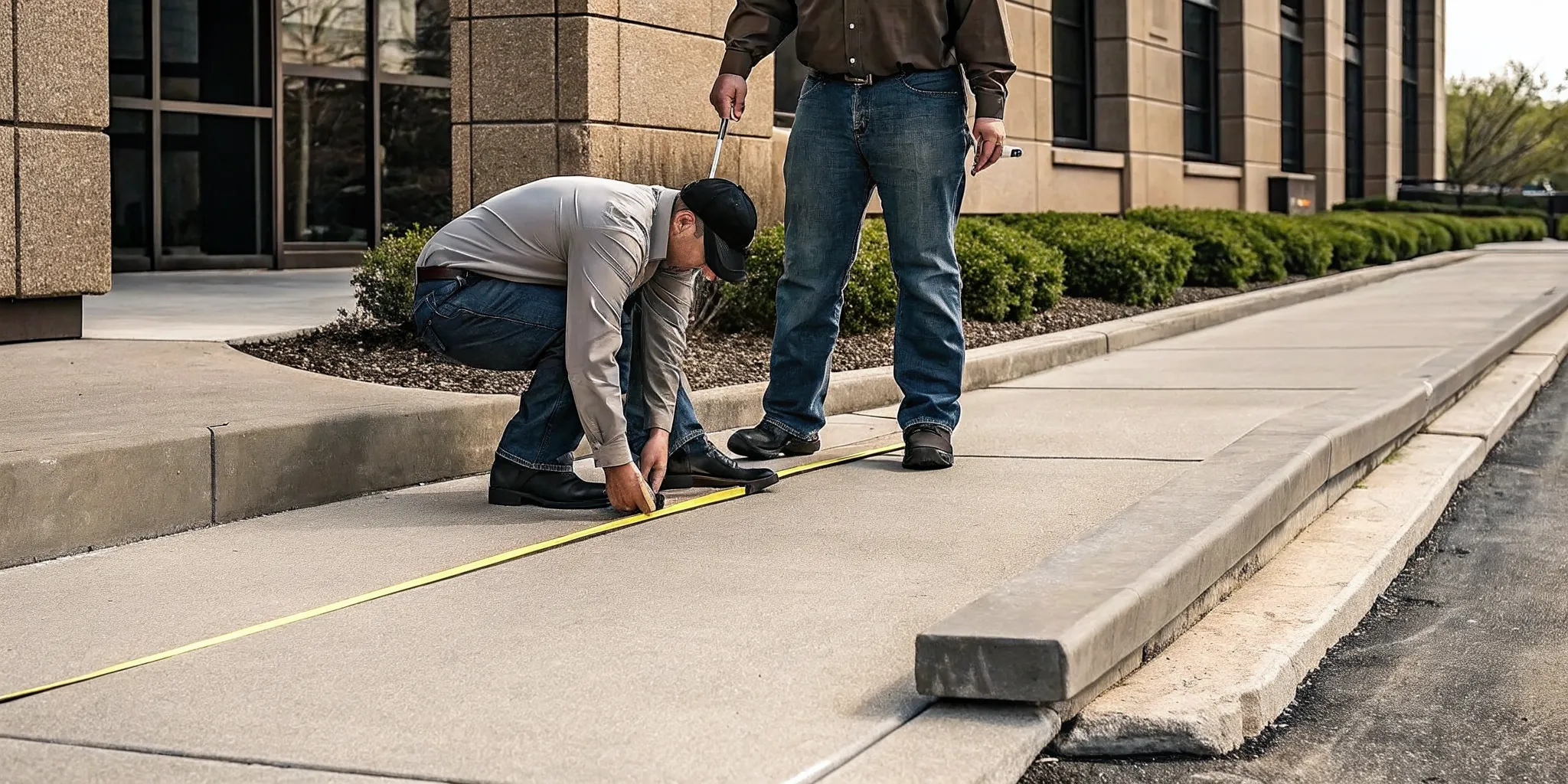
Measure and document each hazard during the audit.
How to conduct a commercial sidewalk safety audit
Plan a repeatable route, measure every vertical displacement, photograph each finding, and rank repairs by severity and pedestrian exposure. Consistent records turn a walk-through into an actionable risk-control program.
Plan the audit path
A thorough walk-through is the base of any safety plan. You should map out every path on your site. This includes the main entrance, side walks, and paths to parking zones. Start at a fixed point and walk in a set loop. This method makes sure you do not miss any slabs. A plan for regular sidewalk safety inspections is the best way to keep people safe. It also helps you find small issues before they turn into big risks.
Site leads must also look at curb ramps and stairs. Use a set route every time you check the site. This keeps your data clean and easy to compare. It also helps you track how the concrete changes over time. Weather and tree roots can move slabs in just a few months. Regular checks help you catch these shifts early.
Measure and log hazards
When you find a fault, you must measure it with care. The 2010 ADA Standards set clear rules for how paths must look. Use a ruler to check the height of every lip. Any lift over 1/4 inch is a trip hazard. Do not just rely on your eyes. Slabs can look flat even when they are not. A small tool helps you get the right numbers every time.
You should also look for gaps and cracks. Wide gaps can catch shoes or walker wheels. Note the width of any crack that is more than 1/2 inch wide. Marking each spot with bright paint is a smart move. It warns people to be careful right away. It also helps the repair crew find the exact slab that needs work. This saves time and money for your business.
Rank risks on your site
Not every hazard needs a fix at the same time. You should rank the risks you find. High-traffic areas are the most important. Focus on paths near doors, ramps, and bus stops first. Using a sidewalk safety audit checklist lets you focus on the most risky spots first. Use your audit data to make a smart fix list.
Set a firm date for the walk. Pick a day with good light. Avoid the start or end of the day when shadows are long. Shadows can hide small lifts in the path.
Walk every path in your plan. Follow the route you made. Look at each slab from a few steps back. This helps you spot leans or tilts in the concrete.
Check every joint and lip. Use a ruler to find the height of each lift. Note any spot where one side is 1/4 inch higher than the other. These are the main trip risks.
Snap photos of the issues. Take a photo of the whole slab. Then take a close-up of the lift. Use a tool in the shot to show the scale of the fault.
Write down the exact spot. Give each slab a name or number. This helps you tell a crew where to go. It also helps you track the fix from start to finish.
Group the hazards by risk level. Mark the slabs in busy areas as high risk. These are the spots that must be fixed first to keep people safe and happy.
Work with a pro repair team. Use a team that knows about precision concrete cutting. This method is clean and fast. It fixes the lip without the mess of total replacement.
Explore professional trip hazard removal services for a faster path from audit findings to safer sidewalks.
What sidewalk conditions create the greatest risk?
The highest-priority conditions are vertical offsets, deep cracks, unstable slabs, blocked accessible routes, and drainage problems in high-traffic areas. Rank each hazard by severity, exposure, and urgency before scheduling repairs.
A sidewalk safety audit checklist helps you find and fix risks before they lead to accidents. Most falls happen because of small changes in the walking surface. Knowing what to look for is the first step in a good sidewalk plan. You must check for vertical shifts, deep cracks, and site blocks that stop safe passage for all users.
Finding vertical shifts and trip risks
Vertical shifts between concrete panels are the most common risk. These shifts often happen when tree roots or soil changes push one slab higher than the next. A vertical rise as small as one-quarter inch can cause a trip. You should measure these gaps to see if they meet the 2010 ADA Standards for easy access. Large shifts need fast action to keep the path safe for people who have trouble moving.
Instead of full slab replacement, you can use precision cutting to fix these risks. This method cuts the concrete at an angle to create a smooth slope. It is a clean and low-cost way to get back to regular sidewalk safety inspections and stay within the law. Saving the height of every risk helps you track your progress over time.
Spotting deep damage and cracks
Deep damage can weaken the sidewalk and lead to big repair bills later. Look for deep cracks that run through the whole slab. Wide gaps can trap heels or walker wheels. Cracks larger than half an inch are a major concern for safety. You should also watch for spalling, which is when the top layer of concrete flakes off. This creates a rough surface that is hard to walk on.
Check for potholes and sunken areas where water might pool. These spots can hide the true depth of a hole or turn into ice in cold weather. A good audit notes the size and spot of every crack. This data helps you decide which sections need a fix first. Keeping your concrete in top shape protects your site from high costs and legal risks.
Assessing site risks and drainage
Site risks can be just as harmful as broken concrete. Tree roots are a main cause of rough slabs. They grow under the path and lift the heavy panels. You must also check for poor drainage. If water does not flow away, it can wash out the dirt under the sidewalk. This leads to hollow spots that might fail under weight. Clean debris like leaves, mud, and sand from the path to keep it clear.
Record all site risks with clear photos and notes. Good records are key to a sidewalk safety audit checklist that works. Note the state of the curbs and ramps at every street crossing. Check if the slopes are too steep for wheelchairs to use safely. By fixing these site issues early, you keep your walkways open and safe for all people.
How does ADA compliance fit into the audit?
ADA compliance adds measurable accessibility checks to the audit, including changes in level, clear width, ramp slope, cross slope, and route obstructions. Compare findings with current standards and use an accessibility professional when conditions are unclear.
Every commercial site must care about safety and access. The Americans with Disabilities Act (ADA) sets the bar for how we build and keep our paths. When you use a sidewalk safety audit checklist, you are not just looking for cracks. You are checking to see if your property follows federal rules. Meeting these rules keeps your site safe for every guest who visits.
Knowing the 2010 Standards
The 2010 ADA Standards are the main rules for commercial sites. These rules cover new buildings and any changes made to old ones. They make sure that paths are easy to use for people with disabilities. If a path is too steep or too rough, it fails to meet the code. A good audit looks at these details to keep you in the clear.
Following these rules is a key part of property care. It is about more than avoiding fines. It is about making a welcoming space for your guests and staff. A full check helps you find weak spots before they lead to a slip or fall. This active step saves time and money in the long run while making your site better for all.
Access rules often change or get updates. Staying on top of them can be hard for busy managers. That is why a checklist is so helpful. It breaks down hard laws into simple steps you can take today. By checking your paths now, you show that you care about safety and fairness for everyone.
Spotting common trip hazards
One of the most common issues on a sidewalk is a trip hazard. Under the ADA, even a small change in height can be a big problem. Any vertical rise greater than 1/4 inch is a hazard that needs a fix. These small lips on the concrete are easy to miss but very dangerous. They can cause a person to trip or get a wheelchair stuck in a gap.
A sidewalk safety audit checklist must focus on these height changes. Over time, tree roots or shifting soil can lift concrete slabs. This creates uneven paths that do not meet the law. Checking your walkways often is the best way to catch these shifts early. Doing regular sidewalk safety inspections helps you find these risks before an accident happens.
When you find a trip hazard, you must act fast. Precision concrete cutting is a great way to fix these spots. Our team uses a patented cutting method to remove the lip and level the path. This method is cleaner and faster than old ways of fixing concrete. It also costs less than replacing full slabs while giving you a safe finish.
The value of expert audits
You can do a quick walk of your site, but a pro check is better. Experts know exactly what to look for and how to measure it. They use tools to check slopes and height gaps with great care. This level of detail ensures your site stays safe and meets all federal rules. It also gives you a clear plan for any repairs you might need to make.
A pro audit gives you a full report on your sidewalk health. This report shows that you take safety seriously. If a legal issue ever comes up, having this proof is very helpful. It shows that you follow a plan to keep your site in good shape. Expert reviews help you spot small issues before they become big, costly repairs that eat your budget.
Trusting a partner like Precision Concrete Cutting makes the job easy. We focus on trip hazard removal to keep your paths safe and open. Our cutting process creates a smooth finish that meets all ADA rules. With our help, your site will be safe for all people and ready for any inspection. Take the first step toward a safer site by starting your audit today.
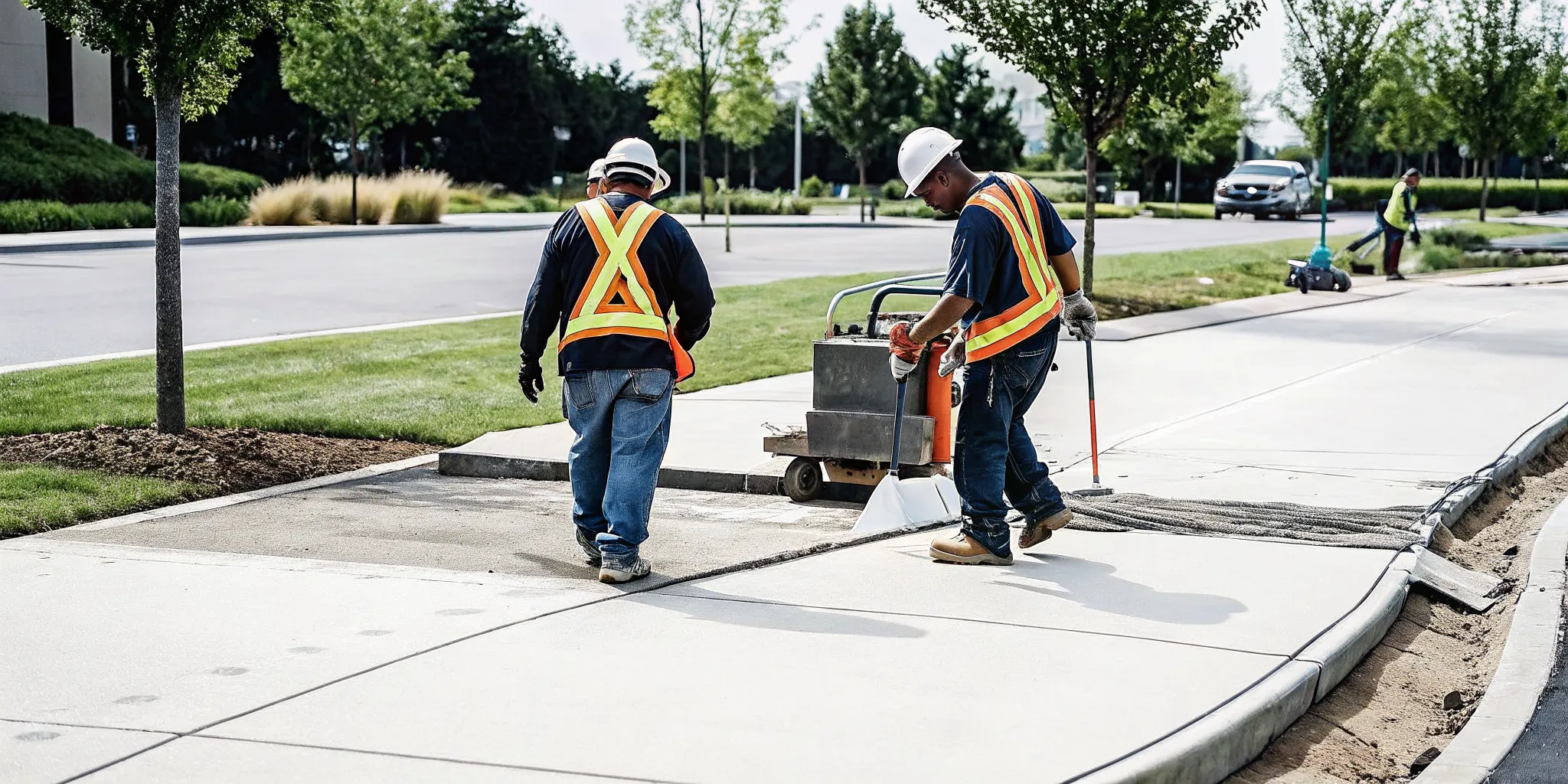
Precision cutting can remove qualifying trip hazards without full slab replacement.
When should you bring in a sidewalk safety professional?
Bring in a sidewalk safety professional when the site has many hazards, uncertain ADA conditions, repeated incidents, limited repair funds, or a need for defensible documentation. An expert assessment helps turn raw findings into a prioritized repair plan.
A walk audit is a great start for any property manager. It helps you see where your paths might be failing. But a simple check is just the first step. Once you find issues, you need to know when to call for help. Some sidewalk problems are small and easy to fix. Others need an expert with the right tools and knowledge. Knowing the difference can save you time and money. It also keeps your property safe for everyone who uses it.
When internal audits find deep issues
You may find many small gaps or cracks during your walk. A good sidewalk safety audit checklist will help you spot these. If you find a heave that is more than 1/4 inch high, you have a real hazard. This is the limit set by safety experts for a safe path. When you see these issues across your site, it is time to bring in a pro. They can look at the whole walk and find things you might miss. They also have the tech to map every fault on your property.
A pro can help you rank these risks. You might not have the funds to fix everything at once. An expert partner helps you pick which spots need care first. This is part of being a smart asset manager. You want to fix the most risky areas to stop falls before they happen. They can use data to show you the best way to spend your repair funds. This move from a simple check to a data-led plan is key for large sites.
Why precision cutting is the best choice
Many people think they have to replace a whole slab when they see a trip hazard. This is slow and costs a lot of money. Others might try to use a coarse tool to wear down the edge. This can leave the walk looking bad and does not always fix the slope. A better way is to use a pro for proactive sidewalk maintenance. Our team uses a patented cutting method that is clean and fast. It removes the hazard and makes the path smooth again without the mess of a full crew.
Precision cutting is safer than other ways to fix concrete. It does not cause the dust or noise of older ways. It also keeps the joint strong so the repair lasts for years. When you bring in a pro, you get a fix that meets high standards. This is not just about a quick fix. It is about a long-term plan for your concrete assets. Cutting the concrete allows for a perfect fit and a safe slope every time. It is the most lean way to handle your paths.
Meeting legal and ADA rules
Safety is not just a goal; it is a law. The 2010 ADA Standards set strict rules for how walks must look. If your paths do not meet these rules, you could face big fines. You might also be at risk if someone gets hurt on your land. This is why regular sidewalk safety inspections are so vital. A pro acts as a compliance advisor to help you stay within the law. They know the codes and can make sure your site is open to all.
Legal risks are real for any business owner. One bad fall can lead to a costly case in court. A sidewalk pro helps you build a defense by keeping good notes. They show that you took steps to keep your site safe. This proof is key if you ever need to show you were not at fault. By using the best tech and methods, you show you care about your guests. You are not just fixing concrete; you are protecting your business from risk. This peace of mind is worth the call to an expert.
Frequently Asked Questions
These answers cover common audit timing, accessibility, liability, and clear-width questions. Always confirm requirements for your property with the current ADA standards and applicable local rules.
How often should you conduct a sidewalk safety audit?
You should perform a sidewalk safety audit at least twice per year. Many property managers choose to do these checks in the spring and fall to catch damage from winter ice or summer heat. A regular audit helps you find new trip hazards early. This active step ensures your site stays safe and helps you avoid high repair costs. Based on a CNA safety guide, routine checks are a key part of property care that cut down on falls.
What is the maximum allowable slope for an ADA-compliant ramp?
A safe ramp must not have a slope steeper than a 1:12 rate. This means for every one inch of rise, there must be twelve inches of length. If a ramp is too steep, it can be hard or risky for people in wheelchairs to use. Keeping slopes gentle is a core part of the 2010 ADA Standards. Following these rules makes your site easy to use for everyone and keeps you in line with legal rules.
Are property owners liable for sidewalk trip and fall accidents?
Yes, property owners are often held liable if they do not fix known trip hazards. If a person falls on an uneven sidewalk that you did not repair, you may face a costly legal claim. Most courts look for proof that you had a plan to find and fix risks. Using a sidewalk safety audit checklist helps show that you take safety with care. Well-kept paths lower your risk and protect your budget from lawsuits and high insurance costs.
What is the minimum safe width for a commercial sidewalk?
Most safety guides set a base width of at least 36 inches for a clear walkway. This space allows a person in a wheelchair to move without hitting blocks or edges. If your paths are too narrow, they can trap users or force them into unsafe areas. Maintaining a wide, clear path is vital for site safety and access. Making sure your walkways meet these size rules helps create a better time for all guests and staff on your property.
Related reading: a sidewalk safety inspection checklist for property managers and preventive sidewalk maintenance for commercial properties.
Ready to remove trip hazards from your sidewalks?
Turn your completed audit into a prioritized action plan. Precision Concrete Cutting can assess qualifying hazards and use its patented cutting process to create safer, more accessible walkways.
Leaving sidewalk hazards on your land can lead to costly legal claims and steep fines. Every day you wait adds to the risk of a person having a bad fall. Fixing these trip hazards now stops falls and helps you stay in line with public laws. Our team uses a clean cutting method to remove these risks in just a few minutes. This process is much faster than tearing out old slabs and pouring new concrete. You get safe and smooth walkways right away without the loud noise or dusty mess of common repair work. Doing regular sidewalk safety checks saves you from much bigger costs in the future. You will feel better knowing your paths are safe for all guests.
Ready to protect your property? Call 1-877-224-0025 to schedule a professional sidewalk safety assessment.


Comments