Concrete Sidewalk Repair: A Property Manager Guide
Concrete sidewalk repair is easier to manage when you start with a clear record of what needs attention, not just a list of visible defects. For property managers, a sound plan should identify trip hazards, establish priorities, select an appropriate repair method, and keep tenants informed while work is underway.
What should a property manager look for?
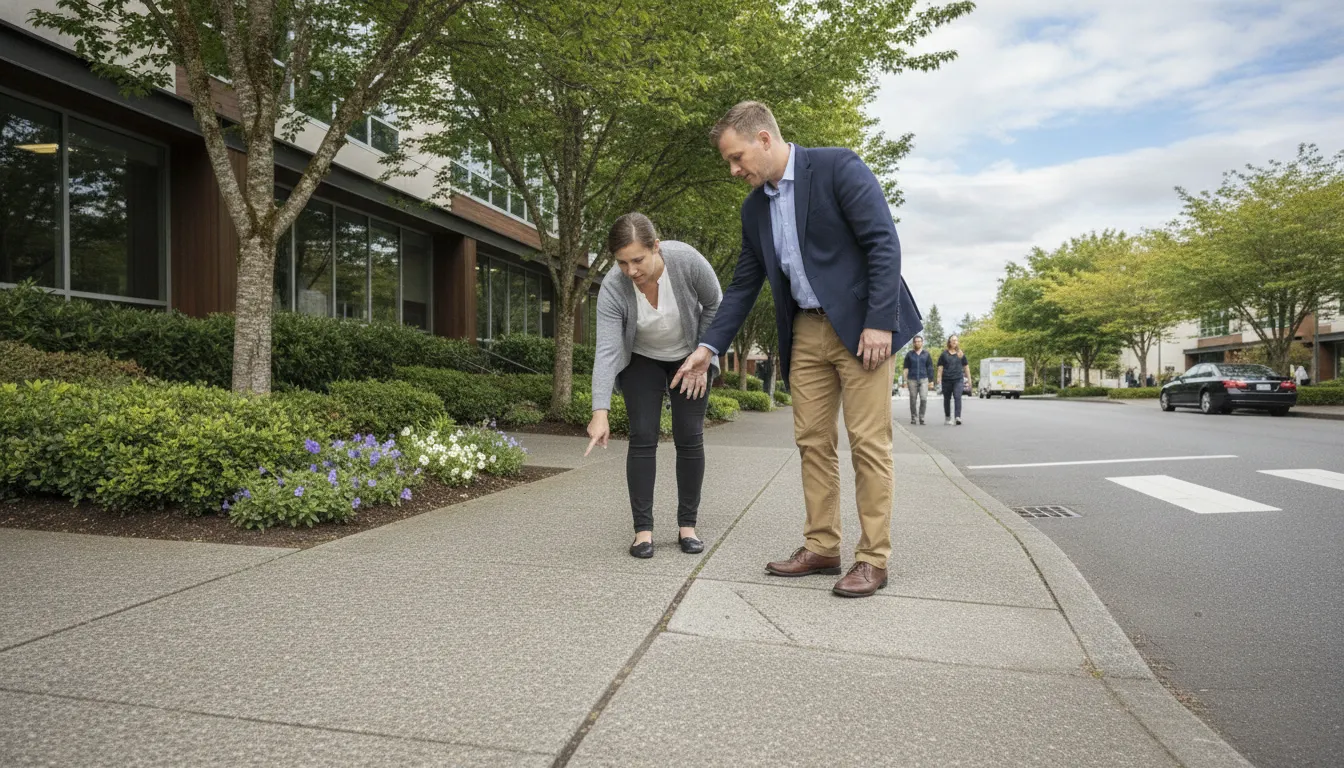
Walk the site or review a recent survey with a consistent checklist. Look for changes in elevation between adjoining sidewalk panels, cracks or breaks that affect walking. Loose material, pooling water, and areas where tree roots or repeated movement may have shifted the walking surface. Note transitions at driveways, entrances, curb ramps, and connections between public and private paths.
Do not treat every visible crack as the same kind of repair. A narrow crack may need monitoring, while an abrupt change in level can present an immediate concern. Some conditions may also indicate a deeper problem, such as ongoing settlement, drainage trouble, or movement that continues after previous work. A qualified assessment helps distinguish a surface-level trip hazard from a panel or subgrade issue that needs a different response. Property teams can learn more about requesting a sidewalk assessment and preparing site information for review.
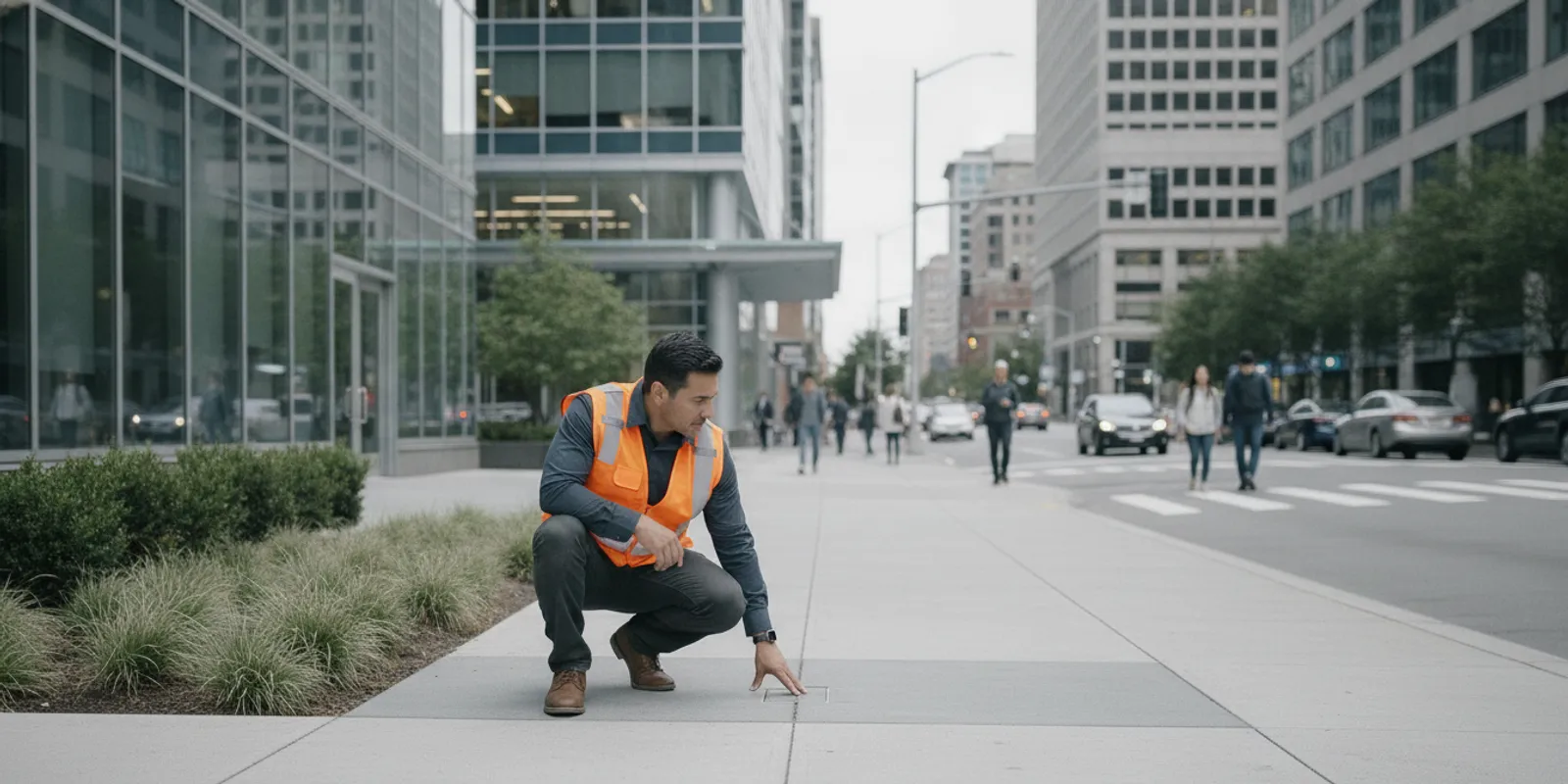
Record the location precisely. Use a site map or property plan and assign each item a simple identifier, such as building, walkway, and panel number. Take photos from a consistent angle and include a wider view that shows nearby doors, crosswalks, or other landmarks. Add the date, the person who observed it, and any temporary action taken. This turns a walk-through into usable maintenance information rather than a collection of unconnected photos.
The Federal Highway Administration's guide to maintaining pedestrian facilities describes sidewalk repair as a process that can include documenting the condition, obtaining required approvals, and coordinating the repair. Local requirements vary, so confirm who is responsible for the walkway and whether permits or notifications apply before scheduling work.
How do you decide what to address first?
Build a priority list that balances the seriousness of each condition with how the route is used. Start with locations along the main accessible path, building entrances, busy crossings, and routes used by many tenants or visitors. Consider whether a condition is near a loading area, transit stop, parking access point, or another place where people naturally pass.
A practical triage process can separate items into three groups:
- Address promptly:
A pronounced level change, broken or loose surface, or other condition that creates a clear walking concern on a frequently used route.
- Assess and schedule:
A condition that needs technical review, additional measurements, or coordination with an owner, utility, or local authority before a repair decision.
- Monitor:
A stable condition that does not currently require immediate work, but should be rechecked on a defined schedule and after events likely to change the surface.
These are planning categories, not a substitute for an accessibility review or applicable code requirements. If you are uncertain about the severity, document the concern and arrange an assessment rather than assuming it can wait. The U.S. Department of Transportation's District of Columbia property management study guide notes that walkways on private property should be maintained in good repair and safe for walking. That statement concerns District of Columbia rules; check the requirements that apply to your own property and jurisdiction.
Set a review date for every monitored item. A note such as "check again next year" is less useful than a dated task assigned to a person or team. After severe weather, nearby excavation, tree work, or other site activity, revisit affected areas sooner. The goal is to keep the condition history current and make changes visible over time.
Which concrete sidewalk repair method fits the condition?
The right method depends on why the walkway is uneven and whether the affected concrete remains suitable to retain. A targeted precision-cutting approach can address certain trip hazards by reshaping the raised edge of existing panels. If a panel is fractured, unstable, badly deteriorated, or affected by a continuing underlying problem, removal and replacement may be more appropriate. A field assessment should determine which conditions qualify for each option.
For property managers, the decision is not simply about whether a panel looks old. Ask whether the proposed work will address the specific hazard, preserve a durable walking route, and give your team a clear record of the completed work. Ask the provider to explain any conditions that are outside the recommended scope, such as active movement or a drainage issue. So the work plan does not imply that a surface treatment resolves an underlying cause.
Consideration | Precision cutting for a suitable trip hazard | Panel removal and replacement |
Best fit | A raised edge where the existing panel is suitable to retain and the hazard can be addressed through precision cutting. | A broken, unstable, or unsuitable panel, or a condition that requires replacement to address the scope. |
Effect on existing walkway | Works with the existing concrete in the qualified area. | Removes and replaces the selected panel or area. |
Planning questions | Which hazards qualify? How will the surface and resulting transition be checked and documented? | What area is included? How will access, curing, barricades, and reopening be coordinated? |
When further review may be needed | If the panel is unstable, significantly damaged, or the cause of movement remains active. | If replacement limits access or the underlying cause has not been identified or addressed. |
This comparison is a starting point, not a diagnosis. The City of Oregon, Ohio, provides a sidewalk repair overview that describes concrete raising as one repair method. The available options and approval process depend on local conditions and the specific site. Ask your provider to identify the proposed method in writing and explain why it fits the observed condition.
Precision Concrete Cutting focuses on sidewalk trip hazard removal and uses a patented slicing process for qualifying locations. Its sidewalk repair services page outlines the company's work. A documented assessment is useful when you need to distinguish an addressable trip hazard from conditions that require replacement or additional investigation.
How should property managers plan concrete sidewalk repair with less disruption?
Start by identifying the routes people rely on most and the times when access is busiest. Coordinate with building staff, security, cleaning teams, tenants, and any vendors who use the same paths. For a multi-building property, group work by area when practical, but do not combine separate locations if doing so would leave an important route unattended for too long.
Before work begins, confirm the details that affect daily operations:
Which entrances and walking routes will be affected, and when?
What alternate accessible route should people use while a work area is controlled?
Who will install and maintain any barricades or signs, and who will confirm that the area is safe to reopen?
How will staff respond if a tenant or visitor needs assistance reaching an entrance?
What weather, access, or site conditions could change the work sequence?
Share a brief notice before scheduled work. State the affected area, expected work window, alternate route, and contact person. Avoid promising an exact reopening time unless the project team has confirmed it. If the schedule changes, update the same channels residents and tenants already use, such as building notices or property communications.
Ask the provider to explain the expected work sequence and how the area will be protected during the job. Precision cutting can be a focused option for qualifying hazards, but site layout, the number and condition of panels, and access needs still matter. The team should agree on the work limits and access plan before mobilization. If several properties are involved, use a shared schedule and a single point of contact to reduce repeated coordination.
What should the scope and closeout records include?
A useful scope tells you what will be assessed, what work is proposed, and what is excluded. Avoid descriptions that say only "repair sidewalk." Ask for locations, quantities or identifiers. The method assigned to each area, access assumptions, and any conditions that may require a separate decision. If one location cannot be addressed as proposed, the scope should say how that exception will be reported.
Before approving a work plan, ask these questions:
Will the assessment include a location-based list or map of observed hazards?
How will the provider determine whether a panel is suitable for precision cutting or needs another approach?
Will the proposed work be tied to clear identifiers that our staff can match to the site?
What access controls, tenant notices, or property coordination are expected from our team?
What records will we receive when work is complete, and how will exceptions be noted?
Can the information support follow-up inspections or planning at other managed properties?
At closeout, retain the final location list, before-and-after records where provided, completion date, any verification or compliance documentation, and a note of work that was deferred or excluded. Store the records with the property's maintenance history. If an organization manages several sites, consistent location labels make it easier to compare open items and see which areas have been addressed without relying on staff memory.
For organizations that manage recurring sidewalk data, a technology-supported workflow can make survey and completion records easier to organize. Precision Concrete Cutting describes its sidewalk technology and data tools, including data management options. Ask what information is available for your scope and how it can be delivered in a format your team can use. Do not assume every project includes the same reporting.
How should you coordinate work across multiple properties?
Use one inventory format across the portfolio. Give each site a consistent name, identify buildings and walkway segments the same way, and record the status of every item: observed, assessed, scheduled, completed, or deferred. Add a reason when an item is deferred, such as pending approval or further investigation. That simple structure lets a regional manager see where decisions are needed without replacing local staff's knowledge of each property.
Separate urgent work from longer-term planning. A portfolio list can group locations by safety priority, access impact, and readiness to proceed. Then schedule work in manageable phases, confirming that each phase leaves the property with a usable route. Review the open list at regular maintenance meetings, and update it after each assessment and completed project.
When choosing a service partner, look for clear scope definition, a repeatable assessment process, communication that works for site teams, and useful closeout records. The company's overview of its approach can help you prepare questions about process and project coordination. Precision Concrete Cutting's ADA compliance information can help frame questions about accessibility documentation. For site-specific requirements, consult the appropriate authority or accessibility professional; a service-provider record does not replace your organization's responsibility to understand applicable obligations.
Frequently Asked Questions
Does every uneven sidewalk panel need replacement?
No. The appropriate response depends on the panel's condition and the cause of the unevenness. Some trip hazards may be suitable for precision cutting, while a broken, unstable, or otherwise unsuitable panel may need replacement or further investigation. An assessment can identify the appropriate scope.
What information should I collect before requesting an assessment?
Provide the property address, a site map if available, known problem areas, photos, access restrictions, and any relevant maintenance history. Include information about busy routes, entrances, and preferred work windows so the assessment and proposed plan account for site operations.
How can I keep tenants informed during sidewalk work?
Give advance notice that identifies the affected route, work window, alternate accessible path, and a contact for questions. Coordinate the notice with onsite staff and update it if the work sequence changes. Confirm who will control access around the work area and when reopening will be approved.
What records should I keep after repairs?
Keep the final scope, location identifiers, completion date, photos or other records provided, verification documents when applicable, and notes about excluded or deferred items. Save them with the property maintenance history and use the same location labels in later inspections.
A consistent assessment and recordkeeping process helps property teams make informed decisions, coordinate access, and carry sidewalk work forward across the portfolio. Start with a clear location list, then match each condition to a documented plan and follow-up.


Comments