Sidewalk Permits: What Property Managers and Cities Should Prepare
A sidewalk permit can be an early project question for property managers, HOA boards, and public works teams planning walkway repairs. The answer depends on where the sidewalk is, who controls the right of way, what work is proposed, and local rules. A little preparation helps you ask the right questions before scheduling work or setting expectations with tenants and residents.
This guide explains how to identify the authority to contact, what details to gather, and how to coordinate a permit review with a sidewalk repair plan. It is a planning guide, not a determination of local requirements. Confirm the rules directly with the responsible agency or property authority before work begins.
When Might a Sidewalk Permit Be Needed?
There is no single permit rule that applies everywhere. A city, county, transportation department, campus, or private property owner may control different sections of a walkway. The work itself also matters. A permit process may apply when a project involves altering a public sidewalk, curb ramp, driveway approach, or other part of a public right of way. Work that occupies or closes a sidewalk can also require separate approval, even when the repair itself is limited.
Start by distinguishing the location and scope. Is the affected panel inside a public right of way, on a privately controlled walkway, or at a boundary that needs clarification? Will the work simply address a raised section, or will it involve removing and replacing concrete, changing the route, staging equipment in the public way, or restricting pedestrian access? Do not assume that a familiar repair method has the same permit status in every jurisdiction.
Local government pages show why checking the specific authority matters. Ithaca, for example, describes permits for sidewalk or driveway construction, removal, replacement, or repair. Grand Rapids has a sidewalk and driveway-approach permit process with its own application steps. These examples are not rules for other places; they illustrate the need to check the applicable local process.
Start with the City of Ithaca's street and sidewalk permit information and Grand Rapids' sidewalk and drive-approach permit page as examples of municipal guidance. Your own city or authority may use different terminology, forms, and review steps.
Who Controls the Sidewalk?
Before you look for an application, identify who is responsible for the location. Property ownership, maintenance responsibility, and permit authority are not always the same thing. A commercial property may maintain a walkway next to its building while the municipality regulates work within the public right of way. An HOA may manage common-area paths but still need to coordinate with a city where a route meets a public street.
Useful starting points include the property survey, site plan, lease or management documents, public right-of-way maps, and prior maintenance records. These documents may help you describe the location, but they do not replace confirmation from the authority. If the boundary is unclear, ask the local public works, transportation, engineering, or permitting office which department has jurisdiction. On a campus or institutional site, contact the facilities team as well.
Keep a record of the answer: the department contacted, the staff role or reference number if provided, the date, the location discussed, and any next steps. This small record can prevent the same jurisdiction question from resurfacing when a project is handed between a property manager, contractor, board, and agency reviewer.
What Should You Gather Before Contacting the Permit Office?
A clear first inquiry helps the reviewer direct you to the correct form or department. Gather the basics before you call or submit a question:
- Exact location:
Provide the property name, street address, city, and state. Identify the sidewalk segment with a building entrance, intersection, driveway, or another clear landmark.
- Ownership or management role:
Explain whether you represent a municipality, HOA, commercial property, campus, or facilities team, and whether you know who controls the walkway.
- Observed condition:
Describe what needs attention in plain terms, such as a vertical offset between sidewalk panels or a route that needs review. Avoid presenting an initial observation as a formal compliance finding.
- Proposed work:
Say whether you are considering trip hazard removal, precision cutting, concrete replacement, a route change, or another scope. If you have not selected a method, say so.
- Extent of the area:
Note the approximate number and location of affected panels, the length of walkway involved, and whether there are several sites.
- Access and staging:
Flag narrow paths, entrances, loading areas, transit stops, landscaping, utilities, or other conditions that could affect pedestrian access or work setup.
- Timing and communication needs:
Share any operational constraints, such as school or business hours, scheduled events, board approval, tenant notices, or planned phases.
- Existing records:
Bring available photographs, plans, inspection notes, prior permit correspondence, and any accessibility documentation that is relevant to the question.
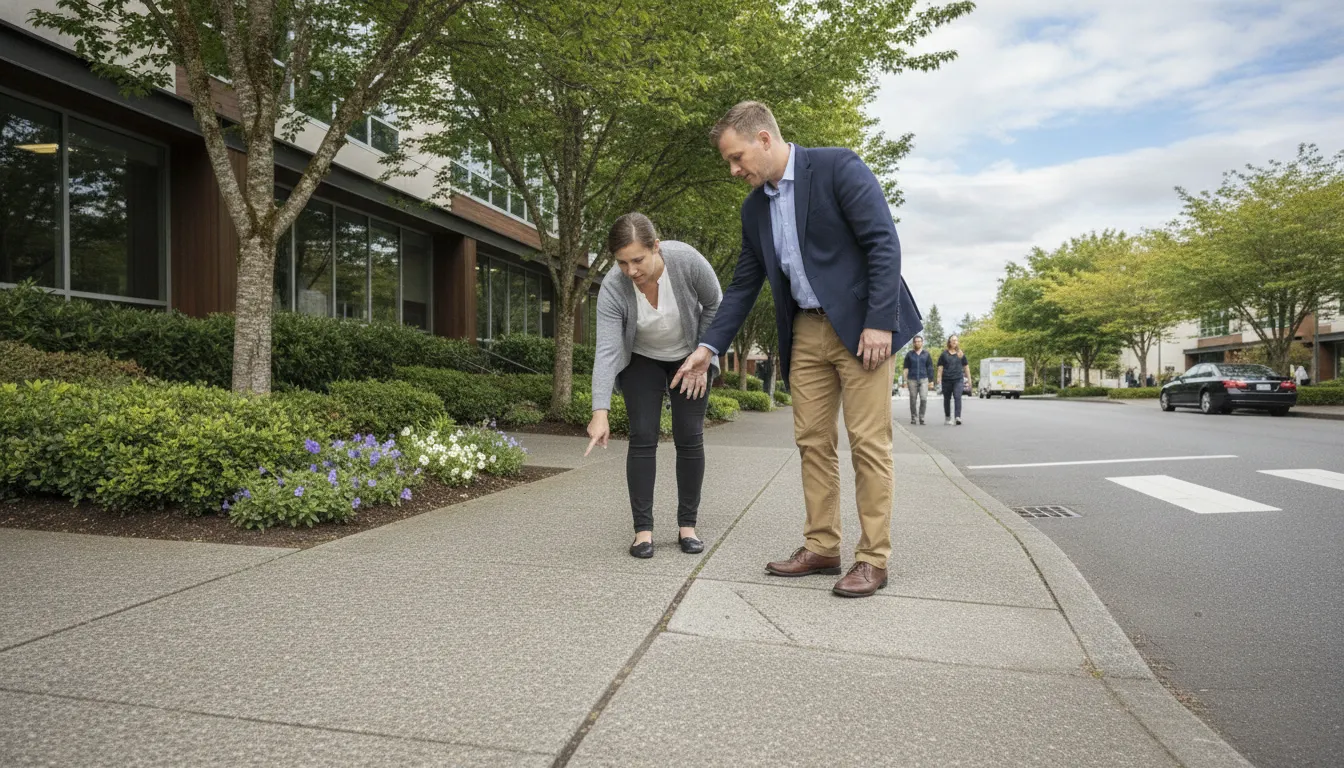
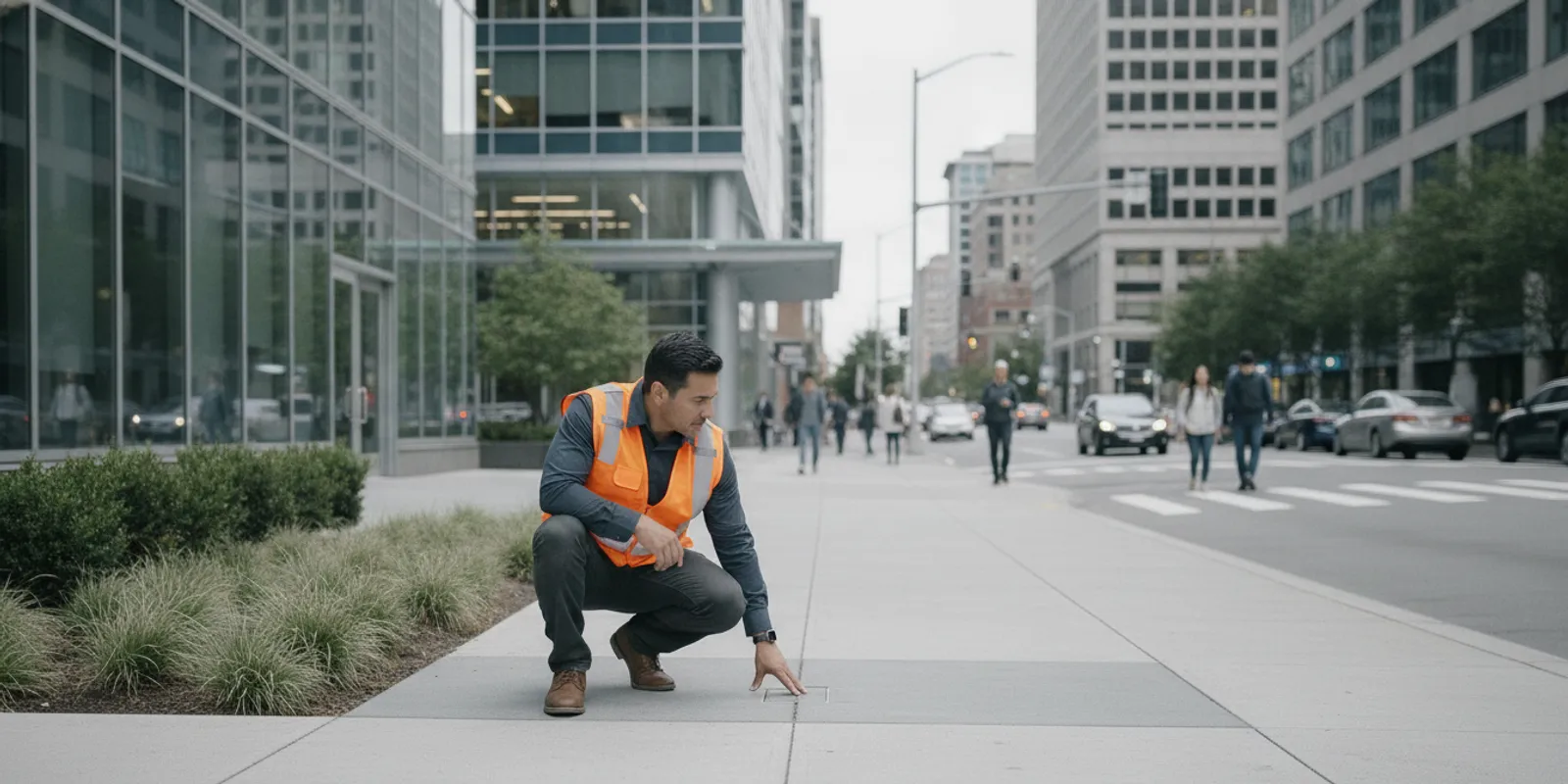
Photos are most useful when they show both the condition and its context. Take a wider image that shows where the location sits along the route, then closer images of the area in question. Label them consistently by building, walkway, or site. Do not place a person in a position that creates a safety risk just to show scale.
Which Questions Should You Ask?
Once you know which office or property authority to contact, ask direct questions and write down the answers. The goal is to confirm the process, not to infer approval from a general conversation.
Does this location fall under your jurisdiction, or should another department review it?
Does the proposed work require a permit, written approval, a right-of-way authorization, or no application?
Does the answer change based on whether the work is precision cutting, concrete replacement, or temporary use of the sidewalk?
Are there separate requirements for pedestrian routing, temporary closures, equipment staging, or work hours?
Which application, drawings, photos, insurance documents, or contractor details should be submitted?
Is a site inspection or pre-work meeting needed? If so, who requests it?
What is the review sequence, and how will the applicant be notified of a decision or missing information?
After the work, is an inspection, closeout document, or record update expected?
Ask the reviewer to point you to the current written instructions and application. If the answer is conditional, record the condition. For example, note whether approval depends on the work area extending into the right of way or on a temporary closure. That detail can affect the scope, schedule, and resident communications.
How Do Permit Steps Differ by Project?
A permit review may focus on different parts of a project depending on the location and scope. The following table is a planning aid, not a substitute for local direction. Always ask the authority which pathway applies.
Project situation | What to clarify | Helpful preparation |
Work on a privately managed walkway | Who owns or maintains the route, and whether a separate authority controls the affected area | Property plan, site photos, maintenance records, and a written scope |
Work on a public sidewalk or driveway approach | Which office regulates the right of way and whether an application or inspection is required | Exact location, proposed work description, and any required plans or forms |
Temporary sidewalk restriction or closure | Whether separate authorization is needed for pedestrian access, staging, or a temporary route | Work-area limits, access plan, timing, and pedestrian-routing proposal |
Multiple buildings or sites | Whether each location needs a separate review, application, or work sequence | Site list, consistent location labels, priority order, and phasing plan |
How Can You Coordinate the Permit Review With Repair Planning?
Permit questions are easier to resolve when the site information and repair scope are organized. For property managers, begin with a simple inventory of locations rather than treating every issue as an isolated call. Record the building or site, walkway segment, observed condition, urgency, and any access constraint. This gives the team a shared view of the work and helps you plan resident or tenant communication.
For a multi-site portfolio, use the same naming convention across photos, notes, and work requests. A label such as “Building C, east entrance, north walkway” is more useful than “front sidewalk.” Keep each location distinct even if similar work is planned at several properties. Where projects require approval, separate confirmed requirements from open questions so a pending decision does not get mistaken for authorization.
Build the schedule around confirmed approvals and operational needs. Ask whether work can be phased, which entrances need to remain available, and what notice tenants, residents, or staff should receive. Leave room for review, follow-up questions, and any inspection the authority requests. Do not promise a start date until the scope, access plan, and approval path are clear.
Precision Concrete Cutting works with organizations responsible for commercial and public walkways. Its approach can include surveying and mapping hazards, trip hazard removal, and documentation. Learn more about sidewalk repair services and the company's sidewalk data and technology. A project assessment can help clarify site conditions and the work scope; it does not replace a permit decision by the responsible authority.
What Can Delay a Sidewalk Permit or Project?
Many avoidable delays begin with missing or mismatched information. Common examples include an unclear location, an application sent to the wrong department, photographs without context, an undefined work area, or a plan that does not explain how pedestrians will pass the site. A request can also stall when the applicant assumes the sidewalk is private but the authority treats part of the work as right-of-way activity.
To reduce back-and-forth, use a consistent project file. Include the location description, current photos, proposed scope, relevant plan, contact details, and a list of questions still awaiting an answer. If the reviewer requests revisions, note exactly what changed and send the updated material as one clearly labeled package. Keep copies of submissions and written responses.
Do not treat a permit status page as approval for your specific project. For instance, New York City's page for active street or sidewalk construction permits provides status and location information for active permits. It is useful for checking listed permit information, but the responsible authority still needs to confirm what applies to a proposed project. See the New York City active street and sidewalk permit status page for that city's process.
Also keep compliance review separate from permit review. A permit may address authorization to perform work, while accessibility requirements concern how a route functions. For background, review the information on ADA-compliant sidewalk accessibility, then confirm applicable standards with the relevant authority and qualified professionals for your project.
Frequently Asked Questions
Does every sidewalk repair need a permit?
No single answer applies everywhere. The responsible authority, location, and work scope determine what approval may be needed. Ask the local permitting or public works office whether the specific work requires a permit, written authorization, or another review.
Who should apply for the permit: the property manager or the service provider?
That depends on local instructions and the project arrangement. Ask the permit office who must be listed as applicant, who may submit documents, and who is responsible for securing approval. Agree on responsibilities before scheduling work, and keep the property representative informed.
Should I submit an application before the repair scope is final?
First ask the authority what information it needs to determine the correct process. You can often begin with a jurisdiction question and a clear description of the site and possible work. Do not submit an incomplete application as though the scope were settled; confirm whether the reviewer needs a final method, drawings, access plan, or other details.
Can a sidewalk status page confirm that my project is approved?
Not necessarily. A status page may show information about permits already issued or active in a particular jurisdiction. It does not automatically establish that a new project has approval. Confirm the status and requirements with the office responsible for your exact location.
A clear permit inquiry starts with the exact location, a realistic description of the work, and confirmation from the authority that controls the site. With those pieces in hand, property teams can plan sidewalk work more confidently and communicate next steps to the people who use the walkway.


Comments