Trip Hazard Removal Guide for Property Managers
Updated: Sep 15
Sidewalk panels that shift by just half an inch can create a major liability exposure for your property. These small vertical gaps are a common cause of slip-and-fall claims in housing communities. For property managers, the challenge is removing trip hazards quickly while preserving budgets, accessibility, and defensible maintenance records.
Trip hazard removal is the process of fixing uneven sidewalk joints to prevent falls and meet safety laws. According to ADA standards, any vertical change in level between 1/4 inch and 1/2 inch must be beveled to make the path safe. For property managers, this work is key to lowering legal risks and keeping paths open for all residents. Precision cutting offers a clean way to fix these spots without the high cost of new concrete. This method removes the whole hazard and leaves a smooth slope. You can fix many panels for much less than the cost of a full replacement. It is the best way to keep your site safe and follow the law.
Before you can fix your walkways, you must know how to find the specific issues that break the law. Learning the rules for What counts as a sidewalk trip hazard? is the first step toward a safer property and lower costs. The path begins with
What counts as a sidewalk trip hazard?
A trip hazard is any shift in a walkway that could cause a person to fall. For property managers, these spots are a big risk. Even a small bump can lead to a slip and fall claim. These claims often cost owners a lot of money in legal fees. To stay safe, you must know what the law says about sidewalk safety and risk.
The ADA quarter inch rule
ADA accessibility standards establish the technical limits for changes in level along an accessible route. A vertical change up to 1/4 inch may remain untreated. A change between 1/4 inch and 1/2 inch must be beveled, while larger changes require treatment as a ramp. For private commercial facilities and many HOA-managed common areas, these requirements inform Title III accessibility obligations and should be incorporated into documented inspection protocols. You can find the full list of rules on the ADA standards website.
If a lift is between 1/4 inch and 1/2 inch, the law has a fix. The edge must be cut to a slope. This slope must not be steeper than a 1 to 2 ratio. This helps wheels and feet move over the bump without a jar. If the lift is over 1/2 inch, the law says you must use a ramp. A simple cut or patch is no longer enough to meet the rules at that height.
Why concrete slabs move
Most hazards happen when the ground under the concrete shifts. Tree roots are a very common cause of this move. As roots grow, they push up the heavy slabs. This creates a lip that can catch a toe. Soil can also wash away during heavy rain or snow. This leaves the panel with no base, so it sinks into the ground. These gaps often get worse over time if you do not fix them.
Weather also plays a role in how slabs sit. In cold areas, ice can push up the concrete. When the ice melts, the slab may not fall back into the right place. This cycle creates new hazards every year. Keeping paths clear of all blocks is a key rule in many safety guides at Yale University. You should look for new shifts after every big storm or season change.
How to spot every hazard
Visual review alone can miss changes in level that require attention. For large portfolios, a structured assessment is more effective because it creates a repeatable inventory rather than relying on informal observations. Assessment teams can record precise locations, severity, pedestrian exposure, photographs, and recommended action for each hazard. They look for uneven joints and cracks that could trip a person. These experts can tell you which spots need work right away and which can wait.
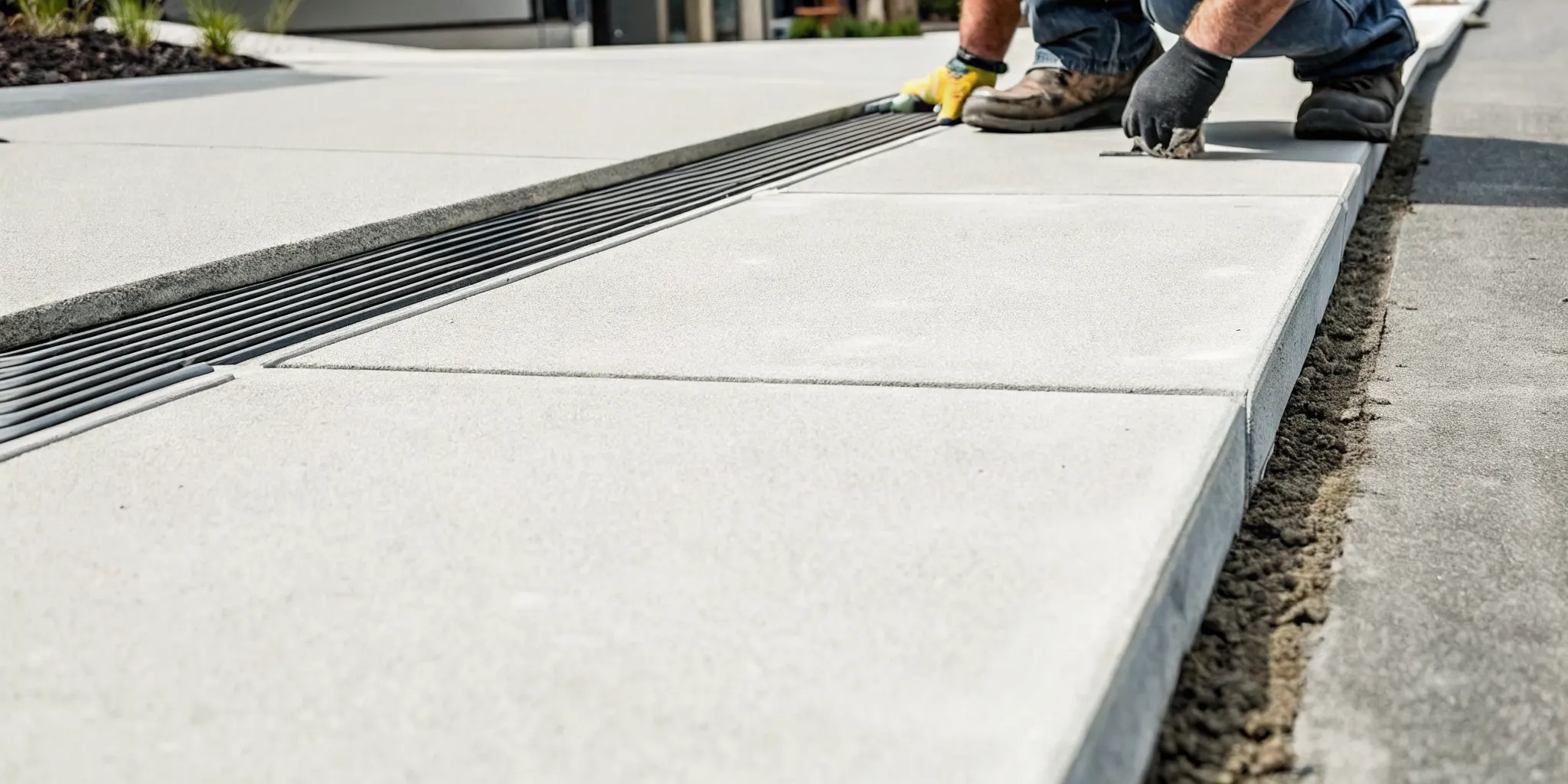
A documented field inspection helps property managers prioritize sidewalk hazards by severity and pedestrian exposure.
Once you find these risks, you need a plan to fix them. You can use expert trip hazard removal services to clear the gaps. This method uses a clean cut to remove the hazard. It is much faster and cheaper than ripping out the old concrete. Plus, you get the proof you need to show your site is safe and follows the law.

A documented sidewalk assessment helps property managers prioritize trip hazard removal by severity and accessibility risk.
Why timely trip hazard removal matters
Keeping your sidewalks in good shape is about more than just looks. It is a key part of keeping your site safe and meeting rules. When you handle issues fast, you protect the people who walk on your paths and you protect your budget. Active upkeep is always better than waiting for a problem to arise.
Keep paths safe and easy to use
The main goal of any sidewalk repair is to keep people safe. Small shifts in the concrete can lead to big falls. Even a tiny lip can be a major risk for someone using a walker or a wheelchair. U.S. rules are very clear about how flat a walkway must be. For example, a vertical rise of more than 1/4 inch is often seen as a trip risk. If a rise is between 1/4 and 1/2 inch, it must have a beveled edge to stay safe.
When you invest in trip hazard removal, you make sure everyone can move freely. This is vital for meeting ADA compliance standards. A smooth path allows people of all ages to move through your site with ease. Waiting too long to fix these spots only increases the chance of a fall. Precision cutting provides a smooth finish that makes the path safe for everyone.
Avoid costly legal fees and fines
Neglecting your sidewalks can lead to serious legal trouble. If someone trips and gets hurt, the site owner or manager is often held liable. These injury claims can be very expensive. Beyond personal injury cases, you may also face high fines for not meeting U.S. standards. Fines for ADA cases can range from $4,000 to $75,000 for each instance. These costs add up quickly if you have many risks on your site.
Taking care of trip hazard removal services early shows that you care about safety. It also gives you the proof you need to protect your site in court. Keeping clear records shows that you take active steps to keep your paths safe. This active work can save you from high costs and long legal battles. It also helps you stay in good standing with local building codes.
Lower your long term repair costs
Fixing a trip hazard now is much cheaper than replacing a whole slab later. Older ways like tearing out old concrete are slow and loud. Precision cutting is a better way to solve the problem. In fact, this method is often 50% to 90% cheaper than full replacement. It takes less time to finish and creates very little mess. This allows you to fix many more risks with the same budget.
By choosing to cut rather than replace, you stretch your upkeep funds much further. You can use GIS sidewalk management to track repairs across your entire site. This helps you stay on top of your upkeep plan without overspending. Timely repairs stop small issues from turning into major failures. This approach is the best way to keep your site in good shape for years to come.
How does ADA compliance affect sidewalk maintenance?
ADA compliance is a key part of sidewalk care. It is not just about following a rule. It is about keeping paths safe for every person. When sidewalk panels shift, they create risks for people who have trouble moving. Site managers must find these issues early. Fixing these hazards helps avoid legal trouble and keeps the public safe.
Accessibility standards for public paths
The law sets clear rules for how level a sidewalk must be. A small lift in the concrete can stop a person in a wheelchair or cause a fall. According to ADA standards, a vertical change up to 1/4 inch is allowed without a fix. But once a gap is between 1/4 inch and 1/2 inch, it must have a slope. This slope cannot be steeper than a 1:2 ratio to stay safe.
If a lift in the concrete is more than 1/2 inch, the fix is more complex. These larger shifts require a ramp to meet the code. Proper ADA compliance means checking every inch of the route. Small changes in height are easy to miss. But those small gaps are often the main cause of trips and falls on public land.
Financial and governance risks of non-compliance
Unaddressed hazards can trigger injury claims, accessibility complaints, emergency repairs, and unplanned legal expense. Property managers should maintain a defensible inspection and remediation record that identifies when a hazard was observed, how its severity was classified, when work was authorized, and how completion was verified.
For HOA boards, this process also supports the board's duty to maintain common areas under governing documents and adopted maintenance policies. A risk-based repair schedule, supported by photographs and location data, gives boards and managers a clearer basis for budget decisions and demonstrates that known hazards are being handled systematically.
Effective trip hazard removal
Choosing the right fix is vital for your budget. Some people think you must tear out and replace every bad panel. This is often not true. Using trip hazard removal services like precision cutting is a better choice. This method is 50% to 90% cheaper than total new concrete. It is also much faster and cleaner for the public.
Our team uses a special slicing method to fix these gaps. Unlike some ways that can be rough, our cutting leaves a smooth, safe finish. We even offer a 100% ADA compliance guarantee for our work. This gives you peace of mind that your paths meet every federal rule. Quick and exact repair is the best way to keep your sidewalk routes safe and open.
Comparing trip hazard removal and repair methods
Site owners have many ways to fix uneven paths. Each way has good and bad points for cost and safety. Picking the right one helps you stay within the law and avoid injury claims. Here is how the most common choices stack up against each other.
Patching and ramping
Patching uses parts like asphalt or grout to fill the gaps between slabs. This is a fast way to remove a trip hazard. But these patches often crack and peel over time. They do not fix the root of the problem and can look messy on your site. Rain and heavy use can cause the patch to break away. This leaves the hazard behind once more. You must clear all debris from the crack before you patch it, or the fix will be weak.
Ramping is like patching but uses a small slope of concrete to bridge the height gap. While this can work for a short time, it often fails to meet long-term safety needs. Most patches do not last long enough to keep people safe for years. They can also create new trips if the edges start to lift or curl up.
Slab lifting and new concrete
Slab lifting uses foam or mud pumped under the concrete to raise it. This can work if the slab is in one piece. But it is hard to get a perfect level this way. It can also be a slow process that blocks foot traffic for hours or days. If the slab is too broken or has many cracks, you must put in new concrete instead.
Putting in new concrete is the most extreme choice. You must dig out the old slab and pour a new one. This is the most costly path and takes the most time. It often costs much more than simple trip hazard removal services. Most jobs do not need a full new slab to be safe. It also makes a lot of waste that goes to the dump.
Clean slicing and cutting
Clean slicing is the best way to fix most hazards. It uses a special saw to cut the concrete at a clean angle. This way is much faster than putting in a new slab. It is also cleaner than other ways because it does not use water or make a large mess. This makes it a good choice for the earth and your site.
This slicing way meets all safety rules. The ADA standards say that gaps over 1/4 inch must have a slope. Clean cutting does this well. It is often 50-90% cheaper than digging up the walk and starting over. You can also get a full guarantee on ADA compliance for every fix.
Repair Method | Cost Level | Time to Fix | Result Quality |
Precision Cutting | Low | Fast | 100% ADA Compliant |
Patching | Low | Fast | Temporary fix |
Slab Lifting | Medium | Slow | Fairly level |
New Concrete | High | Very Slow | New slab |
How to build a trip hazard removal program
Running a large property needs a clear plan for safety and repair. You must find and fix sidewalk issues before they lead to big falls. A strong program helps you stay in line with U.S. laws while keeping people safe. This step saves money by stopping court cases and big fines.
Map your sidewalk list
The first step is to know the state of your paths. You should walk the whole land to find every uneven joint or crack. Many managers now use online tools to map these spots and track work over time. You need to find any rise that is 1/4 inch or higher, as these are true risks.
Based on ADA rules, a rise up to 1/4 inch can be straight up. But anything higher needs a slope or a ramp to stay safe. Finding these spots early helps you set a fair budget. You can then group your repairs to save on the cost of travel and setup for your crew.
Rank your safety repairs
Not all hazards have the same risk level. You should focus on busy areas as your main goal. Paths near doors, pools, or mailboxes are key. Experts at Yale suggest that you must remove trip hazards in walkways to keep people safe.
Use a simple scale to grade each spot. This shows that you are taking active steps to protect the public. Clear records are vital when using trip hazard removal services to lower your risk of a court case.
- Check the whole site:
Walk every path on your land to find trip risks. Map these spots with a site plan or tool.
- Grade the risk level:
Rank each hazard by its height. Also, look at how many people walk near the spot each day.
- Check the law:
Compare your list to ADA rules. This tells you which spots you must fix right away to stay in line with the law.
- Pick a fix:
Pick a way to fix the concrete. Precision cutting is often the best choice for both speed and cost.
- Hire a pro:
Find a team that can give you a full guarantee that their work meets all safety laws.
- Save your data:
Keep photos and notes of every repair. This proves that you took the right steps to keep the land safe.
- Plan for the future:
Set a date to check the paths again next year. New issues can grow as the ground shifts or trees get larger.
Keep your repair records
A good repair partner should give you more than just a quick fix. They should provide a full report on every repair they make. This report needs to show the date, the spot, and the size of the hazard. This data is your best defense if a person ever claims they fell on your land.
You want a partner who knows the law and helps you reach your safety goals every year. When you build a plan, you move from reacting to problems to managing them. This saves time for your staff and keeps your budget on track. A safe sidewalk is a sign of a well-run area.
Frequently Asked Questions
Who is in charge of trip hazards on a sidewalk?
Property managers, HOAs, and city leaders are usually in charge of sidewalk safety. As shown by Safe Sidewalks, these groups must reduce the risk of people falling to protect their property. If they do not fix these hazards, they may face high insurance costs or legal trouble. Keeping sidewalks flat and safe is a key job for anyone who looks after public or private paths.
How does precision cutting remove trip hazards?
Precision cutting removes an uneven sidewalk edge to create a clean, even slope. Precision Concrete Cutting uses specialized tools to address difficult edges and improve accessibility. This method is efficient and produces a durable result for property managers.
How can you remove a trip hazard?
You can remove a trip hazard by slicing or cutting the high edge of a concrete slab to make it smooth. This cutting method is much faster and cleaner than taking out and replacing the whole slab. As shown by Safe Sidewalks, this process is about 50 to 90 percent cheaper than concrete replacement. This path makes the area safe again while saving the owner a lot of money.
What are the ADA rules for sidewalk trip hazards?
The Americans with Disabilities Act (ADA) has clear rules for sidewalk levels. Height changes up to 1/4 inch are okay and do not need a fix. But changes between 1/4 inch and 1/2 inch must be cut at a slight angle. Per the ADA standards, any change over 1/2 inch needs a full ramp. Following these rules helps owners avoid large fines that can reach $75,000.
Ready to request a trip hazard assessment?
Leaving uneven sidewalk slabs alone leads to costly injury claims and fees. These legal costs drain your budget and put your entire site at risk today. You can fix these safety issues today using our trip hazard removal services. Our process is much faster and cheaper than a total sidewalk replacement. It is also a lot cleaner than tearing out old concrete slabs. We use a proven slicing method that removes hazards without any big mess. Acting now prevents small cracks from turning into large hazards for people. This ensures you provide a safe path for every person who visits you. Our team helps you stay in line with all local ADA safety rules. You can secure your sidewalks this week and get real peace of mind. Protecting your tenants and visitors is the best way to avoid risk now.
Ready to request a trip hazard assessment? Call (801) 373.6060 to talk to a concrete cutting expert.



Comments