HOA Sidewalk Maintenance and Repair: A Complete Guide for Boards
Updated: Sep 14
Managing a residential community comes with unique challenges, but few are as persistent or potentially costly as aging concrete. Over time, shifting soils, tree roots, and weather cycles inevitably push neighborhood sidewalks out of alignment, creating unsightly and hazardous vertical displacements. Homeowners association (HOA) board members face the constant pressure of keeping these pathways safe while managing tight reserve funds.
Schedule your free HOA sidewalk assessment today and identify trip hazards before they lead to costly claims.
Implementing a proactive strategy for hoa sidewalk maintenance and repair is a vital board responsibility that protects resident safety and keeps walkways compliant with federal accessibility standards. Under local property laws, homeowners associations are legally responsible for maintaining common area sidewalks and keeping them safe for all community members. Board members must quickly address any walkway trip hazard, which is often defined as a vertical shift of 1/2 inch or greater. Managing these hazards protects the board from costly injury claims, lowers community insurance costs, and ensures long-term sidewalk safety across the neighborhood. Instead of choosing loud and dusty slab replacement. Proactive boards can use clean concrete cutting and data-tracking tools to plan cost-effective, phased sidewalk repairs that align with reserve budgets.
What Legal Responsibilities Do HOA Boards Have for Sidewalk Safety?
HOA boards must know who owns the walkways in their community and who bears the legal duty to maintain them. Setting up a clear hoa sidewalk maintenance and repair plan is the first step toward keeping walkways safe and compliant. Sidewalks may look like public spaces, but the duty to repair them often falls on the board or individual property owners. The answer depends on a mix of the association's governing documents, local municipal codes, and state statutes. Boards that take the time to research and codify their sidewalk maintenance obligations build a strong foundation for everything that follows. From budget planning to vendor selection to legal defense.
Ownership and property boundaries
Walkway rights near homes depend on where the path sits relative to property lines. Common spaces like parks, pool decks, and clubhouse paths almost always belong to the HOA as common area. But sidewalks along private lots and along public streets can be a gray area. Some recorded plat maps deed these walkways to the individual owner, while others retain them as HOA common area. In communities with publicly dedicated sidewalks, the city or county may technically own the walkway. But even on public streets. Municipal codes can still shift the repair obligation to the adjacent owner or to the HOA in its role as the community's governing body.
Federal safety guidelines from the Federal Highway Administration emphasize that maintaining walking surfaces is a critical component of public safety and accessible infrastructure. For HOAs, this means the board must check local codes and recorded site plans to determine whether the city. The HOA, or the individual homeowner pays for sidewalk repairs. A common approach is for the board to commission a boundary survey or title report to map exactly which concrete belongs to whom. Then document those findings in the association's official maintenance records.
CC&R language and board duties
An HOA's governing documents, known as CC&Rs (Covenants, Conditions, and Restrictions), are the primary guide for walkway upkeep responsibilities. CC&Rs define what parts of the development are common area, what parts are limited common area, and what parts belong to individual lot owners. Board members must review these documents to understand exactly who maintains the paths. In most professionally managed communities, the CC&Rs state that the board must keep all common area walkways in good repair. Which includes maintaining a smooth, level surface free of trip hazards.
When CC&Rs are silent or ambiguous on sidewalk maintenance, the board should consult with the association's legal counsel rather than guessing. If an individual homeowner bears responsibility for a sidewalk section. The board may still have a duty to enforce the community's maintenance standards and confirm that hazards are addressed within a reasonable timeframe. This enforcement role is itself a legal duty, and boards that ignore visible hazards on homeowner-maintained walkways can face liability exposure. To reduce risk, the board should establish a written policy that defines inspection responsibilities, repair timelines, and enforcement procedures. Regular sidewalk safety inspection cycles help boards find trip hazards early and maintain a defensible record of proactive maintenance.
State-specific legal landscape
State laws play a big role in determining an HOA's sidewalk obligations. In California, state statutes and case law generally place the burden of sidewalk maintenance on the property owner whose land borders the walkway. In Florida, many master-planned HOAs own and maintain all neighborhood paths as common area, though some planned unit developments follow different rules. In Texas, city ordinances vary widely from one municipality to another. Some Texas cities maintain public sidewalks adjacent to residential subdivisions, while others explicitly require the abutting property owner or homeowners association to handle all repairs.
Beyond basic maintenance obligations, state laws may also govern timelines for repair, notice requirements before entering private lots for repair work, and statutes of limitations for injury claims. The fastest way for a board to get clarity is to request a legal opinion from the association's attorney. Specifically addressing sidewalk maintenance under the laws of the state where the community is located. No matter what state you are in, waiting to act on documented hazards increases risk. Leaving uneven concrete in place for months or years can lead to costly personal injury claims. Maintaining a sidewalk risk register that tracks hazard location, severity, date identified, and repair status provides a clear chain of accountability. By acting on hazards quickly, the board protects both resident safety and the community's financial health.
How Can HOAs Meet ADA Compliance Requirements for Sidewalks?
HOA boards have a clear legal duty to make community walkways accessible under federal law. The Americans with Disabilities Act (ADA) and related fair housing regulations set specific standards for walking surfaces. Including maximum slope allowances, surface smoothness requirements, and acceptable vertical displacement thresholds. Even though HOAs are private entities, federal courts have repeatedly found that sidewalks in residential communities serve a public function and must therefore meet ADA standards. Ignoring these requirements exposes the HOA to both private lawsuits and enforcement actions from the Department of Justice.
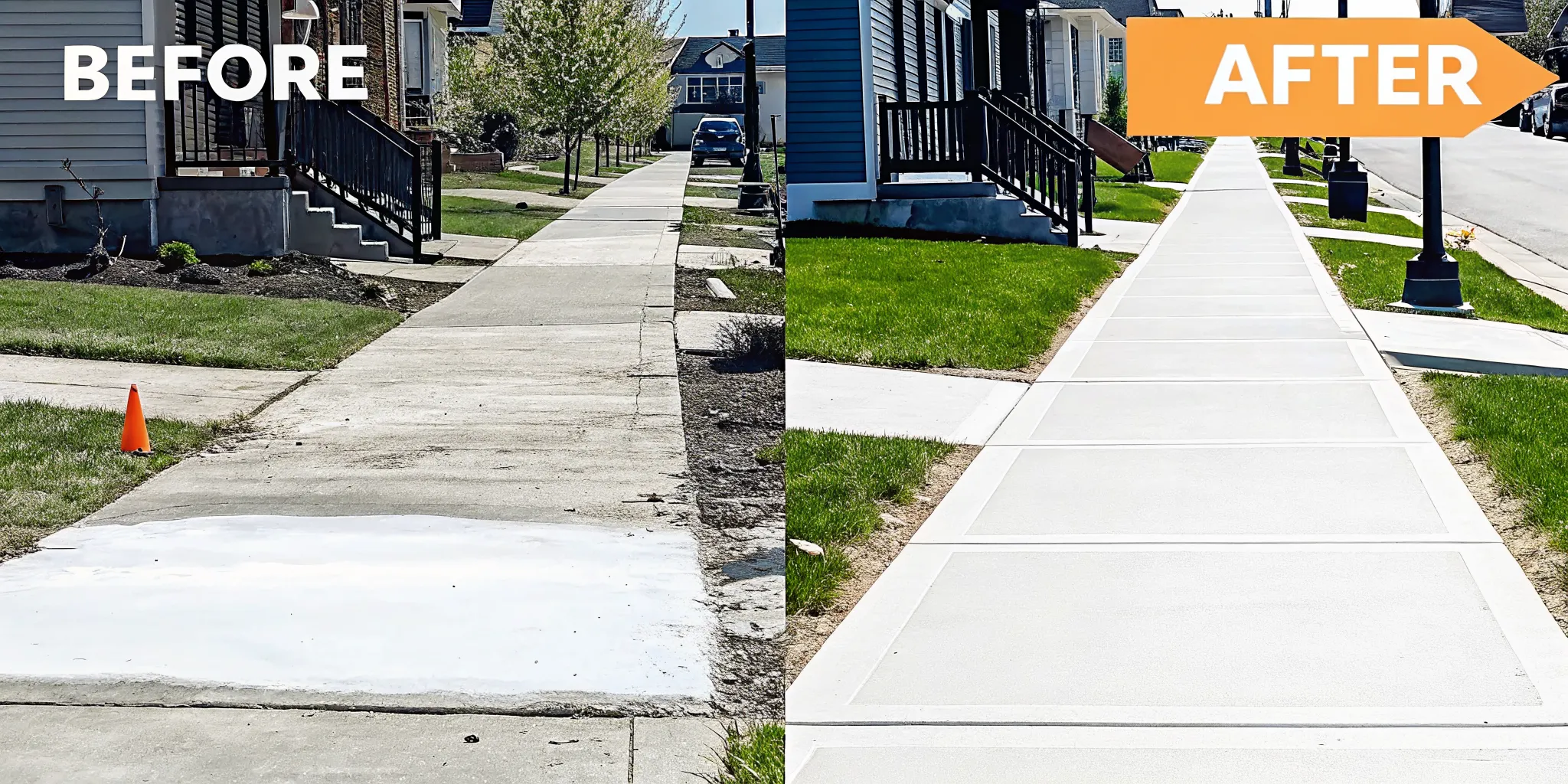
ADA standards for sidewalk surfaces
The ADA Accessibility Guidelines (ADAAG) require walking surfaces to be stable, firm, and slip-resistant. The maximum allowable cross-slope on a walking surface is 2 percent (roughly a 1/4-inch drop over 12 inches). Any vertical change greater than 1/4 inch must be beveled at a slope no steeper than 1:2. A vertical displacement of 1/2 inch or more is a trip hazard that automatically fails ADA compliance. These standards apply regardless of whether the sidewalk is in a public right-of-way or inside a private gated community. HOAs should follow these guidelines as a baseline even when local building codes do not explicitly mandate them. Because personal injury plaintiffs and their attorneys routinely use the ADA standards as the benchmark for what a reasonable and safe walkway looks like.
Consequences of non-compliance
Failing to meet ADA requirements carries serious consequences for an HOA and its board members. Residents, guests, and delivery workers who are injured on uneven walkways can file personal injury claims naming the HOA as the defendant. Beyond individual lawsuits, the Department of Justice has pursued systemic ADA compliance cases against HOAs and property management companies. These actions can result in costly court-ordered remediation plans, civil penalties, and court-appointed monitors who oversee compliance for years. The financial impact of an ADA judgment often dwarfs the cost of proactive sidewalk maintenance. Maintaining clear sidewalk hazard documentation provides the evidence trail the board needs to demonstrate it is meeting its accessibility obligations in good faith.
Fair Housing Act implications
Beyond the ADA, the Fair Housing Act (FHA) requires that common areas in residential communities be accessible to residents with disabilities. This includes pathways from parking areas to units, routes to amenities like pools and clubhouses, and sidewalk connections between neighborhood sections. The FHA's accessibility requirements are in some ways broader than the ADA's, because they apply to all multifamily housing constructed after 1991. For HOAs that operate townhouse developments, condominium complexes, or age-restricted communities. The FHA creates an independent obligation to maintain walkable routes that do not exclude residents with mobility impairments. Boards should consult both ADAAG and FHA Safe Harbor standards when planning sidewalk repairs.
How Should HOAs Conduct Sidewalk Safety Inspections?
Regular walkway inspections are the backbone of any effective hoa sidewalk maintenance and repair program. An inspection program that runs on a predictable schedule catches hazards early, when repair costs are lowest and before anyone has been injured. Inspections also create the documented record that demonstrates the board is fulfilling its duty of care, which is the strongest defense against personal injury claims. This section provides a practical framework for setting up and running a sidewalk safety inspection program for your HOA community.
Establishing an inspection schedule
Most property management experts recommend inspecting all community walkways at least twice per year. Spring inspections catch winter freeze-thaw damage, and fall inspections identify hazards that should be repaired before winter weather arrives. Additional inspections should follow major weather events such as heavy rain, freezing temperatures, earthquakes, or nearby construction work that can shift concrete slabs. Boards with large communities or multiple property sections may find it practical to stagger inspections across several weeks rather than attempting a single community-wide inspection day. A written schedule should be adopted by the board at a regular meeting and assigned to a specific committee member. The community manager, or an outside inspection vendor for consistent execution.
What to look for during inspections
Inspectors should systematically examine every pedestrian walkway in the community. Trained inspectors look for the following common trip hazards:
Vertical displacements of 1/4 inch or more between adjacent concrete slabs
Cracks wider than 1/4 inch that create uneven or jagged walking surfaces
Sunken or settled slabs where one side of a joint is lower than the other
Heaved slabs pushed upward by tree roots, freeze-thaw cycles, or soil expansion
Spalled or crumbling concrete edges at joints and control cuts
Missing, broken, or loose sections where concrete has deteriorated completely
Sloped sections where cross-slope or running slope exceeds ADA maximums
Pooling water on walkway surfaces indicating improper drainage or settlement
Overgrown landscaping encroaching onto walkways and narrowing the accessible path
Each identified hazard should be photographed showing the full context of the location and a close-up of the defect with a measuring tool in the frame for scale. The trip hazard identification guide provides a useful reference for categorizing and prioritizing defects by severity level.
Recording and tracking findings
Documentation is critical for both budget planning and legal defense. Each inspection report should include the inspection date, names of inspectors, a map or list of inspected areas. Photographs of each hazard with measurements, a severity rating, and a recommended repair priority. This documentation serves as evidence that the board is meeting its duty of care and acting with reasonable diligence. Boards should retain all inspection records for at least the applicable statute of limitations period in their state. Which typically ranges from two to six years depending on the jurisdiction. The same documentation provides the data needed to build a phased repair budget. Support a special assessment justification, and demonstrate to insurance carriers that the community is proactively managing trip hazards.
Building Your HOA Sidewalk Maintenance and Repair Budget
One of the most challenging aspects of hoa sidewalk maintenance and repair is securing adequate funding. Boards must balance the need for timely repairs against the reality of limited reserve funds and competing community priorities. A well-planned budget allows repairs to happen on a predictable schedule rather than only when emergencies or lawsuits force action. The most successful HOAs treat sidewalk maintenance as a recurring line item in their long-term capital plan, not as an occasional unexpected expense.
Estimating repair costs by method
The cost of sidewalk repair varies significantly based on the method chosen and the extent of the damage. Boards should understand the full range of repair options and their associated costs before requesting vendor bids. Below is a comparison of the most common repair methods available to HOAs.
Repair Method | Cost per Linear Foot | Disruption Level | Cure Time | ADA Compliant |
Precision Concrete Cutting | $100-$350 | Low | Immediate | Yes |
Slab Replacement | $500-$1,500 | High | 7-28 days | Yes |
Concrete Overlay/Resurfacing | $200-$600 | Medium | 24-72 hours | Varies |
Precision concrete cutting is the most cost-effective approach for most HOAs because it preserves the existing slab, requires no concrete curing time, and produces an ADA-compliant surface immediately. Slab replacement, while sometimes necessary for severely damaged concrete, costs up to five times more per linear foot and disrupts walkway access for days or weeks. The comparison HOA sidewalk assessment from a precision cutting specialist can give your board accurate per-hazard pricing for your specific community.
Funding strategies for HOA sidewalk repairs
HOAs typically fund sidewalk repairs through one of three sources. Reserve funds are the preferred option for planned capital repairs, and the board should include projected sidewalk maintenance costs in the community's reserve study. Regular reserve contributions spread the cost across all homeowners over time rather than hitting the budget all at once. For communities that have not set aside enough reserves, a phased repair timeline funded through the annual operating budget can work for smaller-scale repairs. Special assessments are a third option but should be a last resort, since they create friction with homeowners and can be difficult to pass without broad community support.
Whatever funding method the board chooses, obtaining competitive bids from multiple vendors is essential. A systematic sidewalk repair procurement process ensures the board compares apples-to-apples pricing and selects the best value for the community. Many HOAs find that using the same vendor across multiple phases of work leads to better pricing and scheduling continuity.
Creating a Board-Approved Sidewalk Repair Proposal
Once the board has identified hazards and secured funding, the next step is developing a formal repair proposal for board approval. A thorough, well-documented proposal increases the likelihood of a smooth vote and ensures the work meets the community's quality standards. Boards without a standard proposal format can use a scope of work template to create consistent, professional repair packages.
Essential elements of a strong proposal
A comprehensive sidewalk repair proposal should include every element the board needs to make an informed decision. The following checklist covers the key components:
An executive summary listing the total number of hazards, the proposed repair method, and the total estimated cost
A detailed scope of work with the exact location of each hazard, including a community map or GPS coordinates
Individual photographs of each hazard with measurements showing the vertical displacement
Itemized cost estimates from at least three qualified vendors with unit pricing per linear foot
A project timeline showing when work will begin, how long each phase will take, and the completion date
A disruption management plan describing how walkway access will be maintained during repairs
Certificate of insurance and applicable business licenses for the selected vendor
Written warranty terms covering both workmanship and materials
Before-and-after documentation plan showing how completed repairs will be verified
Get your free HOA sidewalk assessment now and learn how precision cutting can save your community up to 90 percent on repair costs compared to full slab replacement.
Vendor evaluation and selection
Selecting the right repair vendor is one of the most consequential decisions the board will make. Boards should prioritize vendors with specific experience in precision concrete cutting techniques for HOA communities. Request written references from at least three HOAs the vendor has served and follow up to ask about schedule adherence, budget compliance, and resident satisfaction. Verify that the vendor carries general liability insurance with adequate limits and workers compensation coverage. The community's vendor evaluation criteria should be documented in advance so every bidder is compared against the same standards. Boards should also visit an active job site from a shortlisted vendor to see the work quality and crew professionalism firsthand before casting a final vote.
Documentation and Insurance: Protecting Your HOA Board
Thorough documentation is a board's strongest defense against personal liability claims arising from sidewalk injuries. When an HOA board follows a systematic process for hoa sidewalk maintenance and repair and documents every step. Individual board members can invoke the business judgment rule to protect themselves from personal liability. The business judgment rule presumes that board members acted in good faith, with reasonable care. And in the best interest of the association when their decisions were made through a documented process. Without that documentation, personal liability protection is much harder to assert after a claim arises.
Key documents every HOA board should maintain
A comprehensive sidewalk maintenance file should include the following records, organized by year and accessible to the board and property manager:
Annual inspection reports with photographs, measurements, and severity ratings for each hazard
Board meeting minutes documenting approval of inspection findings and repair budgets
Vendor contracts, insurance certificates, and scope of work agreements for every repair project
Work completion reports with before-and-after photographs of each repaired hazard
Resident correspondence related to sidewalk safety concerns and the board's response
A
trip and fall incident response checklist
to guide the board's actions immediately after an injury claim
Insurance policies, endorsements, and correspondence with the HOA's insurance agent regarding trip hazard coverage
Insurance coverage for HOA sidewalk claims
HOAs should review their general liability policy at least annually to confirm it covers trip-and-fall claims on common area walkways. Most standard commercial general liability policies cover slip-and-fall incidents, but boards should verify the policy limits. Deductibles, and any exclusions related to pavement defects or known but unaddressed hazards. Some insurance carriers now require written documentation of regular sidewalk inspections as a condition of renewing or maintaining coverage. The ADA compliance resource page provides additional guidelines relevant to insurance requirements.
Record retention schedule
Boards should retain all sidewalk-related records for the longer of the applicable statute of limitations or the insurance policy retention period. The statute of limitations for personal injury claims related to sidewalk trip hazards typically ranges from two to six years depending on the state. A conservative retention policy is to keep records for at least seven years. And ideally for the full duration of a board member's service plus the statute of limitations. Verification of sidewalk repair results through dated photographs and signed completion statements provides the final link in the documentation chain.
Frequently Asked Questions
What is an HOA's legal responsibility for sidewalk maintenance?
HOAs are generally responsible for maintaining common area sidewalks in a safe condition. The specific obligations depend on the CC&R documents, state laws, and local municipal codes. Boards that fail to address known trip hazards face personal injury lawsuits and potential ADA compliance actions. Regular inspections and prompt repairs demonstrate that the board is meeting its duty of care.
How often should HOAs inspect their sidewalks?
At least twice per year, ideally in the spring and fall, with additional inspections after severe weather, earthquakes, or resident complaints about specific hazards. A written schedule adopted at a board meeting ensures consistency and provides a defensible record of proactive maintenance efforts.
What qualifies as a trip hazard on an HOA sidewalk?
Most jurisdictions define a trip hazard as a vertical displacement of 1/2 inch or greater in a walking surface. However, the more conservative ADA standard recommends repairing any vertical displacement over 1/4 inch to ensure an accessible pathway for all residents. Including those using wheelchairs, walkers, or canes.
Can an HOA be sued for an unsafe sidewalk?
Yes. HOAs and their board members can be named as defendants in personal injury lawsuits if a resident or visitor is injured on an unsafe sidewalk. To prevail, the plaintiff must typically prove the board knew about the hazard and failed to address it within a reasonable period. A documented inspection and repair program substantially reduces litigation risk.
What is the most cost-effective sidewalk repair method for HOAs?
Precision concrete cutting is the most cost-effective method for most HOAs. It costs 70 to 90 percent less than full slab replacement, produces no concrete debris. Cures immediately so walkways are usable right away, and produces an ADA-compliant surface that holds up well over time. Full replacement is necessary only when slabs are severely damaged or have settled beyond repair.
What documentation should an HOA keep for sidewalk maintenance?
Keep inspection reports, photographs of each identified hazard, vendor contracts and certificates of insurance. Work completion reports with before-and-after photos, resident correspondence about safety concerns, and any insurance communications related to trip hazard coverage. Retain these records for at least the statute of limitations period in your state, typically two to six years.
Take Control of Your Community's Sidewalk Safety Plan
Managing hoa sidewalk maintenance and repair is one of the most consequential responsibilities your board holds. A proactive approach protects residents from injury, shields board members from personal liability. Preserves property values throughout the community, and keeps the association in good standing with insurance carriers. By following a structured process of regular inspections, strategic budget planning, thorough documentation, and quality vendor selection. Your HOA can maintain safe, accessible walkways without depleting reserves or resorting to unpopular special assessments. The board that acts today on sidewalk safety is the board that avoids the costly litigation and insurance headaches tomorrow.
Contact Precision Concrete Cutting today for your free sidewalk safety assessment. Call (877) 224-0025 to speak with a sidewalk specialist and get a customized repair plan for your HOA community.



Comments