ADA Sidewalk Compliance Arizona Commercial Property
For an Arizona commercial property manager, sidewalk accessibility is not a one-time construction question. It is an ongoing maintenance responsibility. Start by identifying the routes that serve tenants, customers, employees, and visitors. Then document conditions before small changes become access barriers.
ADA sidewalk compliance Arizona commercial property planning means keeping accessible routes continuous, stable, sufficiently clear, and usable, while addressing changes in level, slope, obstructions, and curb-ramp conditions under the applicable ADA standards. Local responsibility and public-right-of-way rules may also require confirmation with the municipality.
Arizona's seasonal exposure, soil movement, drainage, and routine site changes make regular inspection especially practical. A property manager can begin by mapping the accessible route, recording hazards, checking ownership boundaries, and prioritizing repairs. Clear before-and-after documentation supports each decision. The first step is understanding which standards apply to the commercial sidewalk and how they shape that inspection.
How Does ADA Sidewalk Compliance Shape Arizona Commercial Property Care?
For commercial property managers, ADA sidewalk compliance in Arizona starts with identifying the facility's role and the route people use to reach it. The 2010 ADA Standards establish minimum accessibility requirements for newly designed, constructed, or altered commercial facilities and places of public accommodation. Title III generally covers businesses that serve the public, regardless of age or size. It requires equal opportunity to access the goods and services offered. See the broader guide to general ADA sidewalk compliance requirements for foundational context.
Not every sidewalk in Arizona has the same responsible party or regulatory pathway. A walkway on a commercial parcel may be part of the property's accessible route. A sidewalk in a public right-of-way may involve a city, county, or other public agency. The Access Board's guidance addresses sidewalks, streets, crosswalks, curb ramps, and related pedestrian facilities. Before assigning repair responsibility, confirm parcel boundaries, easement terms, site plans, and local requirements. This article offers practical guidance, not a legal opinion.
What to evaluate on a commercial accessible route
Accessible routes can include walking surfaces, curb ramps, ramps, doorways, elevators, and platform lifts. For walking surfaces, the ADA Standards state that running slope should not exceed 1:20 and cross slope should not exceed 1:48 where those provisions apply. They also generally require at least 36 inches of clear width, with specific exceptions for limited segments and turning conditions.
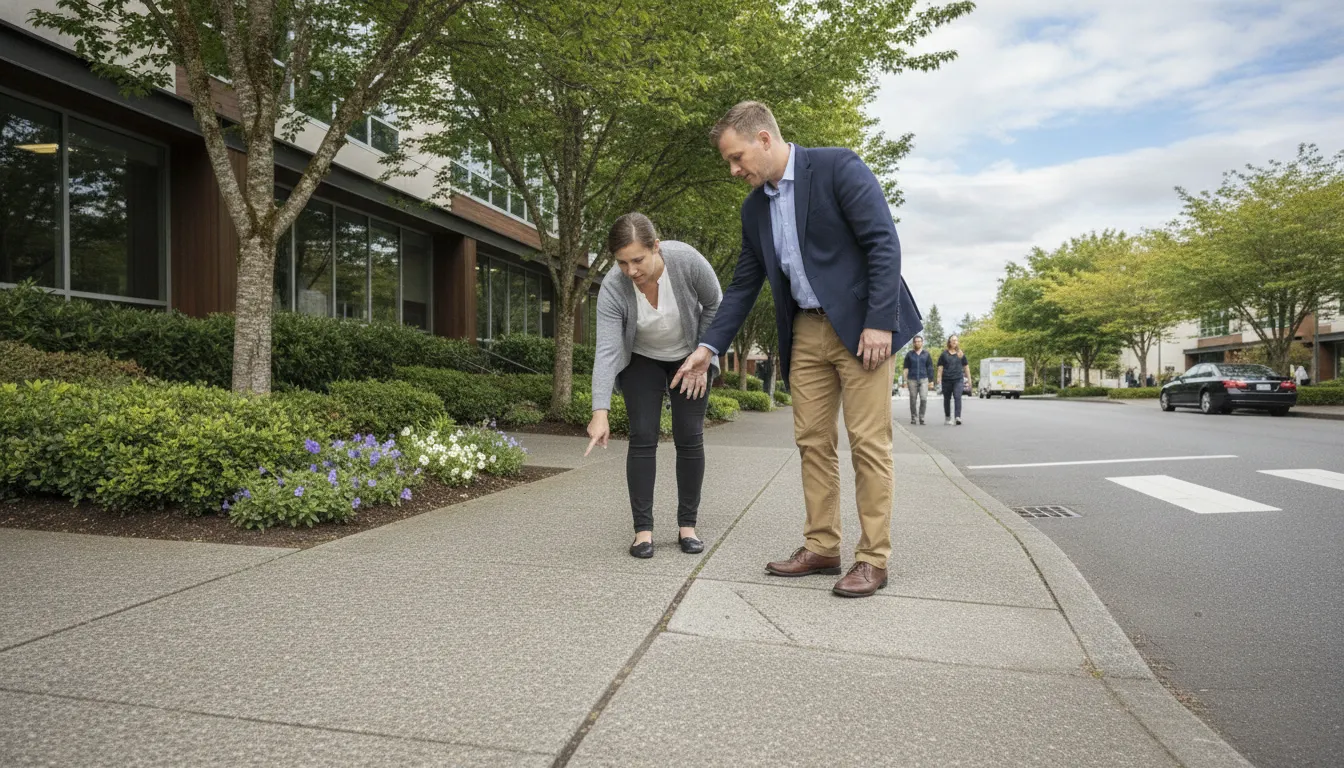
Field conditions matter as much as plan dimensions. Ground surfaces should be stable, firm, and slip resistant. Openings are subject to dimensional limits, and permitted changes in level must comply with the applicable standards. A displaced panel, abrupt joint, blocked route, or poorly connected curb ramp can therefore affect access even when the surrounding sidewalk appears serviceable.
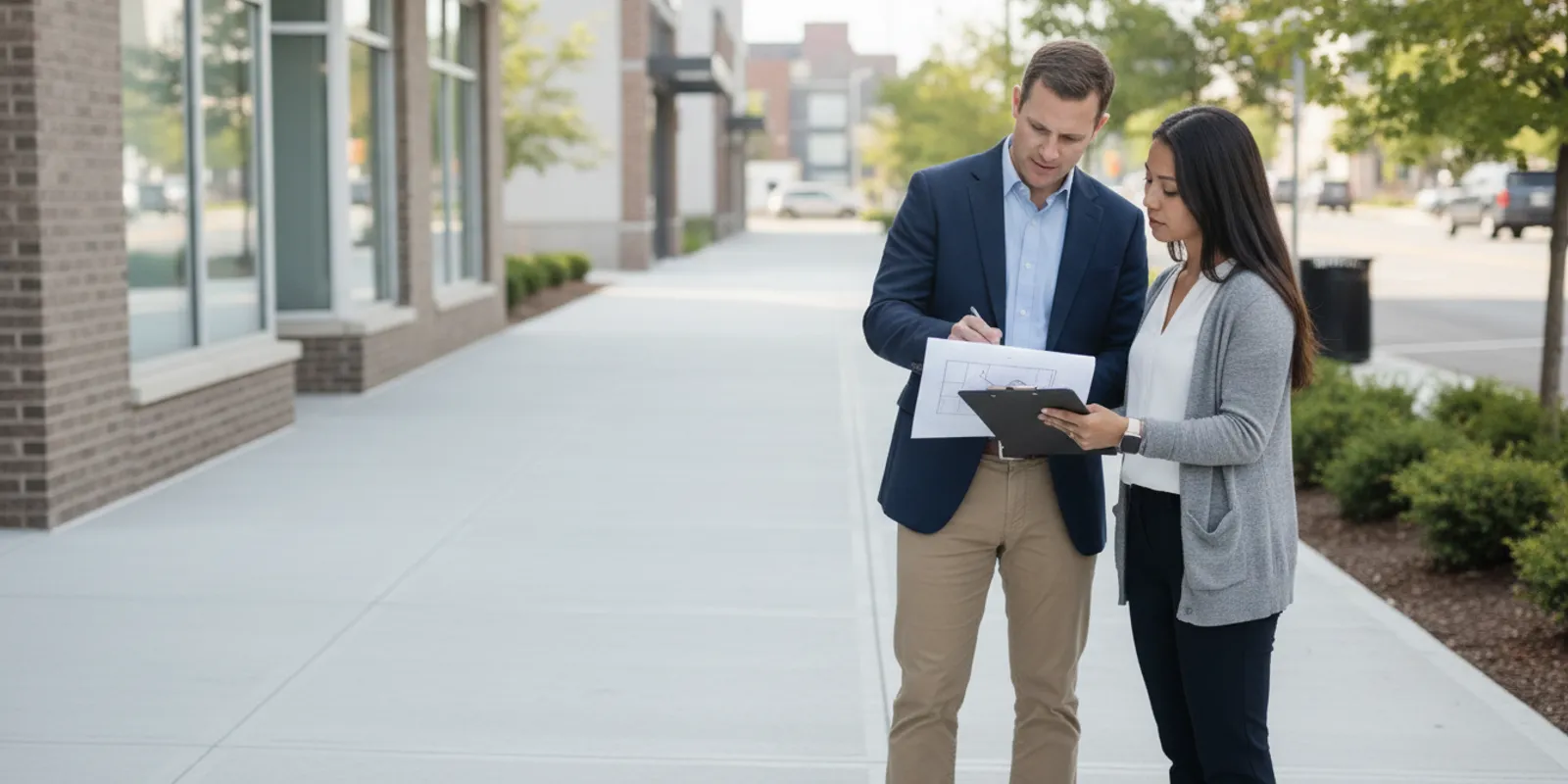
For a defensible maintenance decision, document the route, measure relevant conditions, photograph defects, and separate federal accessibility questions from Arizona or local code questions. Then coordinate with the owner, facility operator, and public agency when a route crosses property boundaries.
What Are the Most Common ADA Sidewalk Violations in Arizona?
For a commercial property manager, an ADA sidewalk review should look beyond one visible crack or raised panel. The accessible route must function as a continuous, unobstructed path from parking and public sidewalks to the facility entrance. Common findings involve changes in level, slope, inadequate width, blocked passage, damaged surfaces, and poorly connected curb ramps. Requirements can depend on whether the area is part of a commercial facility, a public right-of-way, or an altered route. Confirm Arizona-specific responsibility and project scope before repair decisions.
Issue | What to inspect | Property-manager response |
Changes in level | Raised or settled panels, abrupt transitions, and surface openings that interrupt smooth travel. | Photograph and measure the transition, identify the cause if possible, then prioritize precision repair or replacement based on route impact. |
Running and cross slope | Walking surfaces that feel unusually steep or tilted, especially near driveways, entrances, and transitions. | Have the route measured with appropriate tools. As a standards reference, accessible-route walking surfaces generally use a maximum running slope of 1:20 and cross slope of 1:48, subject to context and applicable provisions. |
Insufficient clear width | Landscaping, signs, vehicles, utility equipment, or site features narrowing the pedestrian path. ADA walking surfaces generally require 36 inches of clear width, with limited exceptions. | Remove movable obstructions, measure pinch points, and coordinate permanent changes with the owner or responsible agency. |
Surface obstructions and openings | Loose or unstable surfaces, grates, utility covers, and openings that catch mobility devices or create a trip concern. | Secure temporary hazards immediately and document a durable correction. Walking surfaces must be stable, firm, and slip resistant. |
Curb ramps and route continuity | Missing or poorly aligned ramps, steep transitions, blocked landings, or a route that stops before connecting parking, sidewalk, and entrance. | Trace the entire path of travel, not just the property frontage. Confirm which party controls each segment before scheduling work. |
Drainage and recurring movement | Standing water, erosion, settlement, root-related movement, and drainage paths that degrade the accessible route. | Record the condition after weather events and include drainage or underlying movement in the maintenance plan instead of treating the visible defect in isolation. |
These inspection findings are practical screening categories, not a substitute for a formal code evaluation. The Access Board identifies walking surfaces, curb ramps, and related components as parts of an accessible route. Connect measurements, photographs, ownership records, and repair priorities across the full route.
How Arizona Heat and Weather Affect Sidewalk Maintenance
Arizona exposure makes seasonal sidewalk review a practical part of property management. Heat, intense sun, monsoon rainfall, drainage patterns, tree roots, settlement, and movement at joints can affect how a walking surface performs over time. These conditions do not establish a single cause for every defect. They are reasons to inspect, document, and compare changes across the property.
The Arizona Geological Survey explains that expansive soils can swell when wet and shrink during hot, dry summers, with resulting soil-volume changes capable of affecting sidewalks and other infrastructure. Local conditions vary, so a property manager should treat this information as a reason for site-specific evaluation rather than assume every crack or uneven joint has the same explanation. Review the Arizona Geological Survey's soil guidance when movement appears recurring or widespread.
What to watch during seasonal inspections
- Surface changes:
Look for new vertical displacement, uneven joints, cracking, spalling, or openings that could affect a stable, firm walking route.
- Drainage:
Note ponding, concentrated runoff, washed areas, or blocked drainage paths after storms. Water patterns can help explain where follow-up assessment is needed.
- Roots and landscaping:
Check whether growing roots, irrigation, or landscape changes are lifting or shifting sections near the accessible route.
- Joints and settlement:
Photograph recurring locations from consistent viewpoints and record whether the condition is changing, not just whether it exists.
A simple seasonal record helps distinguish isolated maintenance needs from patterns that deserve broader planning. Property managers can use this Arizona sidewalk repair planning resource to organize inspections, responsibility checks, repair priorities, and documentation. After work, recheck the route and retain before-and-after records so future reviews begin with reliable site history.
A Property Manager's ADA Compliance Action Plan
A repeatable process turns sidewalk concerns into a manageable maintenance program. Use the following sequence to create a clear record, coordinate decisions, and plan work around site operations.
- Inventory the accessible routes.
Map the paths people use to reach entrances, parking areas, amenities, and other regularly accessed parts of the property. Include sidewalks, curb ramps, crossings, and connections between buildings. Record the route location, surface type, nearby obstructions, and any point where the path appears to lose continuity.
Inspect and measure conditions.
Walk each route deliberately rather than reviewing only the most visible defect. Look for changes in level, uneven joints, openings, drainage concerns, obstructions, and surfaces that are not stable or firm. Check clear width, running slope, and cross slope where conditions suggest a potential access issue. The
accessible route inspection checklist
can help standardize field reviews across multiple properties.
Photograph and document each finding.
Give every issue a precise location and a consistent identifier. Capture overview and close-up photographs, note measurements, describe how the condition affects the route, and record the date and reviewer. A
commercial sidewalk safety audit
provides a useful framework for combining observations, photos, and repair records.
- Rank priorities using evidence.
Separate conditions that interrupt an accessible route from lower-priority maintenance items. Consider route importance, severity, pedestrian exposure, recurrence, and whether several defects form one continuous problem. A documented priority list helps property teams defend budget requests and phase work without losing track of unresolved items.
- Confirm responsibility and local requirements.
Identify the property boundary, easements, shared access areas, and any segment that may fall within a public right-of-way. Review the lease, ownership records, municipal guidance, and project requirements with the appropriate owner, municipality, or qualified professional. Do not assume that every sidewalk segment has the same responsible party or regulatory treatment.
- Plan repairs and preserve the record.
Group related work by location and operational impact. Define the recommended treatment, access-management needs, budget estimate, sequence, and target timing. Keep the original inspection record attached to the work plan so the reason for each repair remains clear.
- Verify and report completion.
After work, revisit the route, photograph the completed condition, confirm that the planned issue was addressed, and record any remaining limitation or follow-up need. Update the property map and maintenance log so the next inspection begins with current information.
How Precision Concrete Cutting Supports Commercial Properties
For a commercial property manager, sidewalk work is more useful when it produces an organized maintenance record, not just a completed repair. Precision Concrete Cutting combines field assessment, precision cutting, verification, and sidewalk data management to help teams understand what needs attention, prioritize work, and document the result.
1. Assess and map the property
The process begins with a systematic review of walking areas, accessible routes, entrances, parking connections, and other pedestrian surfaces. PCC's survey system records GPS coordinates, hazard severity, and recommended repairs. That information gives property teams a location-based view of sidewalk conditions instead of relying on scattered observations or memory.
For a multi-building or multi-site portfolio, mapped records can also help managers compare priorities and plan work in stages. A severity-based approach makes it easier to address the most important hazards first while keeping future maintenance visible.
2. Remove trip hazards through precision cutting
After hazards are identified, PCC uses precision cutting to remove qualifying trip hazards while preserving existing sidewalk infrastructure where the process is appropriate. This approach can help commercial properties address changes in level without automatically treating every problem as a full removal-and-replacement project. The right repair method still depends on site conditions and the specific defect.
To explore the service approach, visit sidewalk safety assessment and precision cutting.
3. Verify and report the work
Completion should be documented in a way that another property manager, owner, or facility team can understand. PCC service records may include repair locations, before-and-after photos, and compliance verification. These records create a clearer connection between the original assessment and the finished work, while giving managers useful documentation for internal planning and follow-up.
4. Manage sidewalk data over time
Sidewalk conditions change as sites are used, maintained, and exposed to local environmental conditions. Keeping assessment records, severity ratings, recommendations, and completed repairs together supports an ongoing asset-management program. It also helps teams revisit unresolved items, coordinate future projects, and maintain a consistent history across a commercial property portfolio.
If you want to understand the condition of a commercial walkway before planning repairs, you can request a sidewalk assessment and confirm the appropriate next step for your property.
How Do You Maintain ADA Compliance After Repairs?
Repair work is only one part of an accessible sidewalk program. Conditions can change as routes are used, landscaping grows, drainage patterns shift, or nearby construction alters the path. A practical maintenance process helps property managers confirm that the intended accessible route remains usable and that completed work can be explained later.
Build recurring checks into property operations
Walk the primary routes that connect parking areas, entrances, amenities, and public sidewalks. Look for new changes in level, surface openings, drainage issues, loose materials, obstructions, and conditions that narrow the clear path. Include curb ramps and transitions, not just the repaired panel. The ADA Standards describe accessible routes as continuous and unobstructed, so a repair should be reviewed in the context of the full route.
There is no single inspection frequency that applies to every commercial property. Local requirements, site conditions, seasonal exposure, tenant activity, and the importance of each route may call for different schedules. Set a documented cadence that fits the property, and reassess it after severe weather, construction, landscaping changes, or a reported access concern.
Keep evidence that supports decisions
For each inspection, record the date, route or location, observed condition, photographs, measurements when relevant, and the action taken. Retain before-and-after images, repair history, work orders, and any follow-up verification. A location-based record makes it easier to identify recurring conditions, compare changes over time, and coordinate work across multiple properties.
When a new concern appears, rank it by route importance, severity, and effect on access. Confirm whether the property, a municipality, a utility, or another party is responsible before scheduling work. After repairs, repeat the route check and update the record. This turns ADA sidewalk compliance for an Arizona commercial property from a one-time project into a manageable maintenance practice.
Frequently Asked Questions
What is the ADA requirement for sidewalks?
Sidewalks that form part of an accessible route must provide a continuous, unobstructed path with stable, firm, and slip-resistant surfaces. Depending on the route and applicable standard, managers should evaluate changes in level, running slope, cross slope, clear width, openings, curb ramps, and route connections. The 2010 ADA Standards provide the governing federal requirements for covered commercial facilities.
What are the sidewalk laws in Arizona?
Arizona sidewalk responsibility can depend on the property location, the public agency involved, local ordinances, and whether work is new construction, an alteration, or routine maintenance. Arizona law includes provisions allowing certain municipalities to require sidewalk construction after notice, so a property manager should confirm responsibility with the applicable city or town before authorizing work. This article is practical guidance, not a legal opinion.
What is the most common ADA sidewalk violation?
Changes in level and surface defects are frequent issues because they can interrupt an otherwise continuous accessible route and create a trip hazard. Other recurring concerns include excessive slope, blocked or narrowed walkways, drainage-related deterioration, and curb-ramp problems. A documented site assessment is the best way to identify which conditions affect each property's accessible route.
Is ADA compliance mandatory for commercial properties?
Title III generally applies to businesses that serve the public, regardless of the building's age or business size. Covered businesses must provide people with disabilities an equal opportunity to access their goods and services, and the ADA requires removal of architectural barriers when doing so is readily achievable. Review the Department of Justice Title III guidance and obtain qualified legal advice for a property-specific determination.
Ready to Plan Your Sidewalk Assessment?
A documented sidewalk assessment can help property managers identify access concerns and organize repair priorities with less disruption to daily operations. Precision Concrete Cutting can review the condition of your commercial property's walkways and help clarify practical next steps.


Comments