Healthcare Campus Sidewalk Repair: A Complete Planning Guide
Updated: Oct 23
Medical facilities face intense scrutiny because their patients often struggle with mobility. A small crack or uneven surface can lead to a payout worth thousands of dollars. Maintaining safe walkways is now a core requirement for daily work and legal defense.
A healthcare campus sidewalk repair plan is vital for safety and ADA standards because medical visitors often have mobility problems that make small hazards dangerous. Ignoring these walkways leads to high legal risk, as seen in the 3,200 ADA lawsuits filed in California in 2024 and recent payouts reaching $18.5 million. A professional strategy uses precision cutting to remove trip hazards without the noise of heavy work, which keeps hospital entrances open for every patient. By using asset management instead of reactive fixes, facility managers can protect their budget while providing a safer environment for those who need it most. This proactive approach ensures long-term compliance and lowers the risk of injury for everyone visiting the medical grounds or outpatient clinics on the campus.
Managing a medical campus requires a constant focus on risk and patient access, as every uneven slab of concrete is a threat to the site budget. Understanding these specific legal and daily risks is the first step toward a safer environment for everyone who visits your facility.
Healthcare Campus Sidewalk Repair: Why Healthcare Campuses Need a Dedicated Sidewalk Repair Plan
Higher Standards for Patient Access
Healthcare centers do not face the same risks as a normal office park. These sites see many people with walking problems every day. Because patients often use wheelchairs or walkers,
is a top goal. US rules for access are very strict for health sites. Even a small bump can stop a patient from getting care. The checks on these campuses are high because visitors have walking needs. Small errors that might go unseen elsewhere can lead to big legal issues here. For instance, a faded parking sign is enough to trigger a formal ADA complaint. Beyond ADA laws, OSHA requires safe walking paths for both staff and the public. Site teams must watch high-traffic zones like ER areas and staff walkways to keep everyone safe.
The Growing Cost of ADA Lawsuits
The legal risks for healthcare campuses are growing fast. In 2024 alone, people filed 3,252 ADA lawsuits in California. These cases often target large campuses with many paths and parking zones. When a problem occurs, the costs add up quickly. A single event can lead to fines between $4,000 and $75,000. Costs to pay for these cases are also very high. The average ADA payout now sits at $47,500. Large cities and campuses face even bigger risks. For example, the City of Davis, California, lately agreed to an $18.5 million payout to fix its paths. Major cities like Los Angeles have set up large
to settle class action suits. These numbers show why a plan is a smart move.
Avoiding the Risk of Delay
It is easy to push off sidewalk work when care needs are high. Many health site leaders delay outside repairs because they seem less urgent. But waiting for a lawsuit to act is a costly mistake. A good plan ensures that you find and fix hazards before they cause a fall or a legal claim. By setting a clear schedule, you protect both your patients and your budget. A solid plan tracks every path and parking area. It helps you stay ahead of the high checks that health sites face. This proactive step helps you keep a safe and welcoming campus for all.
Common Sidewalk Hazards on Medical Campuses
Identifying Primary Trip Hazards
Medical campuses face high risks because patients often have mobility needs. The Americans with Disabilities Act (ADA) sets clear rules for safety. Any vertical rise of 1/4 inch or more is a trip hazard. On a hospital site, a small gap can stop a walker or cause a bad fall. These risks create safety gaps and legal problems for facility teams.
Healthcare sites must follow strict rules for all walking areas. The OSHA 1910.22 rule says that all paths must be kept in a safe state. When concrete slabs shift, they create uneven joints. These spots catch shoes and wheels very easily. Frequent checks are needed to find these hazards before they lead to a claim or a patient injury.
Facility managers should focus on wear in high-traffic zones. ER doors and clinic walks see the most use each day. A small crack today can become a large trip hazard next month. Using precision tools to cut these edges down is a fast way to fix the path. It keeps the surface smooth and safe for all visitors without the need for loud work.
Managing Drainage and Slope Compliance
Poor water flow is a big risk near ER entrances. When water stays on the path, it creates slip risks. This can lead to OSHA fines and unsafe conditions for staff. The sideways slope of the walk also matters for safety. All paths must have a cross slope of 2% or less to meet ADA sidewalk compliance standards.
If the path slopes too much, a wheelchair may pull to one side. This makes it hard for patients to stay in control. Our team uses precision cutting to fix these steep zones. We can create a 1:12 ADA-compliant slope. This gentle angle makes the path much easier to use for those with low mobility.
Good drainage keeps the concrete from failing early. Standing water can soak into the joints and wash away the dirt below. This causes the slabs to sink and tilt over time. By fixing the slope and the flow, you protect the walk and the people on it. It is a key part of healthcare campus sidewalk repair that keeps the site up to code.
Surface Stress From Heavy Traffic and Roots
Large medical sites often have heavy trucks and ambulances. This huge weight can crack and sink the concrete over time. Loading docks are common spots where heavy gear causes the ground to settle. These sunken slabs create deep holes and high edges. Such hazards are hard to see at night or during a storm.
Big trees also cause problems on healthcare grounds. As roots grow, they push up the concrete panels. This root growth can lift a slab by several inches. This is far past the limit for safe walking. Cutting these slabs down to a level state is much faster than replacing the whole area. It is also a cleaner way to work that does not bother patients.
Landscaping must be balanced with path safety. If trees are left to grow without care, they will ruin the walk. Regular cutting keeps the bumps from getting too high. This work is quiet and does not make much dust. It is the best choice for a quiet medical zone that needs to stay open for care all day long.
How to Assess Sidewalk Conditions on a Healthcare Campus
Keeping a large medical campus safe starts with a clear view of your walkway health. You need more than a quick look at your concrete paths. A detailed sidewalk condition assessment gives you a full map of every trip risk. This data is the only way to show that your paths meet the rules for walking surfaces set by OSHA. By finding risks early, you can plan repairs that fit your budget and keep patients safe.
A Five-Step Survey Method
A good survey follows a set path to find and record every risk. This system ensures that no small crack or shift in the path goes unseen.
Conduct a Full Site Walk.
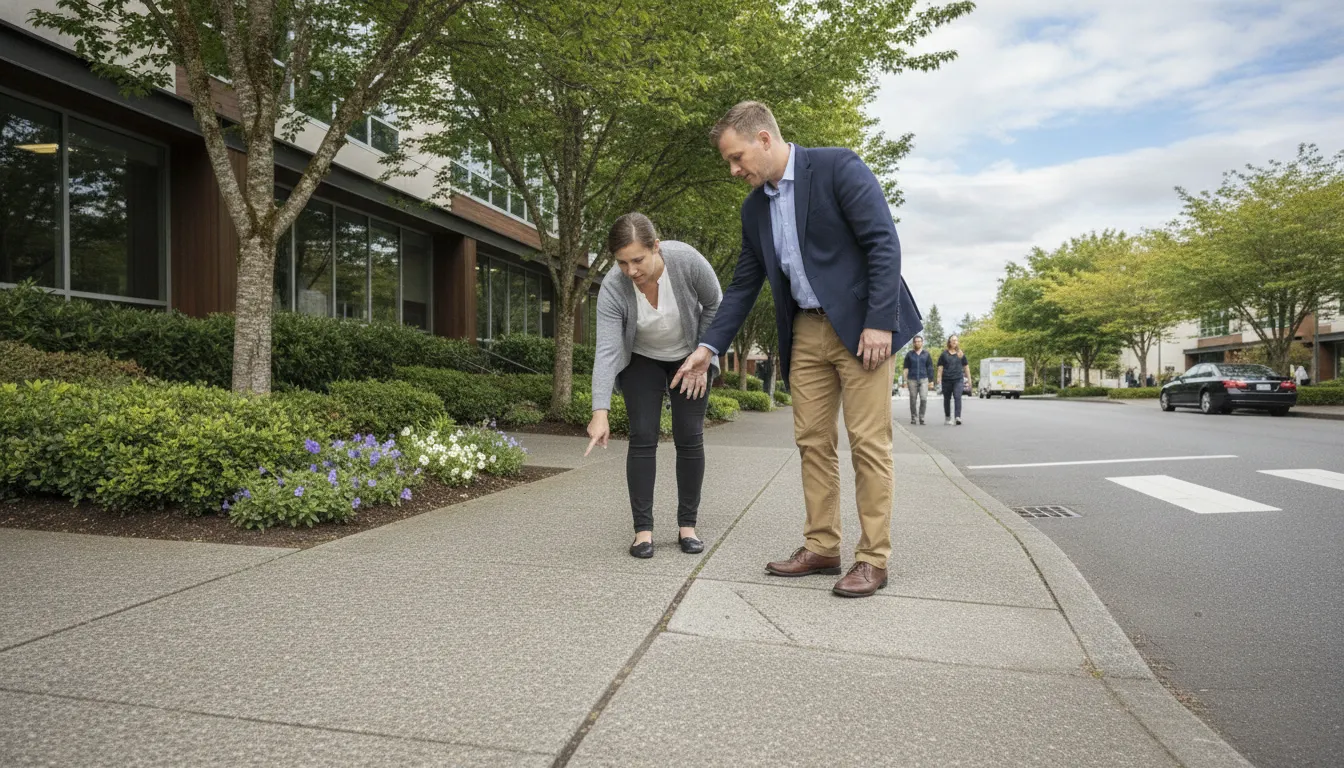
An expert walks every inch of your campus paths to find any shift that is 1/4 inch or higher. The
call these gaps hazards that you must fix to stay safe.
- Mark Risks with GPS Data.
Each hazard gets a GPS tag to help your team find the exact spot of a risk on a large campus. This also helps you plan which zones to close for work without blocking patient paths.
- Rank Risks by Size and Place.
A GPS survey logs each risk by its size and where it is on your site. This lets you fix deep gaps near the ER before you deal with smaller shifts in staff parking lots.
- Keep Clear Records of the Work.
Clean photos and data show the state of your concrete before and after any fix. This creates a paper trail that protects your site during a safety check or a legal case.
Review the Data in Real Time.
All findings go into a central system where you can look at all your
healthcare campus sidewalk repair
needs in one place. This makes it easy to set a clear timeline for your crews.
Using Data to Manage Your Site
Once the survey is done, you can track every panel and fix through the Terminal customer portal. This tool lets your staff see the status of your sidewalk projects from any office. The data comes in GIS-ready data formats that plug into your own campus maps. This link helps you treat your sidewalks as part of a total plan to manage your assets.
Start with a Free Expert Review
Keeping every walkway at an ADA-compliant slope is a top goal for any medical site. You do not have to do this work alone. Precision Concrete Cutting gives you a free on-site assessment to find your biggest safety risks. This report provides the facts you need to make smart choices about your sidewalk care and repair budget.
Sidewalk Repair Methods for Healthcare Facilities
Healthcare campus managers must choose the best way to fix trip hazards on their walkways. Most hospitals need a mix of speed, low cost, and full compliance. When you look at healthcare campus sidewalk repair, you will see four main ways to fix broken or uneven concrete. Each way has a different impact on your budget and patient access.
Precision concrete cutting
Precision cutting is the best choice for medical centers. This patented method uses a saw to cut through the concrete and remove the hazard. It reaches a 100% success rate for trip hazard removal and meets all ADA sidewalk compliance standards. Because it creates no dust and very little noise, it works well near patient rooms and clinic doors.
This method is very fast. You can reopen the sidewalk the same day the work finishes. The cost is also low. It is on average 80% less than what you would pay for full demolition and replacement. This allows professional trip hazard removal services to fix more panels in less time without blocking clinic paths.
Traditional repair methods
Grinding is a common but less helpful fix. It uses a metal wheel to wear down the concrete. This only removes about 30% of the hazard and leaves a rough surface. The NIST notes that surface texture impacts the friction of walking paths. Grinding often needs a new fix within three to seven years. It is loud and creates dust, which is a big risk for healthcare zones.
Mudjacking is another choice. It pumps a slurry under the slab to lift it. This method only fixes about 60% of trip hazards and the slab may sink again later. For full safety, some managers choose full demolition. But ADA.gov rules require paths to stay open or have clear detours. Demolition and replacement costs $10 to $25 per square foot and can close paths for two to four weeks.
Repair method comparison for healthcare campuses
Repair Method | Hazard Removal | Average Cost | Closure Time | Service Life |
Precision Cutting | 100% | Avg. 80% less | Immediate | Permanent fix |
Grinding | 30% | Low per unit | Immediate | 3-7 years |
Mudjacking | 60% | Medium | 1-2 days | 2-10 years |
Full Replacement | 100% | $10-25/sq ft | 2-4 weeks | 20+ years |
Building a Phased Sidewalk Repair Plan for Your Campus
A large medical campus has many zones that need care. Managing across many acres can feel like a huge task. You do not have to fix every path at once. By building a phased plan, you can fix the most dangerous spots first while you stay on budget.
Prioritize hazards by traffic and risk
The best way to start is by looking at where people walk most. Focus your repair plan on areas with the highest risk. Emergency room entrances and outpatient clinics should be the top priority. These areas see the most patients with mobility aids who need a flat surface. You can learn more from the ADA.gov site on access rules.
After you clear the main patient paths, you can move to parking garages and staff walkways. Use a sidewalk repair scope of work to rank each hazard by its height and spot. This data lets you fix the worst risks now and plan minor repairs for next year.
Predictable budgeting with fixed pricing
One of the biggest hurdles for medical teams is cost. Old concrete work is often hard to price. Pricing varies by region and site, so PCC quotes each project after a free assessment. This model makes it easy to know exactly what you will pay for each part of your campus. This is why many firms and schools use this system to keep paths safe.
This clear cost helps you plan your spending over many years. Since each project is quoted after a free assessment, you can choose exactly how many spots to fix in each phase. This way, you stay within your funds while you reach full compliance. It helps you manage your site as a whole asset.
Keep the campus open during work
Patient care cannot stop for sidewalk work. Heavy tools and loud noise can disrupt healing and staff tasks. PCC uses a method backed by 8 U.S. patents to remove trip hazards with very little mess. The system has a vacuum that keeps dust away from hospital air intakes.
The tools make very little noise, which is vital near patient rooms. Because the cutting method is fast, paths stay open. Most repairs are ready for foot traffic in just a few minutes. This speed lets you work around busy clinic hours without closing large parts of your campus.
Documentation and Compliance for Healthcare Sidewalks
Healthcare sites must keep clear records of their walkway safety. Precise data helps teams manage risks and meet strict rules. Proper records show a campus takes safety seriously. This proof can protect a hospital from legal claims if an accident happens on the grounds.
Protecting Your Campus from Legal Risk
Legal issues can be very costly for medical centers. A single ADA violation can cost between $4,000 and $75,000 according to federal rules. These fines do not include the cost of legal fees or payouts. Most medical sites face high scrutiny because many patients use wheelchairs or walkers. Detailed records of every repair help show that the facility works to stay safe.
A formal plan for repairs creates a paper trail for safety. It shows that you find and fix hazards before they cause harm. This proactive step is key for any healthcare campus sidewalk repair project. You can schedule a free sidewalk assessment to start your compliance record today. These files can be vital during a safety audit or in court.
Using the Terminal Portal for Data
Modern tools make it easy to track sidewalk work. The Terminal portal gives you a clear view of every repair on your site. It stores photos of the site before and after the work is done. It also tracks GPS points for every hazard that was fixed. This data helps facility managers stay organized and ready for inspections.
The portal also provides compliance papers for your records. These files confirm that the work meets all current safety laws. Precision Concrete Cutting leaves an ADA-compliant slope on every repair. Having these facts in one place saves time for busy hospital staff. You can see your project status in real time from any device.
Meeting Accreditation Standards
Accreditation groups often look at how a hospital manages its grounds. Safe paths are a big part of patient care and staff safety. Keeping your data in a digital portal makes it easy to share with board members. It shows that your campus uses the best tech to manage its assets. This level of detail helps build trust with patients and the public.
Good records also help with long-term budget plans. You can see which areas need the most work over time. This lets you spend money where it is needed most. Accurate data leads to better choices and safer walkways for everyone on the campus.
Frequently Asked Questions
How often should healthcare facility sidewalks be inspected?
Healthcare facility teams should check their sidewalks at least once every year. These regular checks help you find small trip hazards before they lead to an injury or a lawsuit. According to the sidewalk condition assessment guide, an annual survey using GPS mapping can track the health of every walkway on your medical campus. Frequent checks ensure your site stays safe for patients and visitors who may have trouble walking or use a wheelchair.
How much does healthcare campus sidewalk repair cost?
The cost of sidewalk repair on a medical campus depends on the repair style. Precision concrete cutting costs on average 80 percent less than full sidewalk replacement. While new concrete can cost $10 to $25 per square foot, cutting is much cheaper. This low price helps healthcare managers fix more hazards with the same budget. Using this method saves money while making sure your facility meets ADA sidewalk compliance standards and keeps all patients safe from falls.
Can sidewalk repair be done during active patient hours?
Yes, sidewalk repair can happen during busy patient hours. Patented cutting tools produce very little noise and dust while they work. This quiet process will not bother patients or doctors in nearby clinics. Since there is no wet concrete, walkways can open for use as soon as the cut is done. This same-day service is the best way for hospitals to fix trip hazards without closing main entrances or blocking patient access to care.
How can healthcare facilities minimize sidewalk repair disruption?
Facilities can reduce disruption by choosing precision cutting over full sidewalk replacement. Traditional concrete work requires loud tools and can block walkways for several days. Precision cutting is a clean and fast process that removes 100 percent of trip hazards. By choosing professional trip hazard removal services, healthcare teams can maintain a safe campus without the noise and mess of a large construction project. This method allows for immediate reopening of the sidewalk.
Schedule a free sidewalk assessment for your healthcare campus
Waiting to fix sidewalk trip hazards on your medical campus puts your patients at risk and opens your doors to costly ADA lawsuits and legal trouble. Every day you delay increases the chance of a visitor falling and sustaining a serious injury while maintenance costs for damaged concrete only continue to rise. You can save money and protect your good name by setting up a simple repair plan today that addresses every hazard before an accident can happen. Our team helps you map every risk and build a budget that works for your campus goals while ensuring your walkways meet all safety rules.
Ready to protect your medical facility? Call 1-877-224-0025 to schedule a free sidewalk assessment for your healthcare campus.



Comments