Concrete Slope Guide: Best Practices for Drainage
Updated: Oct 6
The difference between a concrete slab that lasts for decades and one that fails in a few years often comes down to a single detail: its slope. A proper concrete slope is a carefully calculated grade designed to channel water away from structures and prevent it from collecting on the surface. This isn't just about avoiding puddles after a rainstorm; it's about protecting the structural integrity of the concrete and the buildings it surrounds. When water has nowhere to go, it accelerates wear, encourages cracking, and creates unsafe conditions. Understanding how to plan and execute the right slope is essential for any successful concrete project.
Key Takeaways
- A proper slope is your first defense against water damage
: Every exterior concrete slab needs a slight grade, typically 1/4 inch per foot, to channel water away from building foundations and prevent pooling.
- Preparation determines your project's success
: Before pouring, you must grade the subbase to match the final slope and set strong, accurate forms, as this groundwork is essential for a stable, long-lasting surface.
- Stay proactive to maintain safety and function
: Regularly check for standing water after rain and seal small cracks as they appear. This simple maintenance prevents moisture damage and stops trip hazards from developing.
What Is a Concrete Slope and Why Does It Matter?
When you picture a new sidewalk or patio, you probably imagine a perfectly level surface. In reality, the best concrete work has a slight, carefully planned slope. A concrete slope is a subtle incline designed to guide water away from buildings and prevent it from pooling on the surface. Think of it as a built-in drainage system that works silently to protect your property.
The main reason this matters is water management. When rainwater or melting snow has nowhere to go, it sits on the concrete and can seep into the cut next to a building’s foundation. Over time, this can lead to serious and expensive structural damage. A proper slope is your first line of defense, directing water toward a designated drainage area like a street or a storm drain. For municipalities and property managers, ensuring correct sloping across all concrete surfaces is fundamental for maintaining safe, long-lasting infrastructure and preventing future repair costs.
How Proper Drainage Works
Exterior concrete slabs, from public walkways to private driveways, should never be completely flat. They need a gentle grade to let gravity do its job. This slope ensures that water flows off the surface instead of creating puddles. The industry standard for effective drainage is a slope of one-quarter inch per foot. This means for every foot the concrete extends horizontally, it should drop in elevation by a quarter of an inch. For example, a 10-foot-wide sidewalk should be two-and-a-half inches lower on one side than the other to achieve proper runoff. This guideline for exterior slabs is subtle enough not to be noticeable but effective enough to prevent water issues.
Common Problems Caused by Poor Drainage
When a concrete slope is incorrect or nonexistent, water will pool on the surface, leading to a host of problems. Standing water can accelerate the deterioration of the concrete itself, causing cracks, crumbling, and spalling. This damage not only looks bad but also creates uneven surfaces, which can become a serious trip hazard removal issue. In colder climates, this pooled water can freeze, creating slippery ice patches and causing further damage as the ice expands and contracts. Beyond the concrete, standing water can also lead to mold, rot, and an ideal breeding cut for mosquitoes, creating both health and safety concerns for the public.
The Impact on Urban Infrastructure
On a larger scale, improper drainage across a city’s sidewalks and public spaces can strain the entire urban infrastructure. As cities expand, aging drainage systems are already under pressure. When countless concrete surfaces fail to manage runoff effectively, it contributes to localized flooding and overburdens storm drains. According to recent studies on urban drainage challenges, this is a growing concern for municipalities everywhere. Managing these systems requires innovative solutions and proactive maintenance. By ensuring every new and repaired sidewalk has the correct slope, cities can build more resilient infrastructure, reduce long-term maintenance costs, and create safer environments for their residents.
What Is the Recommended Slope for Concrete Surfaces?
Getting the slope right isn’t a one-size-fits-all process. The ideal grade for your concrete surface depends entirely on its purpose. A gentle slope that works perfectly for a patio could be a safety issue on a public walkway or a driveway. Understanding the specific recommendations for different areas is the first step toward a safe, durable, and effective installation that properly manages water runoff and meets all necessary standards.
Sidewalks and Walkways
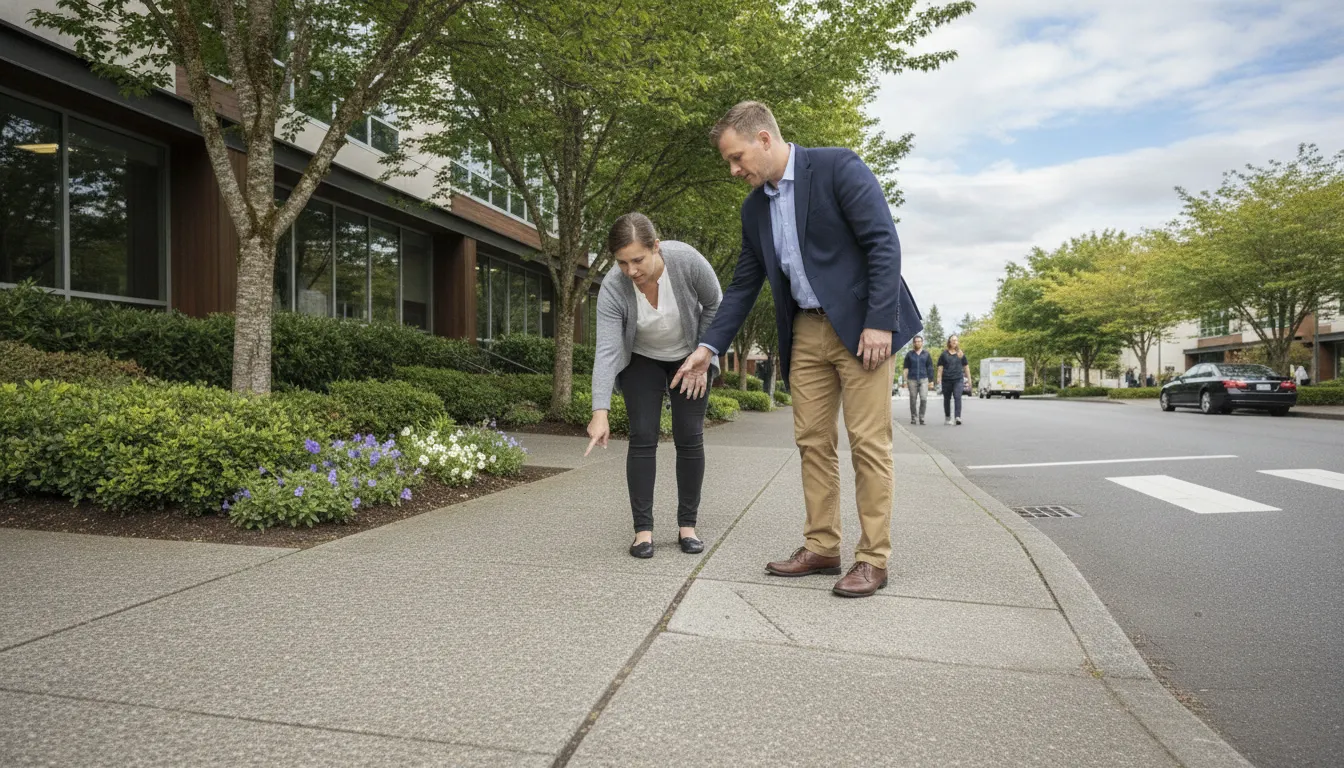
For sidewalks and walkways, proper drainage is key to preventing pooling water, which can lead to ice in the winter and deterioration over time. A good rule of thumb is that a four-foot-wide walkway running alongside a building should drop one inch away from the structure. For a path that extends straight out from a building, a slope of 1/4 inch per foot is the standard. Following these guidelines helps direct water away from foundations and prevents the formation of trip hazards caused by standing water or uneven settling.
Driveways and Parking Lots
When it comes to surfaces that handle vehicles, safety is the top priority. The maximum recommended slope for a driveway is typically 15%. Anything steeper can make it difficult for cars to maintain traction, especially during icy or snowy weather. This grade is steep enough to ensure water drains away efficiently from the pavement and any adjacent structures, but it’s gentle enough to allow for safe vehicle passage. For larger commercial lots, a consistent, carefully planned grade is essential for managing large volumes of water and preventing liability issues.
Patios and Outdoor Spaces
Patios and other outdoor living spaces also need a slight slope to keep water from collecting near your home’s foundation, where it can cause significant damage. A common guideline for a concrete patio is to create a drop of about 2.5 inches for every 10 feet it extends from the house. This subtle incline is usually unnoticeable to the eye but is highly effective at channeling rainwater away from the building. This protects your foundation, prevents basement leaks, and keeps your outdoor space usable even after a storm.
Meeting ADA Compliance Requirements
For public spaces, ensuring accessibility is non-negotiable. When creating ramps or accessible routes, it's critical that the concrete slope adheres to strict guidelines. The cut and foundation beneath the concrete must be graded precisely to match the required slope, creating a smooth and safe path for everyone. Properly graded surfaces are a cornerstone of creating ADA-compliant sidewalks and accessible public areas. This not only ensures you meet legal requirements but also fosters an inclusive environment for people with mobility challenges.
How to Calculate and Create the Right Slope
Getting the slope right from the beginning is the key to a long-lasting and safe concrete surface. A proper slope prevents water from pooling, which can lead to cracks, erosion, and dangerous ice patches in the winter. It’s a foundational step that protects your investment and prevents the need for premature repairs. Whether you're managing a municipal project or a commercial property, understanding the fundamentals of slope calculation and site preparation will help you ensure the job is done correctly. This process involves a bit of math, the right tools, and careful groundwork before any concrete is poured. By focusing on these details, you can create a durable surface that effectively manages water and remains safe for everyone who uses it.
Calculating the Correct Slope
Let's start with the math, which is simpler than it sounds. The standard rule of thumb for effective drainage is to create a slope with a 1/4 inch drop for every foot of length. For example, if you’re pouring a concrete walkway that extends 12 feet from a building, you'll want the far end to be 3 inches lower than the end closest to the building (12 feet x 1/4 inch per foot = 3 inches). This gentle angle is enough to guide water away without being too noticeable. In most situations, a minimum slope of 2% is recommended, which is the same as that 1/4 inch per foot. For areas with less rainfall, a 1% slope, or 1/8 inch per foot, might be sufficient.
Essential Tools and Materials
You don’t need a lot of complicated equipment to set a proper slope, but you do need the right tools for the job. The most important items are stakes, string lines, and a level. You’ll use stakes and a tightly pulled string line to create a visual guide for the top of your concrete pour. This line will represent your final slope. A torpedo level or a longer builder's level helps you check your work as you go, ensuring the angle is consistent across the entire area. For projects with very steep grades, a specialized method like shotcrete, where concrete is sprayed on, can provide more control and prevent the mix from sliding downhill.
Preparing Your Site and Subbase
Proper site preparation is where a successful concrete project truly begins. Before you pour, you need to prepare the cut underneath, known as the subbase. This isn't just about clearing the area; it's about creating a stable and correctly angled foundation for the concrete. The subbase, which is often made of compacted gravel, must be graded to match the intended slope of the final surface. If the subbase is flat, your concrete will be, too, regardless of how you shape the top. Taking the time to compact the cut and ensure the foundation is built at the correct angle is essential for preventing future issues like cracking and settling, which often lead to the need for trip hazard removal.
Best Practices for Pouring Concrete on a Slope
Pouring concrete on a slope requires a bit more finesse than working on a flat surface, but getting it right is essential for safety, durability, and proper water management. The key is to control the concrete from the moment you pour it until it's fully cured. This involves careful preparation of your forms, using the right concrete consistency, and applying the correct finishing techniques. When done correctly, a sloped concrete surface will effectively channel water away from buildings and prevent pooling, which is critical for maintaining safe and accessible pathways.
Whether you're installing a new sidewalk, driveway, or patio, these practices will help you achieve a professional result that lasts. By focusing on a few key details during the pouring and finishing stages, you can prevent common problems like uneven surfaces and uncontrolled water runoff. This attention to detail not only protects your property but also ensures the long-term integrity of your concrete work, reducing the need for future repairs and maintenance.
Forming and Reinforcing Sloped Concrete
Your project's success starts with the setup. Before any concrete is poured, you need to build strong forms that will hold the wet concrete in place and guide its final shape. Use a level and stringline to set your forms precisely, ensuring you create the exact slope needed for effective drainage. This step is non-negotiable, as it dictates where water will go. Proper forming is also the first step in creating safe, ADA-compliant sidewalks that are free of hazards. Reinforcing the slab with rebar or wire mesh will add strength and help prevent cracking over time, especially on a slope where the cut may shift.
How to Keep Concrete from Sliding
The biggest challenge when pouring on a slope is gravity. To keep the concrete from running to the bottom, you need to use a stiffer, less watery mix. This "low-slump" concrete is thick enough to hold its shape better as you work. Always begin pouring at the lowest point of the slope and work your way up. This technique allows the freshly poured concrete to support the material above it, preventing it from sliding downhill. For very steep grades, a method called shotcrete, where concrete is sprayed on with a hose, can provide even greater control over placement and thickness.
Adding Control Joints and Drainage
A well-planned slope is your best defense against water damage. The primary goal is to direct water away from building foundations, where it can cause leaks and costly structural issues. A minimum slope of 1/4 inch per foot is the standard recommendation to ensure water flows away effectively. You should also add control joints every few feet. These planned grooves create weak points that encourage the concrete to crack in a straight, predictable line as it cures and settles. This simple step prevents random, unsightly cracks and helps avoid future trip hazard removal projects.
Getting a Smooth Finish on a Slope
Patience is key to achieving a smooth, professional finish. After pouring the concrete and leveling it with a screed board, you need to let it sit. This waiting period allows bleed water to evaporate from the surface and lets the concrete stiffen slightly. If you start finishing with a trowel too soon, you can weaken the surface and create a messy finish. Once the concrete has firmed up, you can begin smoothing it with a float or trowel, working from the bottom of the slope upwards. This ensures you create an even, non-slip surface that is both safe and durable.
Common Mistakes to Avoid When Creating Concrete Slopes
Pouring a concrete slope might seem simple, but a few common errors can lead to serious issues down the road, including drainage problems, cracks, and safety hazards. Getting it right the first time saves you from costly repairs and ensures your concrete surface is safe, functional, and durable for years to come. By understanding these frequent missteps, you can plan your project more effectively and achieve a professional result.
Getting the Slope Angle and Direction Wrong
One of the most critical mistakes is creating a surface that is either too flat or sloped in the wrong direction. Exterior concrete slabs, from patios to walkways, should never be perfectly level. They need a slight grade to guide water away and prevent it from pooling. The absolute minimum slope for proper drainage is typically 1/8 inch per foot. Just as important is the direction of the slope. Water should always be directed away from building foundations and toward a designated drainage area, like a street or drain. An incorrect slope not only causes water damage but can also create non-compliant surfaces that require professional correction to meet ADA standards.
Common Subgrade Preparation Errors
What’s underneath your concrete is just as important as the concrete itself. The cut layer, or subgrade, must be properly prepared and compacted before you pour. Skipping this step is a recipe for disaster. A poorly compacted subgrade can settle unevenly over time, causing the concrete slab above it to crack, sink, and create dangerous uneven surfaces. If the concrete isn't sloped correctly due to a faulty subbase, water will sit and pool on the surface. This standing water can lead to mold, attract mosquitoes, and even cause rot if it’s near wooden structures. Over time, these issues can develop into significant problems that require professional trip hazard removal.
Ignoring Weather and Timing
Concrete is sensitive to its environment, especially while it’s curing. Pouring on a day that’s too hot, too cold, or rainy can compromise the strength and finish of your slab. Always check the forecast and plan your pour for a mild, dry day. Another common mistake is rushing the setup. Before the concrete arrives, you need to ensure your forms are set correctly using a level and stringline to create the exact slope you need. For projects on a steeper incline, you may even need to use specialized methods like a dry pack mix to keep the concrete from sliding. Rushing the process or ignoring the weather can undo all your careful planning.
How to Test and Maintain Your Concrete Slope
Once your concrete is poured, your work isn’t quite done. Proper maintenance and regular testing are key to ensuring your sloped surfaces function correctly for years to come. A well-maintained slope prevents water damage, protects the integrity of the concrete, and keeps walkways safe for everyone. By staying proactive, you can catch small issues before they become costly problems, extending the lifespan of your pavement and ensuring it remains compliant and safe. These simple checks and maintenance habits will help you protect your investment and avoid future headaches.
Testing for Proper Drainage
You don’t need complex equipment to check if your concrete has the right slope. A simple visual inspection after it rains is a great start. Look for any areas where water pools instead of flowing away. For a more precise check, you can use a long level and a tape measure. A good rule of thumb is that a concrete surface should drop about 1/4 inch for every foot of length. So, a 10-foot walkway should be about 2.5 inches lower at its end than it is at the beginning. This simple drainage calculation helps ensure water is directed away from foundations and off walking surfaces effectively.
Recognizing Signs of Drainage Problems
Poor drainage leaves behind obvious clues. The most common sign is standing water that remains long after a storm has passed. You might also notice discoloration, moss, or algae growth in damp areas. Over time, this constant moisture can cause serious damage to the concrete itself, leading to cracks, crumbling, or a condition called spalling, where the surface flakes away. These issues not only look bad but also create dangerous, uneven surfaces. When water freezes in these damaged spots, it expands, making the problems worse and creating significant slip and trip hazards that could lead to liability issues.
Poor drainage can quickly undermine the soil beneath your walkways, which is why prompt trip hazard removal in Washington is essential to prevent pooling water from causing further damage during heavy rain seasons.
Using Modern Materials for Better Results
Innovations in concrete technology offer new ways to manage water runoff. One of the most effective options is permeable concrete, which is designed with a porous structure that allows water to pass directly through it and into the cut below. This approach is especially useful for large surfaces like parking lots and plazas, as it reduces storm runoff and can help replenish local groundwater. Using innovative materials like pervious concrete can be a smart, sustainable solution for managing drainage in an environmentally friendly way, often helping properties meet local environmental regulations.
Long-Term Maintenance and Repair Tips
Consistent maintenance is the best way to preserve your concrete slope. Start by regularly cleaning the surface to remove leaves, dirt, and other debris that can block water flow and clog drainage paths. It’s also a good idea to inspect for and seal any small cracks as soon as they appear to prevent water from seeping in and causing further damage. Periodically measuring the slope ensures it hasn't shifted due to cut settlement. If you find uneven sections or trip hazards, it’s time to call in professionals for an assessment and precise trip hazard removal to restore safety and function.
Related Articles
Frequently Asked Questions
My existing sidewalk has pooling water. Can the slope be fixed without replacing the whole thing? In many cases, yes. You don't always have to resort to a full replacement, which can be expensive and disruptive. If the issue is localized, professional concrete repair services can often correct the problem. Techniques like Concrete Cutting can precisely remove high spots to improve the grade and eliminate areas where water collects. This approach is often a cost-effective way to fix drainage issues and remove any resulting trip hazards.
Is the 1/4 inch per foot slope a strict rule for all surfaces? Think of it as a reliable starting point, not a rigid law. The 1/4 inch per foot guideline is the industry standard for most walkways and patios because it effectively drains water without being noticeable. However, the ideal slope really depends on the surface's use. For example, an accessible ramp for ADA compliance has very specific, gentler slope requirements, while a long driveway might need a slightly different grade to manage water runoff safely for vehicles.
How exactly does an incorrect slope create a trip hazard? An incorrect slope leads to trip hazards in a couple of ways. First, pooling water can cause the concrete to deteriorate, creating cracks, spalling, and uneven surfaces over time. Second, in colder climates, that standing water freezes into slick ice patches, creating a slip hazard. The most direct issue is when the cut settles unevenly due to poor water management, causing one concrete slab to sink lower than its neighbor and creating an abrupt, hazardous edge.
What's the single most important step to get the slope right from the start? If you have to pick just one, it’s preparing the subbase correctly. The cut underneath the concrete is the foundation for your entire project. If the subbase isn't compacted properly and graded to match the intended final slope, the concrete on top doesn't stand a chance. A flat or poorly prepared subbase will cause the concrete to settle unevenly, leading to cracks, poor drainage, and safety issues down the line.
Besides drainage, are there other reasons why a proper slope is so important for public walkways? Absolutely. For public spaces, a correct and consistent slope is fundamental for accessibility. It ensures that walkways are safe and usable for everyone, including people who use wheelchairs, walkers, or other mobility aids. Adhering to proper grading is a key part of meeting ADA requirements, which helps you create an inclusive environment and avoid potential legal issues related to non-compliance.



Comments