Sidewalk Repair for Property Managers: A Complete Guide
Updated: 19 hours ago
Managing walkway hazards across multiple commercial properties requires a reliable system to protect both tenants and budgets. Sidewalk repair for property managers starts with a professional assessment to identify hazards, prioritize repairs, and establish a plan that keeps your properties safe without disrupting daily operations. Request a free sidewalk assessment today and learn how precision cutting can reduce your liability while saving on average 80% compared to concrete replacement.
Sidewalk repair for property managers is the strategic process of identifying and fixing uneven walkway hazards to maintain safety, ensure ADA compliance, and reduce liability. It combines regular inspections, precision concrete cutting instead of full-slab replacement, and phased multi-site planning to protect tenants and property owners alike.
This comprehensive guide walks property managers through every step of sidewalk safety management: from triaging reported hazards and choosing the right repair method to building a multi-site budget plan and selecting a qualified contractor. Let us start by examining why sidewalk hazards demand immediate attention.
Sidewalk Repair for Property Managers: Why Can't You Afford to Ignore Hazards?
Property managers face a hidden risk every day on their walkways. Uneven concrete slabs create trip hazards that threaten tenant safety and expose property owners to legal action. According to the Federal Highway Administration, sidewalk tripping is among the most common causes of premises liability claims. These claims can result in significant financial losses from settlements, legal fees, and increased insurance premiums.
The financial impact of a single trip-and-fall incident far exceeds the cost of proactive sidewalk repair. Beyond the direct cost of a settlement, property managers may face higher insurance rates and damage to their professional reputation. Tenants who feel unsafe may choose to leave, creating turnover costs that add to the financial burden. Neglected sidewalks also indicate poor property management to inspectors and prospective tenants.
Precision Concrete Cutting offers sidewalk repair for property managers that costs on average 80% less than traditional demolition and replacement. By addressing hazards early, you avoid the compounding costs of emergency repairs, legal claims, and insurance hikes that come from deferred maintenance. Schedule your free sidewalk assessment now.
How Should Property Managers Respond to a Trip Hazard Report?
When a tenant, visitor, or delivery driver reports an uneven sidewalk, your response time and process matter. A structured triage protocol ensures every hazard is assessed consistently, documented properly, and resolved efficiently.
Step 1: Secure the Area and Document the Hazard
Dispatch a team member to the location immediately and place temporary warning signage or barricades. Take photographs from multiple angles including a reference measurement showing the vertical displacement. Record the exact location, date, time, and the name of the person who reported it. This documentation serves as your first line of defense if an incident occurs before repairs are completed.
Step 2: Assess Severity Using ADA Standards
Measure the vertical displacement at the highest point of the raised edge. Per the ADA 2010 Standards, vertical changes exceeding 1/4 inch on accessible routes require correction. The EMC Insurance technical sheet recommends documenting additional thresholds: cracks wider than 3/4 inch and deeper than 1/2 inch. 50% or more spalling on a slab section, and ponding water deeper than 1/4 inch. Use these thresholds to classify the hazard as critical, high, medium, or low priority.
Step 3: Determine Immediate Protective Measures
For high-priority hazards in high-traffic areas, implement temporary measures such as temporary ramps, tape marking, or redirecting pedestrian traffic. Document these measures with photographs and notes. This shows good faith effort to protect pedestrians while a permanent repair is scheduled.
Step 4: Prioritize Based on Risk Level and Foot Traffic
Not every trip hazard requires the same urgency. Hazards in high-traffic areas near building entrances, parking lots, and accessible routes come first. Then address medium-priority hazards in moderate-traffic areas, followed by low-priority issues in low-traffic zones. This phased approach allows you to allocate budget effectively.
Step 5: Contact a Specialized Contractor
Once you have classified and documented the hazard, contact a contractor who specializes in trip hazard removal and ADA-compliant repairs. General concrete contractors often recommend expensive slab replacement because that is their standard process. A specialized firm uses precision methods that preserve the existing concrete.
Step 6: Document Every Action for Liability Defense
Maintain a complete record: the original report, inspection notes, photographs, contractor communication, the repair invoice, and post-repair compliance verification. This documentation demonstrates that you acted promptly and professionally, which is your strongest defense against liability claims.
Sidewalk Repair Methods: Precision Cutting vs. Full Replacement
Property managers must choose the best method for fixing uneven walkways. General contractors often push for full slab replacement because it generates more revenue. However, precision concrete cutting offers a dramatically better solution for most trip hazards.
The Problems with Slab Replacement
Slab replacement requires heavy equipment, noisy demolition, and days of work. Workers must break up old concrete, haul away debris, and pour new slabs. New concrete needs days to cure before pedestrians can use it. Heavy trucks can damage landscaping, adding unexpected costs. Finally, new concrete rarely matches the color of the existing walkway, creating an unattractive patchwork appearance.
The Precision Cutting Advantage
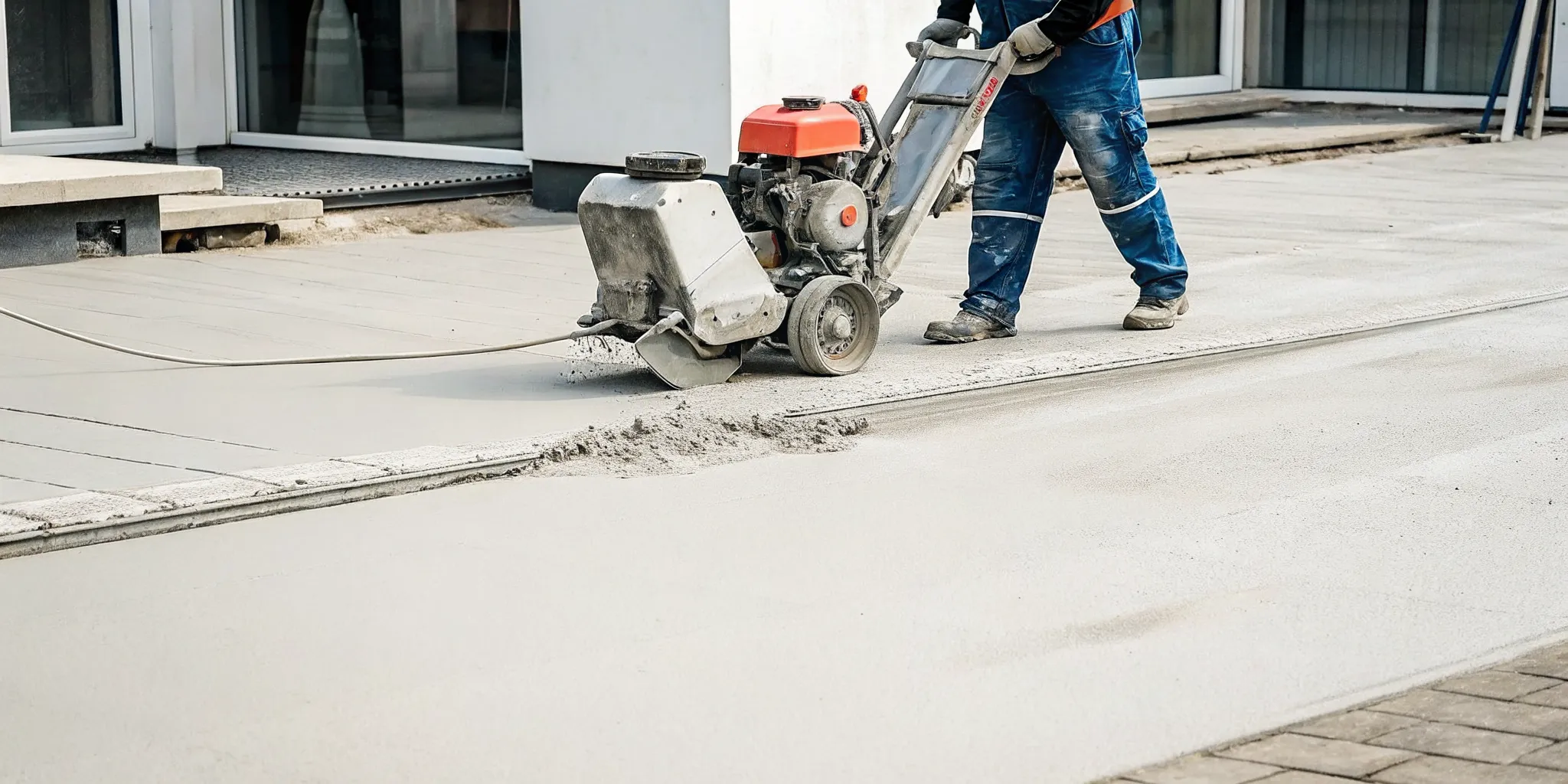
Precision concrete cutting is a clean, quiet alternative. Instead of breaking the slab, specialized equipment cuts the concrete to remove the trip hazard. This patented process keeps sidewalks open during the work with minimal noise. No waiting for concrete to dry. No tenant disruption. This method costs on average 80% less than full replacement and preserves the natural appearance of your walkways. For properties needing a quick trip hazard sidewalk repair, precision cutting is the right choice.
Meeting ADA Standards
The patented cutting process achieves a precise 1:12 slope on repaired transitions. Which complies with the ADA standard requiring ramp slopes no steeper than 1:12 on pedestrian access routes. This ensures your walkways meet strict ADA design standards for public safety without the waste, noise, and high cost of traditional replacement.
Comparison Feature | Precision Concrete Cutting | Traditional Slab Replacement |
Project Cost | Costs on average 80% less | Expensive due to labor and materials |
Disruption Level | Low, quiet, completed in hours | High noise lasting for days |
Walkway Closure Time | Open for use immediately | Closed for days during concrete cure |
ADA Compliance | ADA-compliant 1:12 slope | Slope often uneven |
Environmental Impact | Low carbon, zero concrete waste | High carbon, debris goes to landfill |
Visual Consistency | Preserves existing slab appearance | Mismatched new concrete patches |
For property managers evaluating their options, precision cutting clearly delivers superior results at lower cost while keeping tenants satisfied and walkways safe.
Building a Phased Multi-Site Repair Plan
Property managers overseeing multiple sites face a unique challenge: how to budget and schedule sidewalk repairs across an entire portfolio. A phased repair plan allows you to address the most critical hazards first while systematically working through lower-priority issues as budget allows.
Step 1: Inventory Your Sidewalk Assets
Build a complete inventory of every sidewalk section across all your properties. Record the location, approximate square footage, concrete age, and current condition. Include notes on previous repairs and any history of trip hazard complaints. This baseline inventory becomes the foundation of your maintenance program.
Step 2: Prioritize by Risk Severity and Foot Traffic
High-traffic areas near building entrances, parking lot walkways, and accessible routes serving people with disabilities should receive the highest priority. Use the 1/4 inch ADA vertical displacement threshold as your primary triage tool.
Step 3: Budget for Each Phase
Using your prioritized list, estimate the cost of each repair phase. Because precision concrete cutting costs on average 80% less than replacement, you can address more hazards within the same budget. Present your phased plan to property owners or board members with clear cost projections and safety justifications. Our guide on how to prioritize sidewalk repair provides additional planning frameworks.
Step 4: Use GIS Tools for Tracking
Geographic Information System (GIS) tools transform how property managers track sidewalk assets across multiple sites. GIS mapping provides a visual dashboard showing every hazard location, repair status, compliance certificate, and inspection date. Precision Concrete Cutting offers GIS-integrated data management that tracks every repair across your portfolio, giving you a comprehensive view of sidewalk health.
Step 5: Align Repairs with Capital Planning Cycles
Incorporate your phased sidewalk repair plan into your annual capital improvement budget. By scheduling repairs during planned maintenance windows, you minimize disruption and avoid emergency repair premiums. A well-structured plan protects your properties, your budget, and your professional reputation.
What Are the ADA Requirements for Sidewalk Repair?
Commercial properties must follow the Americans with Disabilities Act (ADA) to ensure safe public access. For property managers, keeping walkways clear of barriers is a key legal and business duty. Sidewalks are the core of any accessible route, connecting parking stalls to building entrances. If walkways have cracks or uneven joints, they can block access, trigger lawsuits, and lead to costly fines.
The Quarter-Inch Standard for Accessible Routes
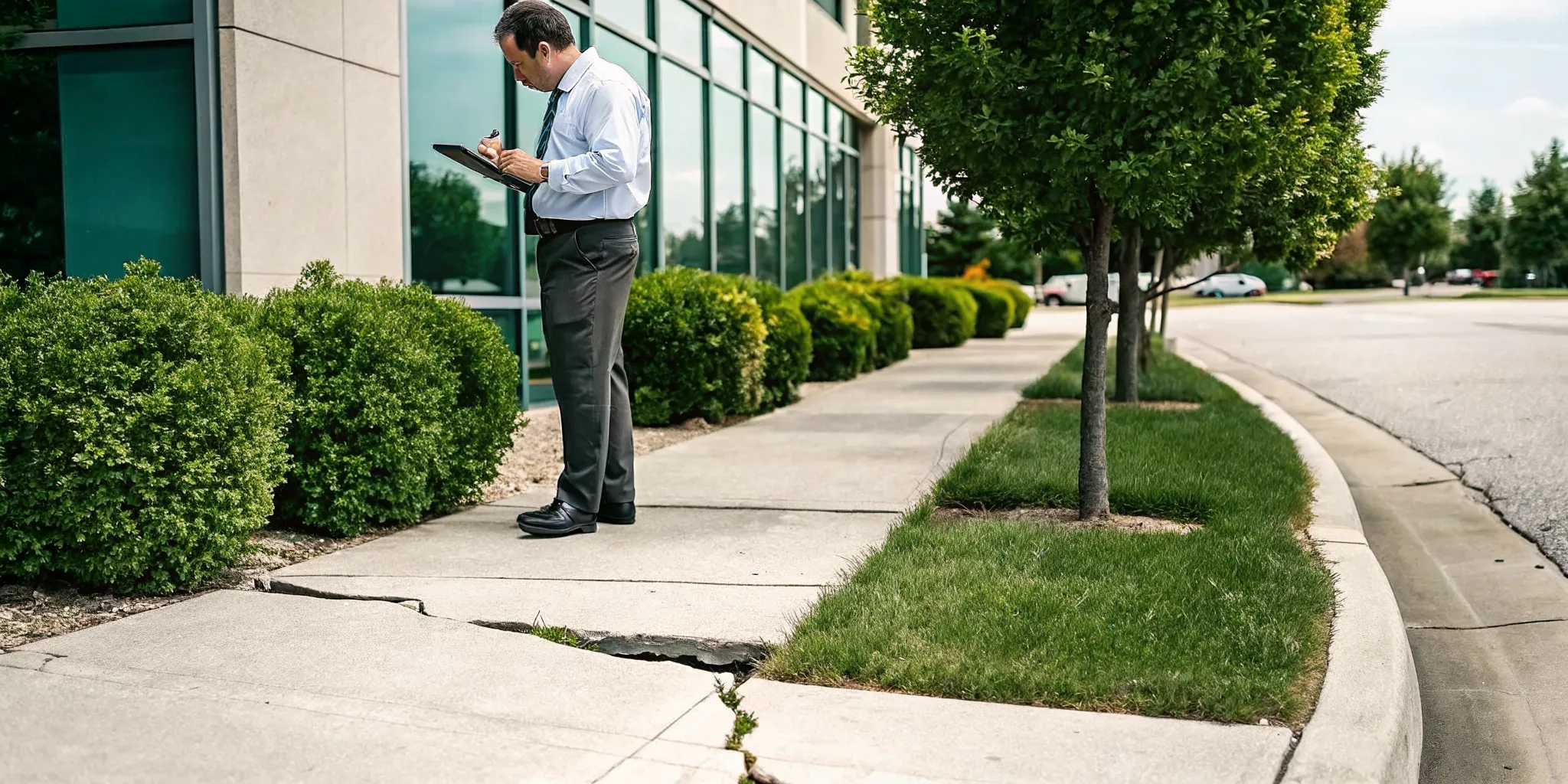
Federal rules define clear limits for safe walkway transitions. Under the ADA standards, vertical changes in level greater than 1/4 inch on pedestrian access routes require correction. Other thresholds to track include:
Vertical level changes greater than 1/4 inch on any accessible path
Cracks or gaps wider than 3/4 inch and deeper than 1/2 inch
Utility valves or other objects protruding 1/2 inch or more
Meeting the Ramp Slope Standard
For transitions that require a ramp, the ADA requires a maximum slope of 1:12 (one inch of rise for every 12 inches of run). Precision concrete cutting achieves this standard consistently by cutting raised edges to a smooth, compliant slope. Our specialized trip hazard sidewalk repair leaves an ADA-compliant slope, unlike general contractors who often recommend costly slab replacement without meeting precise slope requirements.
Demonstrating Good Faith Compliance
If a slip-and-fall accident occurs on your property, proper maintenance records are vital. Keeping clear files of sidewalk checks and repairs shows that you take safety seriously. Detailed compliance reports demonstrate good faith compliance, lowering insurance risks while keeping tenants safe. Explore our guide on how to prioritize sidewalk repair across your portfolio for more detail.
Documentation and Liability Protection for Sidewalk Repairs
Thorough documentation is not just a back-office task. It is a legal shield. When a slip-and-fall incident occurs, the quality of your records can determine whether you face a costly settlement or a dismissed claim. Comprehensive maintenance documentation demonstrates due diligence and can significantly reduce liability exposure.
Every sidewalk inspection, repair, and communication should be documented in detail. Create a standard inspection checklist based on the ADA 2010 Standards. Record the date, inspector name, specific location, vertical displacement measurements, and photographs from multiple angles. When a repair is performed, document the contractor name, repair method, before and after photos, and compliance certificates.
The EMC Insurance technical sheet recommends documenting: vertical displacement exceeding 1/2 inch (1/4 inch on accessible routes). Cracks wider than 3/4 inch and deeper than 1/2 inch, spalling affecting 50% or more of a slab, and ponding water deeper than 1/4 inch. Following these thresholds creates an objective standard of care that holds up in legal proceedings.
For property managers overseeing multiple sites, a centralized digital documentation system is essential. Cloud-based platforms and GIS-integrated tools allow you to track every inspection and repair across your entire portfolio. Precision Concrete Cutting supports property managers by providing comprehensive documentation with every job, including pre-repair photographs, post-repair measurements verifying ADA-compliant slopes, and a written record of every repair.
Treat documentation as a recurring operational process. Schedule quarterly file reviews, update your hazard registry after every inspection cycle. And store records in a format that is easy to retrieve during legal discovery or insurance audits. Good documentation is inexpensive insurance against expensive lawsuits.
How Do You Choose the Right Sidewalk Repair Contractor?
Vendor selection may be the most important decision in your sidewalk repair for property managers program. The right contractor delivers lasting repairs and proper documentation. The wrong one creates recurring hazards and liability exposure.
Prioritize specialized experience. General concrete contractors handle driveways and foundations. Few understand the specific requirements of sidewalk trip hazard repair. Look for a contractor who focuses exclusively on trip hazard removal and ADA compliance. They should demonstrate knowledge of ADA 2010 Standards, proper slope requirements, and the documentation needed for liability defense.
Verify their repair method. Ask prospective contractors precisely how they remove trip hazards. If their primary method involves demolition and repouring, you will pay significantly more and face longer disruptions. Contractors using precision cutting methods can complete repairs in hours at a fraction of the cost. A dedicated sidewalk repair vendor evaluation guide provides a scorecard you can use when comparing bids.
Check documentation practices. The right contractor provides before and after photographs, ADA compliance measurements, and a written record of every repair. If a contractor cannot offer thorough documentation, that is a red flag. Your liability defense depends on having a complete paper trail for every repair.
Ask about multi-site capacity. If you manage multiple properties, your contractor should handle phased work across locations. Ask about response times for emergency reports and how they coordinate with your property teams.
Frequently Asked Questions
How much does sidewalk repair cost for property managers?
Costs vary by method and severity. Precision concrete cutting costs on average 80% less than full slab replacement. For a typical trip hazard repair, expect significantly less per linear foot than demolition and repouring. Many contractors offer free assessments to provide accurate quotes based on your specific hazards.
Can the city make you pay for sidewalk repair?
In most jurisdictions, property owners are responsible for sidewalk maintenance and repair adjacent to their property. Some cities offer shared cost programs for ADA-compliant repairs. Property managers should check local municipal codes and factor sidewalk repair into annual operating budgets.
Will property insurance pay for sidewalk repair?
Standard commercial property insurance covers sudden and accidental damage but not gradual wear and tear like settling, cracking, or tree root displacement. Proactive sidewalk repair is an operating expense, but proper maintenance documentation reduces liability exposure and can help control insurance premiums over time.
How often should property managers inspect sidewalks?
Industry best practice recommends a formal inspection at least annually, with high-traffic areas inspected quarterly. After every seasonal weather event or known hazard report, conduct a targeted walkthrough. Consistent inspection schedules help catch trip hazards early when they can be resolved with simple precision cutting.
What is the ADA height requirement for sidewalk trip hazards?
The ADA 2010 Standards require that vertical changes on pedestrian access routes be no more than 1/4 inch. Changes between 1/4 inch and 1/2 inch must be beveled with a slope no steeper than 1:2. Any change exceeding 1/2 inch requires a ramp. Precision Concrete Cutting cuts each repair to an ADA-compliant 1:12 slope.
Take the Next Step Toward Safer Sidewalks
Managing sidewalk hazards across multiple properties does not have to be a constant source of stress. Precision Concrete Cutting brings over 20 years of specialized experience in trip hazard removal, with more than 30 million hazards removed since 2002. Our patented precision cutting process solves trip hazards quickly, quietly, and at a fraction of the cost of traditional replacement.
Every project leaves an ADA-compliant slope and comes with comprehensive documentation for your records. Whether you need a single repair or a phased multi-site plan, our team works around your schedule to minimize disruption to tenants and residents.
Call us today at 1-877-224-0025 to schedule a free sidewalk assessment for your properties. Or visit our services page to learn more about how precision concrete cutting can extend the life of your walkways while keeping them safe and ADA compliant.
Related reading: how to choose a sidewalk repair contractor.



Comments