School Campus Sidewalk Safety: Inspection and Repair Planning
School campus sidewalk safety depends on more than fixing a visible crack or raised panel. Facility teams need a repeatable way to inspect entrances, bus loading areas, cross-campus routes, and event spaces, then decide what to address first. A clear process helps protect accessible travel, coordinate work around the school calendar, and give district leaders useful records of decisions.
Which campus sidewalk areas deserve the closest attention?
Start with the routes people use most and the places where pedestrians have fewer alternatives. A campus map can help teams look beyond isolated sidewalk panels and consider how students, staff, families, and visitors move from one destination to another.
- Main entrances and accessible arrival routes:
Review paths connecting parking, drop-off areas, transit stops, and building entrances. Consider whether a person using a mobility device can follow a continuous route without being directed into vehicle areas.
- Bus loading and student drop-off areas:
Check the walk between the loading zone and school entry, including curbside paths and crossing points. These spaces become busy at predictable times and may have queues that obscure a walking surface.
- Cross-campus connections:
Inspect the links between classrooms, libraries, dining areas, athletic facilities, and parking. A route can be important even if no single segment appears especially busy.
- Outdoor gathering and event areas:
Review walkways serving auditoriums, stadiums, playgrounds, and assembly spaces. Events can bring unfamiliar visitors onto paths that receive less attention during a normal school day.
- Transitions and changes in direction:
Look closely at joints, transitions between materials, ramps, corners, and places where water or tree roots may affect the surface over time.
Use campus knowledge as well as a map. Ask custodians, transportation staff, teachers, and event coordinators where people detour, slow down, or report trouble. Their observations can help identify routes that need a closer inspection, but they should supplement—not replace—a consistent review process.
It can help to divide a large campus into manageable zones. Mark each building entrance, pedestrian crossing, loading area, and destination on a working map, then connect them with the routes people actually take. Include shortcuts students use between classes and paths that serve evening events, not just the route shown on a site plan. When a report comes in, staff can identify the affected route and nearby destinations rather than describing a location only as “outside the gym.”
How should a school team inspect sidewalks?
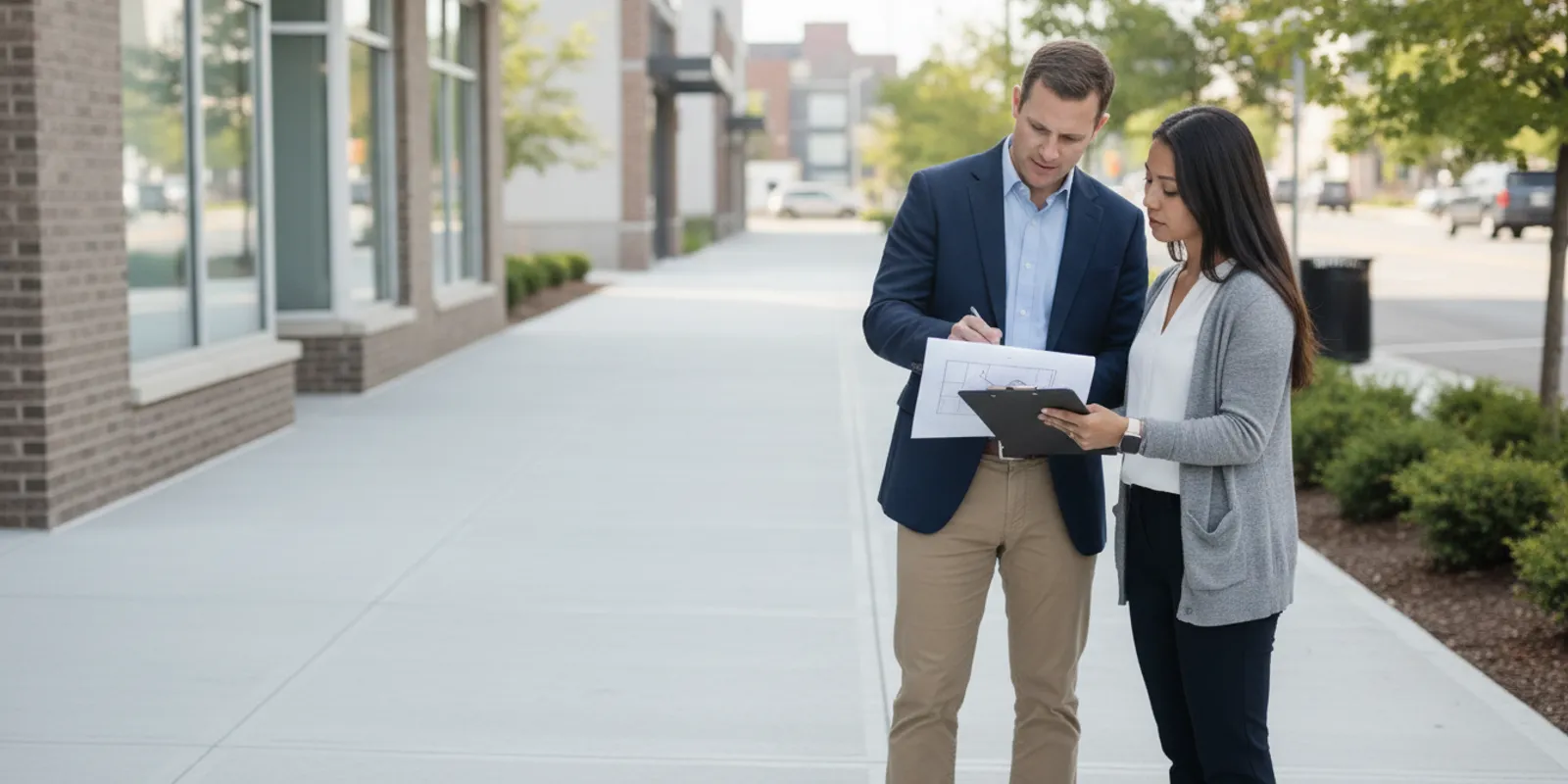
Choose a repeatable inspection method so that different staff members can record conditions in a consistent way. A school district might assign inspections to facilities personnel or coordinate them with a broader accessibility review. The Federal Highway Administration's research summary on pedestrian-facility maintenance describes the role of sidewalk inspection and maintenance policies. The useful takeaway for campus teams is to define how observations are made, recorded, and followed up.
- Set a route and schedule.
Walk each campus by zone, using the same route or map each time. Inspect high-use areas more frequently, and add a review after construction, severe weather, or a reported concern.
- Look at the whole path.
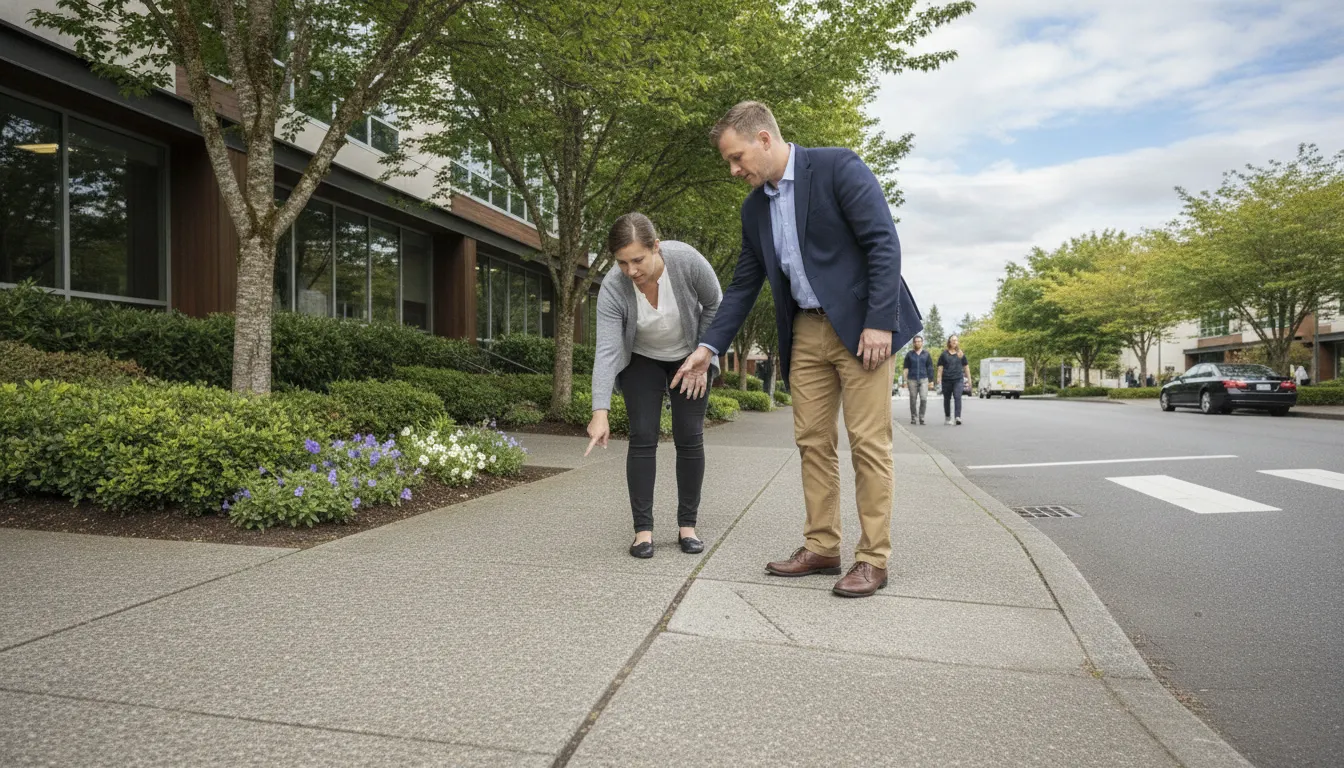
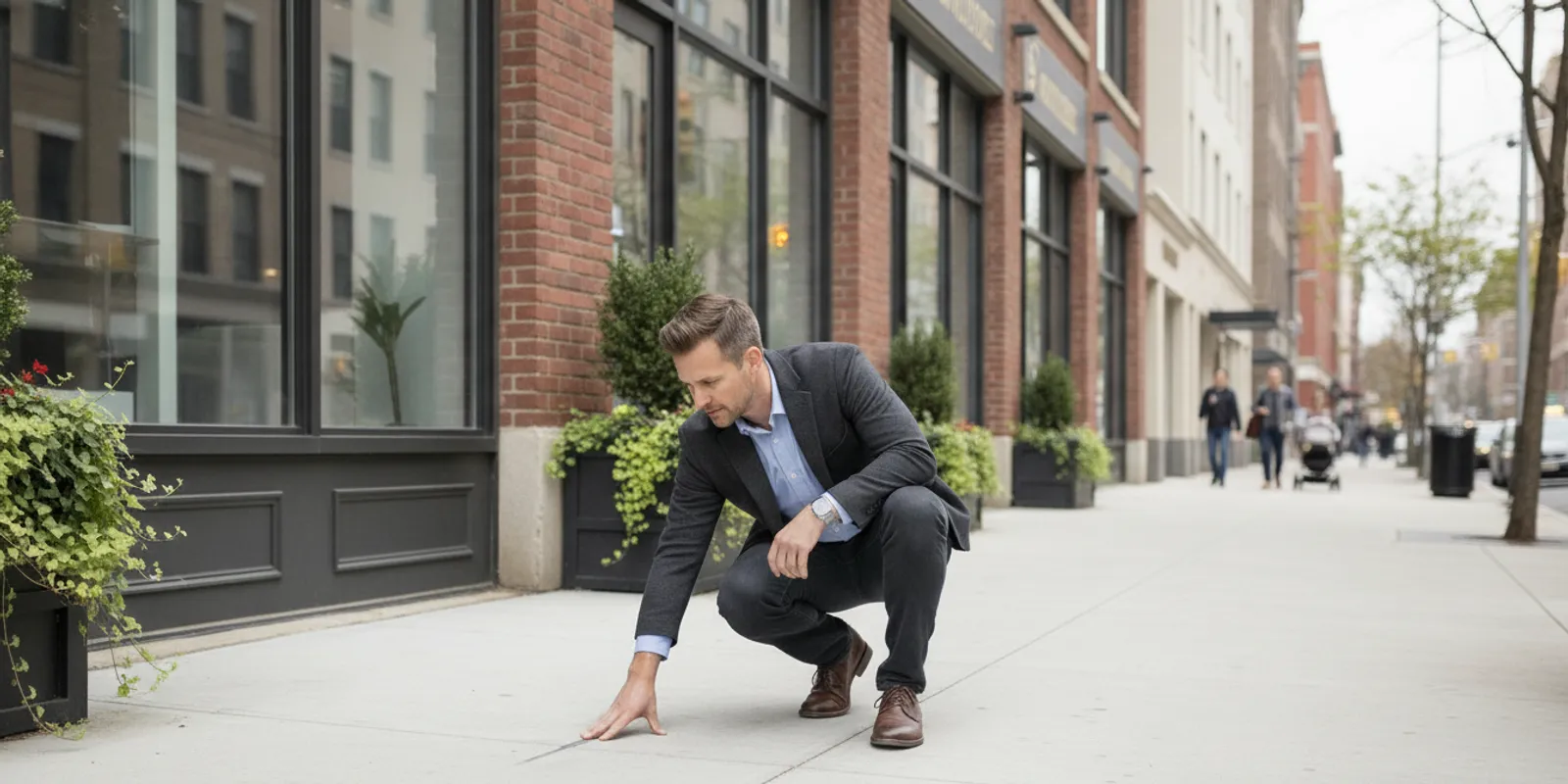
Note vertical changes, gaps, loose or displaced panels, surface deterioration, standing water, obstructions, and unclear transitions. Record conditions that could make a route harder to use, not only obvious trip concerns.
- Consider the user's path.
Walk the route from the perspective of someone using a wheelchair, cane, walker, or stroller. Check whether the route remains clear and connected at crossings, entrances, and changes in direction.
- Record the location precisely.
Use a campus map, building name, nearby entrance, or a consistent location code. Add a photograph when district procedures allow it, and note the date and the person who completed the review.
- Assign follow-up.
Identify who will review each finding, decide whether immediate precautions are appropriate, and track it until a repair or other action is completed.
Inspections should not be treated as a substitute for responding to reports. Staff need a simple way to communicate an observed hazard and know who receives the report. When an issue cannot be addressed right away, record its status and any interim steps the district has chosen. Document the decision rather than allowing an open item to disappear between inspection cycles.
For consistency, agree on a small set of observation fields before multiple inspectors begin. One person might write “raised panel near east entrance,” while another records “uneven sidewalk at building 4.” A shared location code, condition description, and photo convention make those notes easier to compare. Avoid trying to diagnose the cause during a basic walk-through. Record what is visible and route questions about scope or accessibility to the appropriate facilities or accessibility professional.
Inspection timing should reflect the campus's pattern of use. A walk during a quiet summer morning can reveal surface conditions, but it may not show how queues form at dismissal or whether an event crowd blocks a narrow connection. Pair a scheduled facilities walk with observations during representative arrival, class-change, or event periods when practical. That gives the team context for exposure and route choices, without relying on a single snapshot.
How can teams prioritize sidewalk repairs?
Many campuses have more maintenance needs than time or funding to address them at once. A transparent prioritization method helps explain why one location is scheduled before another. It also makes it easier to revisit the list as conditions, schedules, and available resources change.
Consider these factors together rather than relying on a single score:
- Accessibility and route importance:
Does the location sit on a primary route to a building, accessible entrance, or essential campus service? Is there a practical alternate route?
- Pedestrian activity:
How many people use the path, and when? Consider arrival and dismissal peaks, class changes, athletic events, and visitor traffic.
- Condition and change over time:
Is the issue stable, worsening, or recurring? Compare current notes and photographs with earlier records where available.
- Exposure and ability to avoid the area:
Can pedestrians see and easily navigate around the condition, or is the route narrow, crowded, or constrained by nearby activity?
- Coordination opportunities:
Can work be coordinated with planned facilities projects or scheduled during a school break? Avoid delaying a high-priority response simply to align with a future project.
A simple tier system can keep the process understandable. For example, a district could label items as urgent review, priority repair, or scheduled maintenance, then define what each label means and who can approve a change. Those categories are an internal planning tool, not a substitute for applicable accessibility requirements or professional evaluation.
Consider a hypothetical campus with two reports. One is a small change in level on a quiet path behind a storage building, where an alternate route is available. The other is a deteriorating transition on the main path between accessible parking and the front entrance, used throughout the school day. The second item may warrant earlier review because it serves a key route and has no equally direct alternative. The example is not a universal ranking rule; it shows why condition alone does not tell the whole story.
Make the prioritization process reviewable. Keep the reason behind each tier, note who approved the sequence, and set a date to revisit open items. If the school calendar changes, construction affects an alternate path, or a new report suggests a condition has worsened, update the decision rather than leaving the old ranking in place. This gives administrators a clear explanation of both the chosen repair order and what might change it.
What should a campus repair plan compare?
Before choosing a repair approach, document the site condition and identify what the work must accomplish. Compare alternatives based on route continuity, the amount of existing sidewalk affected, timing, access during work, and the records the district needs afterward. The best fit can vary by location and project scope.
Planning question | Why it matters on campus | What to record |
Which route is affected? | Work may affect access to a busy entrance, loading area, or event space. | Route map, nearby destinations, and an alternate path if available. |
What condition needs attention? | A clear description helps the team compare options and confirm the work scope. | Location, measurements or observations as appropriate, photographs, and inspection date. |
How will access be managed? | Students, staff, and visitors need clear directions around active work areas. | Work-zone plan, timing considerations, notification responsibility, and access needs. |
What documentation is needed? | Consistent records help facilities staff close out work and plan future maintenance. | Before-and-after records, completed scope, and follow-up items. |
Can the work be phased? | Phasing may help coordinate repairs across buildings or around school activities. | Priority sequence, schedule dependencies, and who approves changes. |
Some trip hazards can be addressed by precision cutting that adjusts the transition between sidewalk panels while retaining the existing panels. Other conditions may call for a different response. A site-specific assessment helps establish which locations fit a particular method and what documentation is appropriate. Learn more about sidewalk services for institutional properties and the company's technology and data tools.
When reviewing proposed scopes, ask the same practical questions for each location: What exact condition is being addressed? What portion of the route will be affected? How will pedestrians use the area while work is underway? What will the close-out record show? These questions help facilities staff compare proposals without assuming every panel needs identical treatment. They also make it easier to distinguish immediate work from follow-up inspection or a separate capital project.
For campuses with several buildings or sites, group work in a way that makes operational sense. A sequence might address the arrival corridor first, then move to a lower-traffic connector, while reserving a separate phase for a route serving a scheduled event. The plan should identify dependencies, such as access to a building entrance or coordination with another project. If a proposed sequence changes, update the site contacts and map so that staff are not relying on outdated detour information.
How can schools plan work with less disruption?
Repair planning should protect safe access without treating disruption as inevitable. Start by identifying when and where pedestrian traffic is heaviest. Then coordinate site access, work sequencing, and communication with the people responsible for the affected buildings and routes.
- Share a location-specific schedule.
Give school administrators and facilities contacts the planned work area and expected sequence as soon as those details are established.
- Keep routes understandable.
Use clear detours and signs that direct people to an accessible alternative where one is available. Check that the alternate route is not blocked by deliveries, events, or other work.
- Coordinate with the school calendar.
Consider class schedules, arrival and dismissal, examinations, sports, performances, and public events. If work spans multiple sites, phase the sequence to limit simultaneous impacts.
- Confirm responsibilities.
Identify who will communicate changes, answer questions, and verify that the area is ready for normal use after work is complete.
- Close the loop.
Update the inspection record when a repair is completed, and note any follow-up work or route change still needed.
A specialized sidewalk partner can help facilities teams assess and map trip hazards, prioritize locations, and document completed work. Precision Concrete Cutting's process includes assessing and mapping locations, precision trip-hazard removal, verification and reporting, and data management. To understand how these activities can relate to accessibility planning, review the company's information on sidewalk accessibility and compliance. Requirements and site conditions vary, so a district should confirm applicable standards with its accessibility professionals.
Communication is most useful when it answers practical questions: which entrance remains open, where the alternate route begins, whether a route change affects accessible access, and whom staff should contact if conditions on the ground differ from the plan. Share the information with front-office staff, transportation teams, custodial staff, and event organizers, not only the facilities group. For a school with multiple buildings, a simple marked map can be more useful than a general notice that “sidewalk work is underway.” Review any detour shortly before work begins and revise it if another activity has changed the route.
Plan for the end of the work as carefully as the start. Decide who will check the area, remove or update temporary directions, and confirm that the normal route can resume. If a different route will remain in use or follow-up work is still open, record that status and tell the staff who handle daily access questions. This small close-out step prevents a temporary arrangement from becoming an undocumented long-term condition.
What records should facilities teams keep?
Good records make maintenance easier to manage across school years and staff changes. They also let decision-makers see what was observed, what action was taken, and which items remain open. The format can be simple, provided it is consistent and easy for authorized staff to use.
For each finding, keep the location, date, inspection notes, photographs if appropriate, priority, assigned owner, action taken, and close-out date. If a repair is planned but not complete, add the reason for deferral, the next review date, and any interim access steps. Keep records for related work together so a later reviewer can understand the history of that segment.
When a district manages more than one campus, use common location fields and status definitions. A shared structure makes it easier to compare needs without losing the detail of each site. For a primer on accessible paths and the role sidewalks play, the academic study Pedestrian Planning on College Campuses reviews campus pedestrian planning practices. Its campus focus is especially relevant to universities, while K–12 teams can adapt the broader planning idea to their own routes and schedules.
A practical record can connect the initial observation to the final decision. For instance, an entry might include a unique location identifier, a short description, a photograph from a consistent angle, the route's nearby destinations, a priority category, and the name or role responsible for next action. After the work, add the completed scope and a new photo if district procedures allow. If an item remains open, keep it visible on a current follow-up list rather than burying it in an old inspection file.
For a district-wide review, use the same terms for statuses such as “reported,” “reviewed,” “scheduled,” “completed,” and “follow-up needed.” Define who may move an item from one status to another. This avoids a common handoff problem: one team may consider a request complete once a work order is issued, while another expects the repair and field verification to be finished. A short definition for each status creates a more dependable view of unresolved work.
Frequently Asked Questions
How often should a school inspect its sidewalks?
There is no single schedule that fits every campus. Set a routine based on pedestrian use, observed conditions, and district procedures, with closer attention to high-use routes and follow-up after reported concerns or events that may affect the walkway.
Should a team inspect only during the school year?
No. Inspections during the school year reveal how routes work under normal activity, while checks during breaks can help teams plan projects with fewer conflicts. A review after construction or significant weather can also help identify changes.
What should staff do when they find a possible trip hazard?
Record its location and condition, notify the person responsible for facilities follow-up, and use district procedures to decide whether temporary precautions are needed. Track the item until the decision and any repair are documented.
Can one repair plan cover several school sites?
Yes. A district can use a shared inspection and documentation framework across campuses, then prioritize each location based on its routes, activity, condition, and schedule. A common format helps coordinate work while preserving site-specific decisions.
Consistent inspections, clear priorities, and complete records help school teams manage sidewalk conditions as part of ongoing campus operations. Start with the routes people depend on most, document what you find, and review the plan as conditions change.

Comments