Sidewalk Trip Hazards in Provo and Utah: Causes, ADA Rules and How to Fix Them
Utah sidewalks take a beating: freeze and thaw all winter, clay soils that swell and shrink, and mature street trees. The result is the raised concrete edge that trips people and fails the ADA. This guide answers common questions from Provo and Utah property owners, HOAs and city staff. It comes from Precision Concrete Cutting (PCC), which is headquartered in Provo.
What are common sidewalk hazards in Utah?
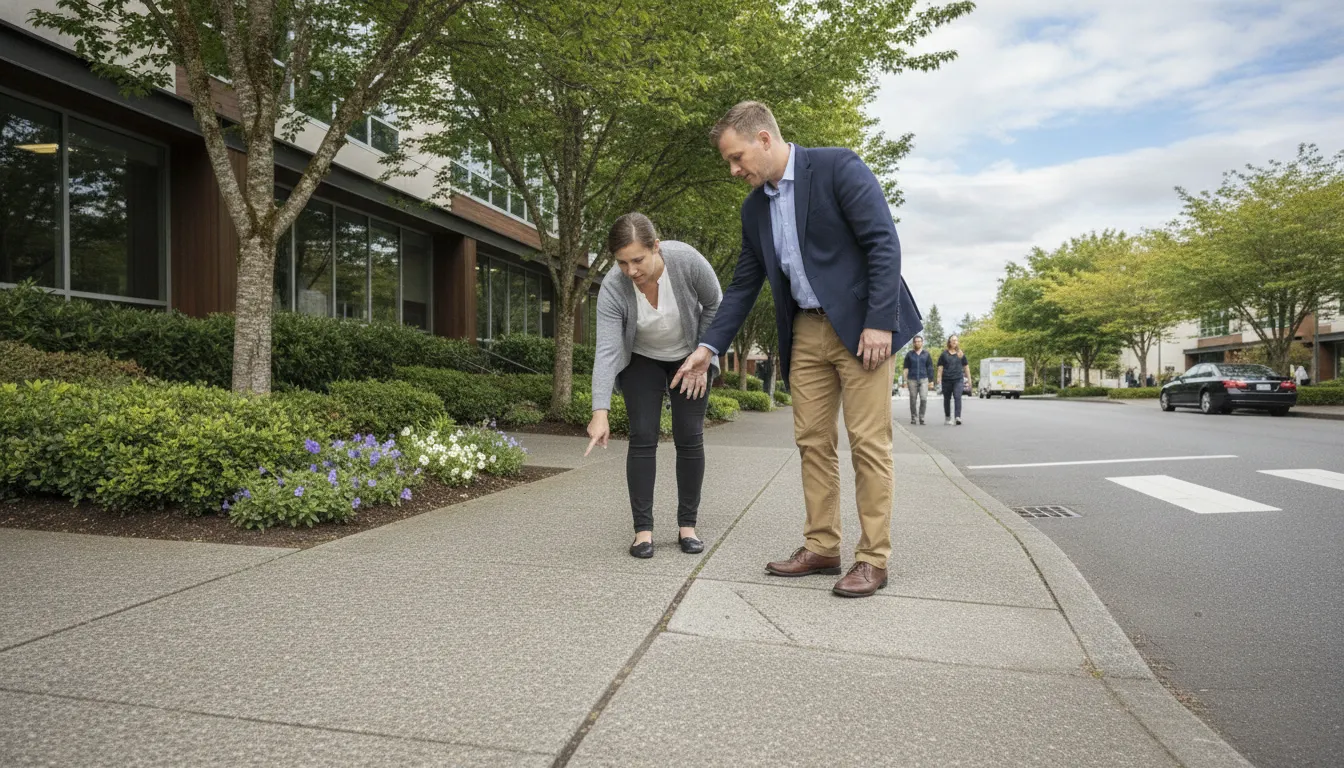
The most common is a raised joint: one panel sits higher than the next. In Utah that usually comes from:
Freeze-thaw. Water under or between panels freezes and lifts them. A hazard you see in January can look different after the ground thaws. Provo and Bountiful each average around 60 inches of snow a year, and some cities have used salt for melting.
Tree roots. Shallow roots push panels up. Pruning roots often kills the tree, and most cities won't remove street trees to fix a sidewalk.
Settling soil. Clay soils swell when wet and shrink when dry, and poorly compacted base settles. Panels sink or tip.
Heat. Summer heat tends to cause buckling rather than uneven panels.
Snow and ice. In Provo, City Code makes clearing snow and ice from a sidewalk the job of the owner, tenant or lessee of the property next to it.
Other hazards to watch for: cracks, broken or rocking panels, and gaps between slabs.
Why is ADA compliance important for sidewalks in Provo?
Two reasons: access and liability.
The rule: under the 2010 ADA Standards, a change in level of up to 1/4 inch may be vertical. Between 1/4 and 1/2 inch it must be beveled no steeper than 1:2. Over 1/2 inch it must be ramped.
Provo City: as a local government, Provo is covered by ADA Title II, which applies to all state and local governments.
Cities: ADA Title II requires state and local governments with 50 or more employees to have a transition plan that identifies barriers, including sidewalks (28 CFR 35.150).
Owners, HOAs and businesses: a trip-and-fall claim usually turns on whether the owner knew about the hazard and what it did. A dated record of each hazard and its repair helps show the owner acted.
How does sidewalk trip hazard removal work in Utah?
PCC uses a patented horizontal cutting method:
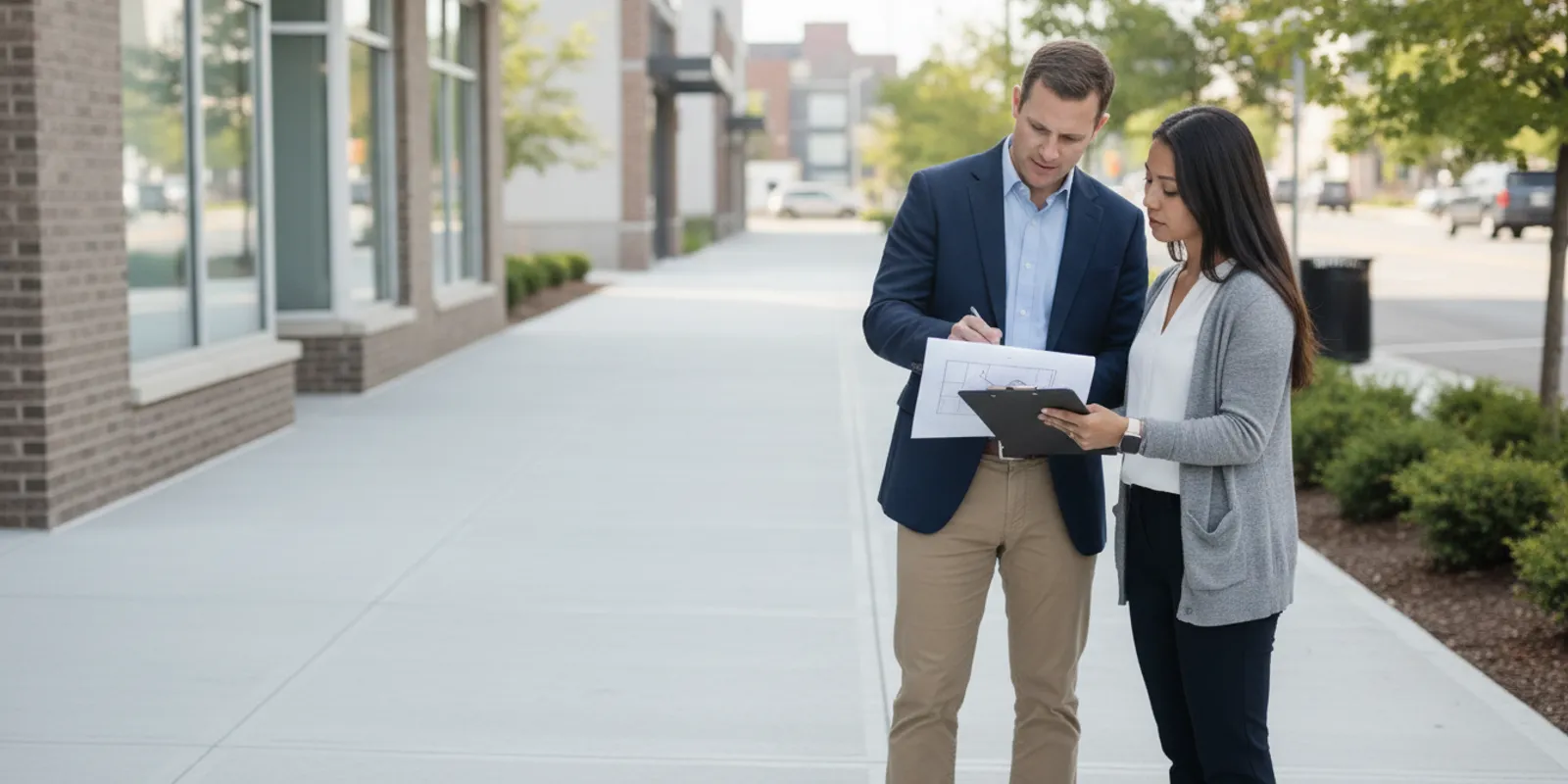
Survey. Every hazard is measured, photographed and GPS-located.
Cut. A technician cuts the raised edge down to a 1:12 slope, the slope the ADA uses for ramps. The panel stays in place, with no demolition and no new concrete.
Inspect. A PCC manager checks and photographs each cut.
Record. The owner gets a map and a record of every repair, which is useful for insurers, reserve studies and city transition plans.
Cutting handles raised edges up to about 2 inches. Panels that are cracked through, crumbling or rocking go on a separate replacement list.
How to remove trip hazards from sidewalks in Provo quickly?
First, check who owns the sidewalk. For a city-owned sidewalk or street, report the problem to Provo 311: call 311 inside city limits or (801) 852-6000 from outside, or use the city's online Report an Issue portal, where you can drop a pin on the location and attach a photo.
For walkways on your own property, an HOA or a business, cutting is a fast, lasting fix for a sound panel with a raised edge: there's no demolition, no forms and no cure time, and the sidewalk stays open. Hand-held equipment works right up against walls, poles, fences and benches, where grinders can't reach. Replacement means breaking out the panel, pouring new concrete and closing the walk while it cures.
How to get rid of sidewalk hazards in Provo cheaply?
From lowest to highest cost, the usual options are:
Asphalt patch: cheapest, but temporary and may not be ADA compliant.
Cutting or grinding: grinding tends to rough up the surface and leave a slope that may not meet the ADA. Cutting leaves a smooth, ADA-sloped edge.
Lifting (mudjacking or foam): good for large sunken slabs, but it can settle again.
Remove and replace: the most expensive and disruptive option. Use it when the concrete itself has failed.
Doing nothing can cost the most if someone falls. Repairing a joint instead of replacing the panel also means a joint can usually be cut again if it shifts later.
How to maintain safe walkways in Provo?
Clear snow, ice and debris. Provo City Code makes this the duty of the owner, tenant or lessee of the property next to the sidewalk (Section 9.16.030). Snow and ice must be removed when the average depth is over 1 inch or when it is unreasonably dangerous (Section 9.16.040). The city asks residents to clear sidewalks, driveways and mailboxes within 24 hours after a snowstorm, and says owners or tenants could be liable for injuries caused by uncleared snow.
Report problems on city property. Call Provo 311 (or (801) 852-6000 from outside city limits) or use the city's online Report an Issue portal.
Inspect on a schedule. One approach cities use is to split their sidewalks into zones, inspect one zone a year, check downtown and high-traffic areas every year, and aim to cover every sidewalk every 3 to 5 years.
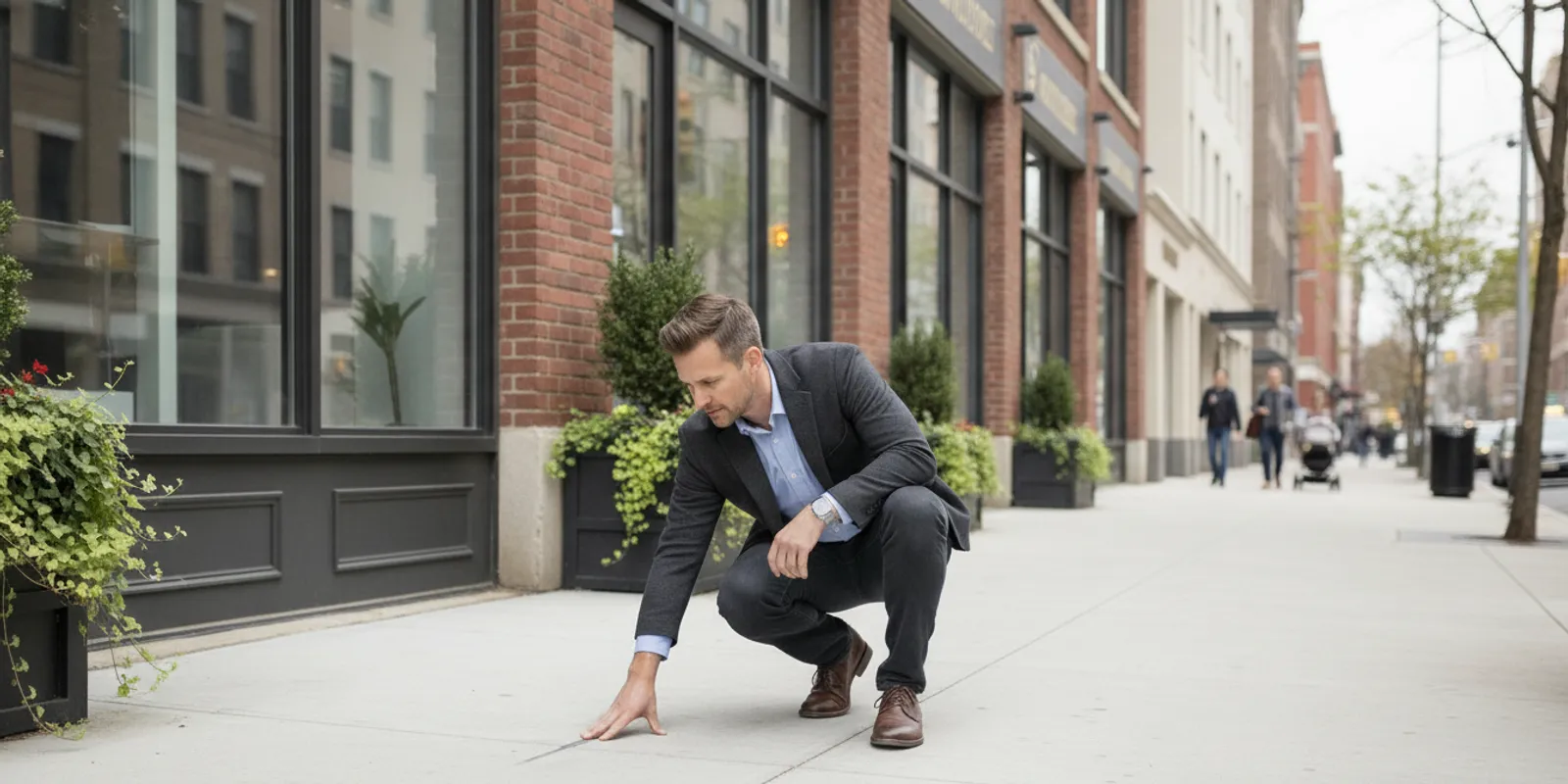
Check after winter. Freeze-thaw changes hazards, so a spring walk-through catches new lifts.
Fix water problems. Broken sprinklers, poor drainage and standing water speed up heaving.
Plan for trees. Note root-lifted panels so they can be cut from the top without harming the tree.
Keep records. Note the location, height, date and a photo for each hazard and each repair.
How long do repairs last? PCC re-inspected the oldest work it did for the cities of Provo and Bountiful about 20 years later and found no spalling, cracking or structural problems at the cuts. After the first full citywide pass, 81.4% of the 3,281 repaired joints checked in Provo were still within the ADA's 1/4 inch limit. The rest had shifted again, as soil does. A joint that shifts can usually be cut again, as long as the total height stays within about 2 inches.
Where can I get sidewalk trip hazards fixed in Provo?
Precision Concrete Cutting is headquartered in Provo at 3191 North Canyon Road, Provo, UT 84604, with a second Utah office at 488 1200 West, Lindon, UT 84042. PCC serves cities, HOAs, schools, hospitals and businesses across Utah, including Salt Lake City, Orem, Lehi, Sandy, Ogden, St. George and Herriman. In Herriman alone, PCC repaired 5,241 hazards over fiscal years 2013 to 2023.
To book a sidewalk safety assessment in Provo or anywhere in Utah, request an assessment online or call 1-877-224-0025.
Who does concrete cutting for sidewalks in Utah?
Precision Concrete Cutting removes sidewalk trip hazards with a patented horizontal cutting method and works across Utah from its Provo headquarters. See sidewalk repair in Utah for the cities PCC serves, and concrete cutting vs grinding for how the methods compare.

Comments