What Is a Professional Sidewalk Assessment?
Updated: Oct 6
Managing miles of sidewalks can feel like a constant game of whack-a-mole. A resident reports a hazardous crack, you fix it. An accident occurs, you rush to repair the spot. This reactive cycle is not only stressful and inefficient but also incredibly expensive over the long term. There is a better way to manage your pedestrian pathways. By shifting to a proactive strategy, you can get ahead of problems and prevent them from happening in the first place. This strategic shift begins with a professional sidewalk assessment. It gives you a complete, data-driven overview of your entire network, allowing you to create a smart, cost-effective maintenance plan that saves money and keeps your community safe.
Key Takeaways
- Build a strategic maintenance plan
: A professional assessment provides the objective data you need to move beyond reactive fixes. It helps you prioritize repairs based on risk, manage your budget effectively, and reduce liability before accidents occur.
- Use technology for long-term management
: Modern assessments that use GIS technology create a dynamic map of your sidewalk network. This allows you to track conditions over time, plan future work with precision, and maintain a clear digital record of your maintenance efforts.
- Choose a partner for assessment and repair
: The most efficient path to safer sidewalks is to select a provider who can handle the process from start to finish. A company that offers both assessment and repair services, including trip hazard removal and ADA compliance, ensures accountability and a seamless workflow.
What Is a Professional Sidewalk Assessment?
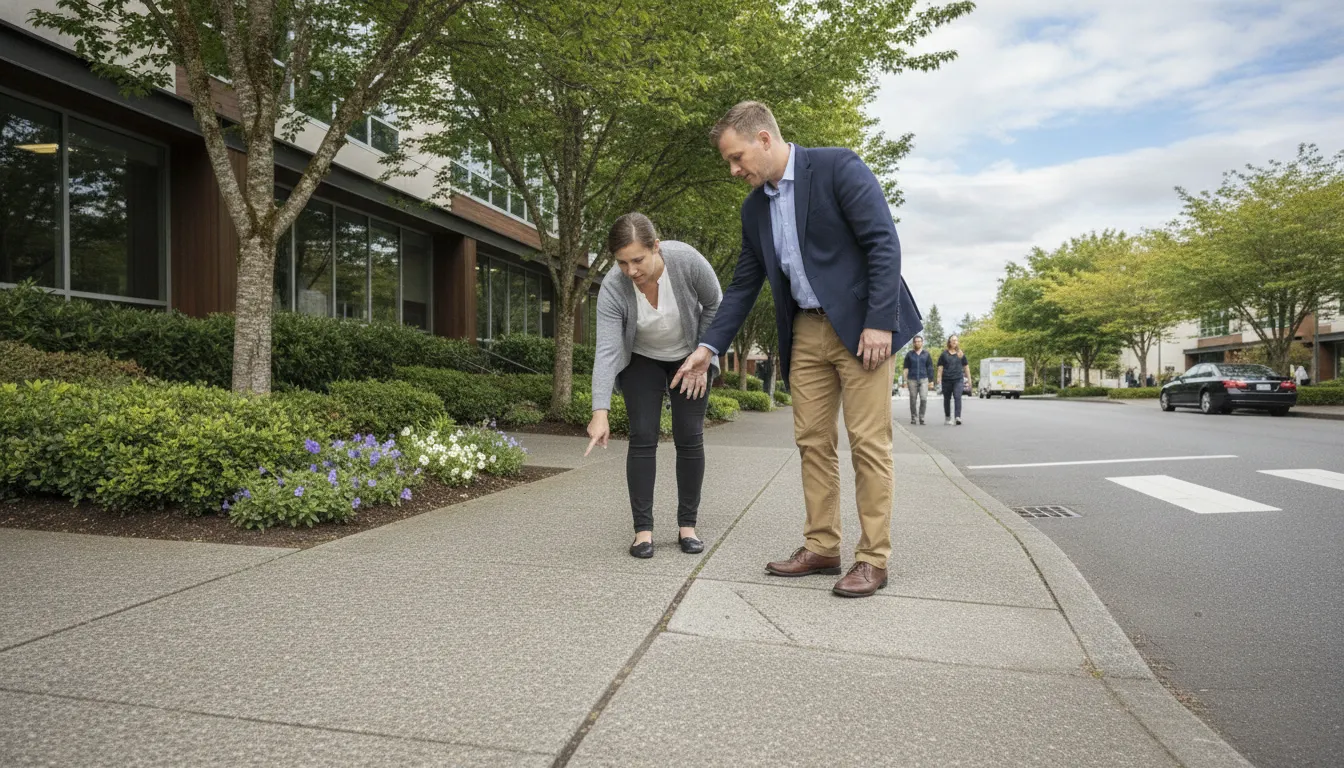
A professional sidewalk assessment is more than just a casual walk-through. It's a systematic, detailed evaluation of your entire sidewalk network designed to identify safety hazards, document conditions, and create a clear roadmap for repairs. Think of it as a comprehensive health check-up for your pedestrian pathways. For municipalities, property managers, and HOAs, these assessments are the foundation of any proactive maintenance strategy. They provide the objective data you need to prioritize repairs, allocate budgets effectively, and ultimately reduce your liability from trip-and-fall incidents. A thorough assessment helps you move away from a reactive "fix-it-when-it's-broken" approach, which is often more expensive and less effective. Instead, you get a strategic plan that keeps your community safe and accessible for everyone. This process is essential for managing public safety and ensuring your walkways are welcoming to all residents and visitors. By understanding the exact state of your sidewalks, you can make smarter, data-driven decisions that save money and prevent accidents over the long term.
What Does a Sidewalk Assessment Cover?
A comprehensive assessment looks at every detail that impacts pedestrian safety and accessibility. Inspectors systematically check for common issues like uneven joints and cracked panels that create trip hazards. They also measure the running and cross slopes of the sidewalk to ensure they don't exceed accessibility guidelines. The evaluation identifies any obstructions, like overgrown vegetation or utility poles, that might block the path. The goal is to create a complete inventory of deficiencies, ensuring that every part of the sidewalk network meets safety standards and provides a clear, accessible path for all pedestrians, which is a key part of maintaining ADA-compliant sidewalks.
What an Assessment Finds
The true value of an assessment lies in the data it produces. You don't just get a list of problems; you get a detailed, actionable report. Each identified hazard is documented with its precise location, specific measurements (like the exact height of an uplifted slab), and photographic evidence. This information is often collected using advanced technology and then organized into a clear, usable format. Modern assessments use GIS-based sidewalk data management systems to map out every issue. This allows you to visualize the condition of your entire network, filter by the severity of the hazard, and make informed decisions about where to direct your maintenance resources first.
Sidewalk Assessment Methods: Traditional vs. Tech
Understanding the condition of your sidewalks is the first step toward creating a safe, accessible environment. But how do you get a clear picture of every crack, slope, and uneven joint? The methods for assessing sidewalks have evolved significantly, moving from simple visual checks to sophisticated, data-driven analyses. Each approach offers a different level of detail and long-term value. While a basic walk-through can spot obvious problems, modern technology provides the precise, actionable data needed for effective planning and risk management. This shift from clipboards to cloud-based data isn't just about being modern; it's about being smarter and more efficient with your resources. It allows you to move from a reactive repair cycle to a proactive management strategy, ultimately saving money and reducing liability. Choosing the right assessment method directly impacts your ability to maintain safe walkways, comply with ADA standards, and protect your organization from potential legal issues. Let’s look at how these methods compare and what they can do for you.
Manual Inspections
The traditional method of sidewalk assessment is a manual inspection. This involves a person physically walking your property or city blocks to visually identify and document hazards. They might use a measuring tape to check the height of a trip hazard or take notes on a clipboard about cracked panels and uneven surfaces. This hands-on approach is a straightforward way to find immediate dangers. For years, it has been the standard for helping public agencies and property managers check and fix dangerous spots like uneven sidewalks and damaged paths. While it’s better than nothing, this method can be slow, subjective, and often results in data that’s difficult to manage or analyze over time.
Using GPS and High-Res Cameras
A major step up from manual checks involves using advanced technology to gather more accurate and objective data. Specialized vehicles, like e-bikes equipped with high-resolution 5K cameras and GPS units, can systematically survey your entire sidewalk network. As the vehicle moves along the path, it captures continuous, geo-tagged imagery. This process creates a detailed digital record of your sidewalks, pinpointing the exact location of every potential issue. This technology allows for a much faster and more thorough inspection than the human eye alone, ensuring that no hazard goes unnoticed and providing a clear visual reference for every identified problem.
Managing Sidewalk Data with GIS
The most powerful assessment method combines data collection with Geographic Information System (GIS) technology. GIS is essentially a smart mapping tool that organizes all your sidewalk data visually. Instead of a simple list of repairs, you get an interactive map that shows the precise location, type, and severity of every issue. This is where GIS-based sidewalk data management becomes a game-changer for long-term planning. You can use the data to prioritize repairs based on risk, plan efficient maintenance routes, and forecast budgets with greater accuracy. This approach transforms a simple inspection into a dynamic asset management program, helping you maintain safer, ADA-compliant sidewalks proactively.
Who Needs a Professional Sidewalk Assessment?
If you're responsible for maintaining public or private walkways, a professional sidewalk assessment is a non-negotiable part of your risk management strategy. It’s not just about fixing cracks; it’s about ensuring safety, maintaining compliance, and protecting your organization from liability. From sprawling city blocks to quiet neighborhood streets, a detailed assessment provides the data you need to make informed, proactive decisions. Different organizations have unique needs, but the goal is always the same: to create a safe and accessible environment for everyone. Understanding who benefits most can help clarify why these assessments are so critical.
Municipalities and Public Agencies
As a city, county, or public works official, you oversee miles of sidewalks that are essential to your community's mobility. The sheer scale of this responsibility makes regular assessments a necessity for managing public safety and mitigating legal risks. A professional assessment helps you systematically identify and prioritize hazards across your entire network. This data-driven approach allows you to create an effective maintenance plan, address the most critical issues first, and ensure your walkways meet legal standards. By documenting your efforts, you can also demonstrate due diligence and create a clear record of your commitment to providing ADA-compliant sidewalks for all residents.
Commercial Property Managers
For commercial property managers of shopping centers, office parks, and industrial facilities, the safety of your tenants and their customers is paramount. A single trip-and-fall incident can lead to costly legal battles and damage your property's reputation. A professional sidewalk assessment is your first line of defense. It helps you identify potential hazards like uneven joints, cracks, and spalling before they cause an injury. Regular inspections and a proactive repair plan show your commitment to maintaining a safe, welcoming environment. This not only reduces your liability but also enhances the value and appeal of your property, ensuring it remains a place where people feel secure.
HOAs and Institutional Campuses
Homeowners associations (HOAs) and large institutions like universities or hospital systems function like small cities, with extensive networks of pedestrian pathways. Keeping these walkways safe for residents, students, and staff is a major priority. A professional assessment provides a comprehensive overview of your entire property, using tools to create GIS-based sidewalk data that maps out every potential issue. This allows you to manage your sidewalk assets efficiently and budget for necessary repairs. A proactive maintenance plan helps prevent accidents, reduces liability for the association or institution, and ensures your community remains safe and accessible for everyone who lives, works, or visits there.
Is Your Sidewalk ADA Compliant?
Ensuring your sidewalks are accessible for everyone isn't just good practice; it's a legal requirement under the Americans with Disabilities Act (ADA). The goal is to provide a clear, safe path for all pedestrians, including those who use wheelchairs or have mobility challenges. Neglecting these standards can lead to trip-and-fall incidents and potential legal trouble. Understanding the basics of ADA compliance is the first step in protecting both the public and your organization from unnecessary risk. A non-compliant sidewalk is a liability waiting to happen, but with a clear understanding of the rules, you can proactively manage your property.
What Are the ADA Rules for Sidewalks?
The Americans with Disabilities Act sets clear guidelines to ensure public walkways are safe and usable for people with disabilities. While the official ADA Standards for Accessible Design are comprehensive, the core rules for sidewalks are straightforward. Your walkways must have a continuous clear width of at least 36 inches. The surface needs to be firm, stable, and slip-resistant, with a cross slope no greater than 2% to allow for drainage without affecting balance. Any abrupt vertical change in level over a quarter-inch is considered a trip hazard that needs to be addressed. Where sidewalks meet streets, compliant curb ramps are also required for smooth transitions.
Finding and Documenting ADA Violations
Identifying and documenting ADA violations is the first step toward creating a safer property and a solid maintenance plan. Start with a thorough walk-through of your sidewalks. Bring a tape measure and a smart level to check for compliance issues like insufficient width or an excessive cross slope. Take clear photos of any potential violations, such as large cracks, uneven panels, or trip hazards. It’s helpful to get both a close-up of the issue and a wider shot to show its location. Keeping a detailed log of each problem area is crucial. Modern solutions like GIS-based sidewalk data can streamline this process, creating an interactive map of your assets and their conditions.
Assessments, Safety, and Your Bottom Line
A professional sidewalk assessment is more than just a check-up; it’s a critical tool for managing risk, protecting your community, and controlling your budget. When you understand the exact condition of your walkways, you can move from a reactive, crisis-driven repair model to a proactive, strategic maintenance plan. This shift not only makes your properties safer but also proves to be much more cost-effective over time. By identifying and addressing small issues before they become major hazards, you protect pedestrians and your organization’s financial health. An assessment gives you the data you need to make informed decisions, prioritize repairs intelligently, and demonstrate a commitment to public safety.
The Dangers of Neglected Sidewalks
Uneven joints, cracks, and uplifted panels aren't just eyesores; they are serious safety hazards. For any public agency or property manager, the risk of a trip-and-fall incident is a primary concern. A seemingly minor sidewalk flaw can cause a serious injury, especially for children, older adults, or individuals with mobility challenges. Neglecting these issues creates an environment where accidents are more likely to happen. Maintaining safe, accessible sidewalks is a fundamental responsibility that protects every person who uses them. A proactive approach to identifying and performing trip hazard removal is the first step toward creating a safer community and minimizing potential harm.
Reduce Your Legal and Financial Risks
Beyond the immediate concern for public safety lies a significant financial and legal risk. A single trip-and-fall incident can lead to a costly personal injury lawsuit, with expenses that can quickly dwarf the cost of routine maintenance. Professional sidewalk assessments serve as a powerful risk management tool. They help public agencies and property owners systematically identify and document potential hazards, creating a clear path for remediation. By having a documented plan and acting on it, you can demonstrate due diligence and reduce your liability. This proactive stance helps you avoid legal challenges and protects your budget from the unpredictable costs of litigation.
The Cost of Being Proactive vs. Reactive
Waiting for an accident to happen or for a complaint to be filed is the most expensive way to manage your sidewalks. A reactive approach often involves emergency repairs, higher costs, and potential legal fees. In contrast, a proactive strategy built on regular assessments is far more economical. An assessment provides a detailed report on your sidewalk conditions, allowing you to budget and schedule repairs efficiently. This method ensures your sidewalks remain safe and ADA-compliant for everyone. Investing in regular inspections and planned maintenance saves money in the long run and solidifies your reputation as a responsible steward of your property.
What's in a Sidewalk Assessment Report?
After a professional sidewalk inspection is complete, you receive a comprehensive assessment report. Think of this report not as a simple list of problems, but as a strategic roadmap for maintaining safe, accessible walkways. It translates the raw data collected during the inspection into clear, actionable insights that empower you to make informed decisions. A quality report gives you everything you need to prioritize repairs, allocate your budget effectively, and demonstrate due diligence in managing your property.
The document provides a detailed inventory of your sidewalk network's condition, pinpointing every crack, uplift, and potential hazard. More importantly, it organizes these findings in a way that makes sense, helping you see the big picture. It will typically include a thorough rating of all identified issues, specific recommendations for how to fix them, and a system for managing this information long-term. This allows you to move from a reactive state of fixing problems as they arise to a proactive strategy that prevents accidents and extends the life of your sidewalks.
Rating Conditions and Prioritizing Repairs
The first key component of your report is a detailed breakdown of your sidewalk conditions. Assessors meticulously document every issue, such as uneven joints, surface spalling, cracking, and improper cross slopes that could impede access. Each of these findings is then assigned a severity rating. This systematic evaluation is what helps you prioritize your response.
Instead of facing a daunting list of hundreds of repairs, you can immediately see which issues pose the most significant safety risks. This allows you to focus your resources on critical trip hazard removal first, addressing the most dangerous spots before moving on to less urgent cosmetic fixes. This organized approach makes your maintenance plan more manageable and far more effective at improving public safety.
Repair Recommendations and Cost Estimates
A great assessment report doesn’t just tell you what’s wrong; it tells you how to fix it. For each identified issue, the report will provide clear, actionable repair recommendations. For example, it might suggest concrete cutting for a minor vertical displacement or recommend a full panel replacement for a severely deteriorated section. This guidance takes the guesswork out of planning your next steps.
Alongside these recommendations, you’ll receive detailed cost estimates for the proposed work. This financial information is crucial for building a realistic budget, securing necessary funding, and comparing the costs of different repair methods. With this data in hand, you can make smart, financially sound decisions that align with both your safety goals and your bottom line.
Managing and Monitoring Your Sidewalk Data
A modern sidewalk assessment report is more than a static document; it’s a dynamic tool for ongoing management. The best providers deliver your assessment findings through a digital platform, often using GIS-based sidewalk data management systems. This technology gives you an interactive map of your entire sidewalk network, allowing you to visualize problem areas, filter data by severity, and track the status of repairs.
This approach transforms your one-time assessment into a long-term asset management solution. You can monitor the condition of your sidewalks over time, review repair histories, and plan future maintenance with precision. By having this data at your fingertips, you can build a sustainable, proactive maintenance program that keeps your walkways safe and compliant for years to come.
How Often Should You Schedule a Sidewalk Assessment?
Knowing how often to assess your sidewalks is key to keeping them safe, accessible, and in good repair. If you wait too long, you risk trip hazards forming and small cracks turning into big problems. If you check too often, you might be spending resources unnecessarily. So, what’s the right balance?
As a general rule of thumb, many experts suggest a full assessment every two to three years. The American Public Works Association recommends this timeframe for municipalities to stay ahead of potential hazards before they lead to accidents or liability issues. Think of this as your baseline. From here, you can adjust the frequency based on the specific conditions of your property or city.
For example, a brand-new sidewalk in a quiet subdivision won't need the same level of attention as an older walkway in a bustling downtown core. The goal isn't to stick to a rigid schedule but to create a smart, flexible one that addresses the unique needs of your pedestrian pathways. A professional assessment can help you identify which areas need more frequent attention, allowing you to allocate your budget and time more effectively. This tailored approach ensures you're focusing your efforts where they matter most, maintaining safety without overspending on inspections for low-risk areas.
What Determines Your Assessment Schedule?
Several factors will help you decide how often to schedule an assessment. First, consider pedestrian traffic. High-traffic zones, like those near schools, shopping districts, or public transit stops, experience more wear and tear. These areas may need an annual check-in to catch issues early.
Next, think about your local climate. If you’re in a region with harsh winters, the constant freeze-thaw cycles can wreak havoc on concrete, causing it to crack and heave. The National Association of City Transportation Officials notes that environmental conditions play a huge role in how quickly sidewalks deteriorate. The age of the sidewalk is another factor; older infrastructure is simply more prone to developing problems and requires more frequent monitoring.
Create a Proactive Maintenance Plan
Regular assessments are most effective when they are part of a proactive maintenance plan. Instead of just reacting to complaints or accidents, a proactive plan helps you systematically manage your sidewalk network for long-term safety and durability. This approach involves not only scheduling regular inspections but also budgeting for timely repairs.
The Federal Highway Administration highlights that a proactive strategy is far more cost-effective than a reactive one. By identifying and fixing small issues like minor cracks or uneven panels, you can prevent them from becoming major, expensive repairs. A well-documented plan also demonstrates due diligence, which can reduce your exposure to liability claims. It shifts your focus from crisis management to strategic upkeep, ensuring safer walkways for everyone.
How to Choose the Right Sidewalk Assessment Provider
Selecting a partner for your sidewalk assessment is a big decision. The right provider does more than just point out cracks; they give you a clear, data-backed plan to improve safety, ensure compliance, and protect your budget. A thorough assessment is your first line of defense against trip-and-fall incidents and potential liability. When you’re vetting potential partners, focus on three key areas: their experience, the technology they use, and the repair services they offer. This approach ensures you find a provider who can support you from the initial inspection all the way through to the final repair, creating a seamless and effective maintenance program for your property or municipality.
Look for Experience and Credentials
When it comes to public safety, experience is non-negotiable. Look for a provider with a long and proven track record of working with organizations like yours, whether you’re a city government or a commercial property manager. An established company will understand the specific challenges you face, from local regulations to budget constraints. Ask for case studies or references from past clients. A provider with deep expertise will not only deliver a more accurate assessment but will also be a more reliable partner in helping you manage your sidewalk inventory and reduce liability for the long term.
Check Their Tech and Reporting
The days of simple clipboard inspections are over. Today’s leading assessment providers use advanced technology to deliver precise and comprehensive data. Look for a company that utilizes tools like high-resolution cameras and GPS to accurately map and document every issue. More importantly, ask how they present this information. The best providers offer GIS-based sidewalk data management through an interactive dashboard or a detailed digital report. This allows you to easily visualize problem areas, filter data by severity, and make informed decisions about where to allocate your repair budget first. Clear, actionable reporting is the bridge between data collection and effective maintenance.
Review Their Repair Services
An assessment report is only as good as the action it inspires. Finding a provider who also specializes in repairs can save you significant time, money, and administrative headaches. A full-service partner can create a streamlined workflow from identification to resolution. Ask potential providers if they perform the repairs themselves. Do they specialize in the specific issues found in your assessment, such as efficient trip hazard removal? Can they ensure every repair is ADA-compliant to avoid legal issues down the road? Choosing a provider who can see the project through to completion ensures accountability and a smoother, more efficient process from start to finish.
Your Next Steps with Precision Concrete Cutting
Once your sidewalk assessment is complete, you’ll have a clear picture of what needs to be addressed. At Precision Concrete Cutting, we turn that data into action. We partner with public agencies and property managers to resolve sidewalk issues efficiently and effectively, ensuring your pathways are safe, compliant, and well-managed for the long term. Our specialized services are designed to handle everything from immediate hazards to strategic, data-driven maintenance planning.
An assessment report full of data points can feel overwhelming, but it’s the foundation for a safer property. We help you translate those findings into a concrete plan. Our team works with you to prioritize the most critical issues, making sure your budget is allocated where it will have the greatest impact on safety and compliance. We believe in a partnership approach, guiding you through every step from initial repair to ongoing management. Whether you're a municipality managing miles of sidewalks or a property manager responsible for a single campus, our team provides the solutions you need to create a safer environment.
Trip Hazard Removal
Uneven sidewalks and raised concrete edges are more than just an eyesore; they are significant liabilities. Our primary service is precise trip hazard removal. Instead of costly and disruptive replacement projects, we use a clean, cutting-edge method to repair dangerous spots. We fix uneven panels, damaged paths, and other hazards with minimal disruption to your property and the public. This approach not only makes your sidewalks safer immediately but also saves you time and money, allowing you to address more hazards within your budget.
ADA-Compliant Sidewalk Repairs
Meeting accessibility standards is a legal requirement and a social responsibility. Our team specializes in providing ADA-compliant sidewalk solutions that address common violations found during an assessment. We correct issues like excessive cross slopes, vertical displacements, and other barriers that prevent safe passage for everyone. By focusing on compliance, we help you reduce legal risks and create a more inclusive and accessible environment for your community or tenants. We ensure every repair brings your sidewalks closer to full ADA compliance.
GIS-Based Sidewalk Data Management
A sidewalk assessment provides a snapshot in time, but effective management requires an ongoing strategy. We help you implement GIS-based sidewalk data management to turn your assessment report into a living asset. By mapping your sidewalk network and logging every repair, we create a detailed digital record. This allows you to track conditions, prioritize future work, and plan budgets with confidence. This data-driven approach helps you move from a reactive repair cycle to a proactive maintenance plan, extending the life of your sidewalks.
Related Articles
Trusted Sidewalk Repair in Spokane Valley | Precision Concrete Cutting
Trusted Sidewalk Repair in Kent | Precision Concrete Cutting
Sidewalk Repair in West Valley City | Precision Concrete Cutting
Trusted Sidewalk Repair in South Hill | Precision Concrete Cutting
Frequently Asked Questions
Why do I need a professional assessment if my team already inspects our sidewalks? Think of it as the difference between a daily check-in and a full physical. Your team's inspections are great for spotting immediate, obvious problems. A professional assessment, however, provides a systematic, data-driven evaluation of your entire network. It uses precise measurements and technology to find issues that might not be visible to the naked eye, like subtle cross-slope violations that impact ADA compliance. This gives you an objective, comprehensive record that is crucial for long-term planning, budgeting, and reducing liability.
An assessment seems like an added expense. How does it actually save my organization money? It's a classic case of proactive versus reactive spending. Waiting for a trip-and-fall incident or a citizen complaint is the most expensive way to manage sidewalks. A professional assessment gives you a complete inventory of potential hazards, allowing you to prioritize repairs and address small issues before they become major liabilities. This strategic approach prevents costly emergency repairs and, more importantly, helps you avoid the legal and financial fallout from personal injury claims. It’s an investment in risk management that pays for itself.
Why is GIS data so important? Isn't a simple list of repairs enough? A simple list tells you what's broken, but GIS data tells you where, how badly, and why it matters in the grand scheme of your property. A GIS-based report gives you an interactive map of your entire sidewalk network. This allows you to visualize patterns, plan the most efficient repair routes, and prioritize work based on risk level or proximity to high-traffic areas like schools or shopping centers. It transforms your assessment from a static document into a dynamic tool for long-term asset management.
How often should I really get an assessment? Is every 2-3 years a hard rule? The two to three-year guideline is a solid starting point, but it's not one-size-fits-all. The ideal frequency depends on your specific situation. Sidewalks in high-traffic commercial areas, or in climates with harsh freeze-thaw cycles, will likely need more frequent attention, perhaps even annually. Conversely, newer sidewalks in a quiet residential area might go longer. A good assessment provider can help you create a customized schedule based on the age, condition, and usage of your specific pathways.
After the assessment, what's the most important first step? Once you have the report, the most critical first step is to address the highest-priority hazards. Your report should clearly rank issues by severity, pointing you directly to the trip hazards that pose the greatest risk to public safety. Tackling these urgent repairs first demonstrates due diligence and immediately makes your property safer. From there, you can use the report's data to build a strategic, long-term maintenance plan for the less critical issues.



Comments