Municipal Sidewalk Repair RFP: A Buyer Guide
Updated: Oct 12
A well-built municipal sidewalk repair RFP turns a broad safety priority into a contract that procurement teams can price, compare, administer, and defend. The strongest solicitations define the hazard inventory, required outcomes, acceptance tests, reporting format, and closeout evidence before bidders submit proposals. That clarity protects public funds while helping public works teams deliver accessible, dependable pedestrian routes.
This buyer guide explains how to write a solicitation around measurable results rather than vague promises. It gives procurement officers, engineers, risk managers, and accessibility coordinators a common framework for evaluating trip hazard removal proposals. It also shows how an assess-map-remove-verify workflow can connect field conditions to invoices, inspections, and long-term asset planning.
Define the municipal sidewalk repair RFP outcome first
A municipal sidewalk repair solicitation should state the public outcome first: remove documented trip hazards, improve accessible passage, preserve suitable concrete, and produce verifiable records. It should then translate that outcome into a bounded scope, bidder responsibilities, measurable acceptance criteria, and a closeout package the city can audit.
Start with a short purpose statement that explains why the municipality is buying the work. Avoid framing the project as a request for labor hours or a specific quantity of concrete alone. The procurement goal is a safer pedestrian network supported by reliable evidence. Bidders should understand that a completed task is not merely a visited location. It is an accepted repair tied to a known hazard record.
Separate required outcomes from vendor methods
Procurement teams should be precise about results while leaving room for qualified bidders to explain how they will achieve them. Require a safe transition, an approved finish, complete documentation, and protection of adjacent property. Then ask vendors to describe whether each condition is best addressed through precision cutting, concrete leveling, replacement, or another approved treatment.
This structure improves proposal comparison. It also prevents a bidder from applying one method to every condition, even when the slab condition, surrounding features, or repair geometry calls for another response. Make the municipality's authority explicit: the city may approve, reject, or reclassify a proposed treatment before work begins.
Identify roles and decision rights
Name the contract administrator, field inspector, accessibility reviewer, and individual authorized to approve changes. Explain which decisions require written approval and which can be handled in the field. A simple responsibility matrix can prevent delays caused by unclear authority.
The RFP should also state who provides traffic control coordination, resident notifications, permits, utility information, and access to municipal GIS data. These details influence price and schedule. When every bidder makes the same assumptions, proposals become easier to compare fairly.
Build a defensible hazard inventory and bid schedule
A defensible scope begins with a location-specific hazard inventory, not an estimated citywide total. Each record should identify the condition, location, measurements, supporting images, and proposed treatment category. Giving bidders consistent source data reduces contingencies, improves unit pricing, and creates the baseline used to verify completed work.
Assign a unique record to every hazard
Require each hazard to have a unique identifier linked to a street address or asset segment, coordinates, field measurements, and clear photographs. Include relevant context such as curb ramps, driveways, utility covers, tree roots, severe cracking, or drainage concerns. The record should let a reviewer understand the condition without relying only on a crew member's memory.
A GIS-ready inventory is especially useful because it connects procurement records to the municipality's existing asset system. The solicitation should define required coordinate format, field names, accepted file types, and data ownership. If the city already has a schema, provide it with the RFP. If it does not, require bidders to submit a sample data dictionary with their proposals.
Create bid items that support fair comparison
Organize the bid schedule around measurable units. A city might request unit prices by approved repair category, hazard size range, mobilization zone, or another clearly defined basis. State what each unit includes, such as site protection, cutting, cleanup, documentation, and verification. Clearly identify work that requires separate authorization.
Include a process for newly discovered hazards and conditions that cannot be addressed as planned. Require written documentation, a proposed treatment, pricing basis, and city approval before extra work begins. This preserves flexibility without turning change orders into an uncontrolled second scope.
Prioritize work transparently
Explain how the municipality will sequence hazards. Priority factors may include severity, pedestrian demand, proximity to public facilities, accessibility routes, prior complaints, and coordination with planned capital work. Do not imply that one factor alone determines risk. Instead, state that the city will use documented criteria to establish work packages.
A phased base bid with optional work packages can help procurement teams align awards with available funding. It also allows the city to preserve the same technical and reporting standards if additional funds become available during the contract period.
Specify ADA-focused deliverables and acceptance criteria
ADA-focused procurement requires more than a general promise of compliance. The RFP should identify applicable requirements, define the city's measurable pass criteria, and require evidence for every accepted repair. Clear tests for transition, cross-slope impact, surface condition, width, cleanup, and documentation make final acceptance consistent and defensible.
Direct bidders to the municipality's adopted standards and project-specific accessibility requirements. Ask each bidder to explain how its proposed process protects the usable pedestrian route and avoids creating a new barrier. The contract should require immediate notice when site conditions prevent the planned repair from meeting the stated criteria.
Write acceptance criteria that inspectors can apply
Every criterion should answer three questions: what will be checked, how will it be checked, and what happens if it fails. For example, require the finished transition to satisfy the project's specified geometry across the full affected path, with no abrupt edge left outside the repair area. Require a stable, uniform walking surface that does not introduce a new obstruction.
Define the measurement tool, record format, inspection timing, and party responsible for acceptance. Avoid terms such as "smooth enough" or "as needed" unless the contract also defines what they mean. Objective language reduces disputes and gives responsible bidders confidence that competitors will be held to the same standard.
Require complete before-and-after evidence
For each hazard ID, require a before image, an after image from a comparable angle, final measurements, treatment type, completion date, and acceptance status. If the site is rejected or deferred, require a reason code and supporting notes. This evidence supports invoice review, public inquiries, future inspections, and program reporting.
Include clear remediation terms. Work that does not meet acceptance criteria should be corrected within a specified period at no additional cost, subject to the contract's terms. Require the vendor to update the repair record after correction so the final dataset reflects the accepted condition.
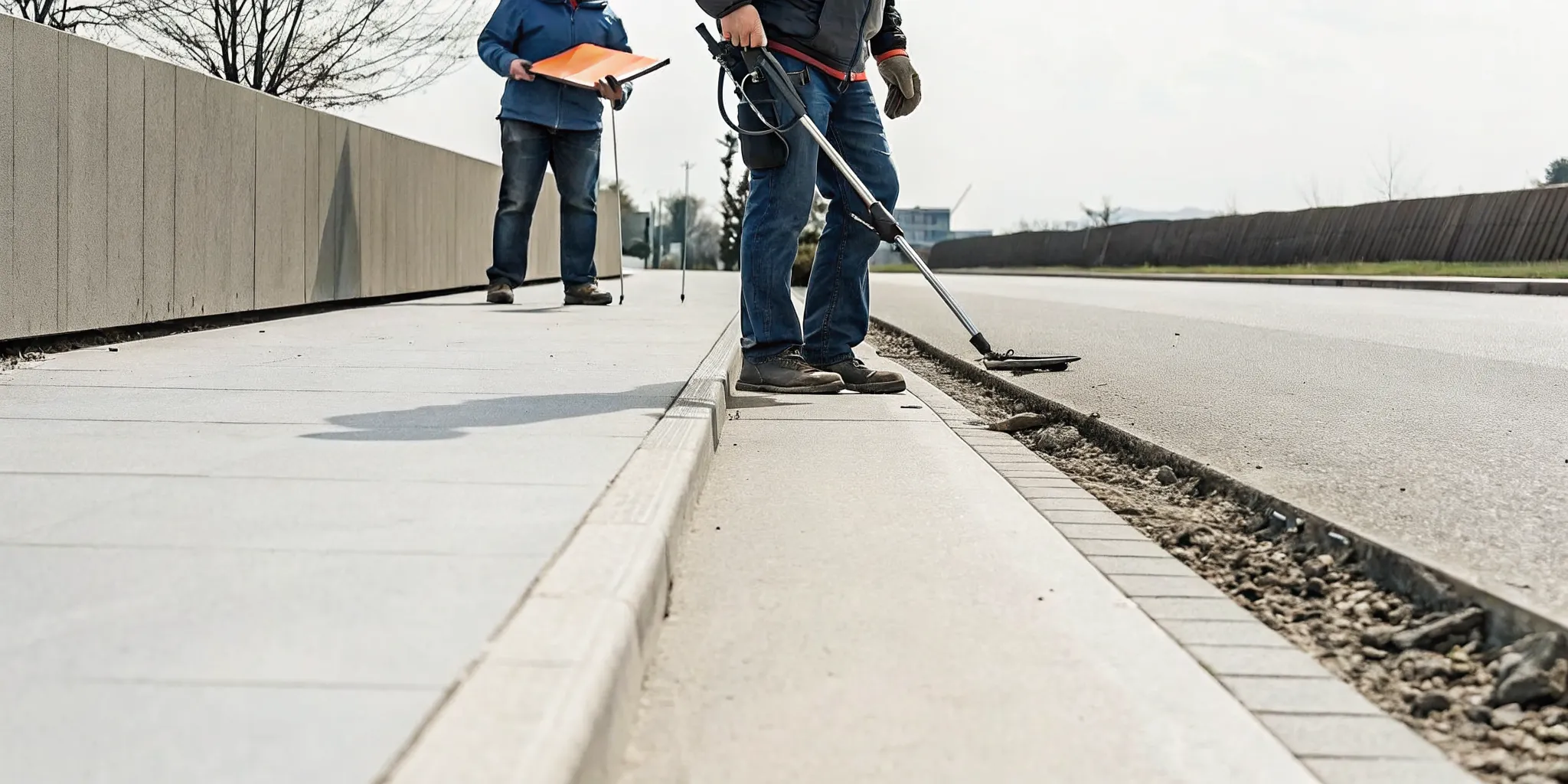
Procurement teams can align scope language, field verification, and closeout documentation around one ADA-focused approach.
Evaluate bidders on evidence, capacity, and control
The best-value evaluation should measure whether a bidder can deliver consistent, documented results at municipal scale. Score relevant experience, technical approach, staffing, safety planning, schedule capacity, data quality, quality control, and price. Published weights and required evidence help the review panel distinguish proven capability from broad marketing claims.
Use a scored evaluation matrix
Give every reviewer the same matrix and scoring guidance before proposals are opened. Require narrative explanations for scores, particularly when evaluators assign the highest or lowest rating. A useful matrix separates minimum qualifications from scored factors so an attractive price cannot compensate for a missing mandatory capability.
Evaluation area | Evidence to request | What reviewers should test |
Relevant experience | Comparable project summaries and references | Scale, complexity, public-sector coordination, and results |
Technical approach | Sample work plan and method decision process | Fit with stated outcomes and site conditions |
Quality control | Inspection checklist and sample repair record | Repeatability, traceability, and corrective action |
Data delivery | Sample GIS export, images, and field definitions | Completeness and compatibility with city systems |
Capacity | Staffing, equipment, and production schedule | Ability to meet milestones without reducing quality |
Price | Completed bid schedule and assumptions | Total evaluated cost and pricing transparency |
Ask questions that expose execution risk
During interviews or written clarifications, ask who makes repair-method decisions, who verifies completed work, and how rejected work is tracked. Ask bidders to walk through a difficult sample location from assessment to closeout. Their answers should reveal whether the proposed workflow is operational or merely aspirational.
How will you confirm the inventory before production begins?
What conditions cause you to defer a site or recommend another treatment?
How do you protect pedestrians and maintain access during work?
What evidence is attached to each completed hazard record?
How are quality failures identified, corrected, and reported?
How will your data integrate with the city's required system?
What assumptions could affect price, staffing, or schedule?
Validate claims before award
Check references consistently. Review sample deliverables for completeness, and use identical test conditions and scoring criteria for any permitted demonstrations.
Control the schedule, reporting, and closeout
A workable RFP connects schedule milestones to transparent reporting and payment. Require a baseline plan, look-ahead updates, progress records, issue escalation, inspection windows, and a defined closeout package. The city should be able to compare planned, completed, accepted, rejected, and invoiced quantities throughout the contract.
Set realistic milestones and coordination rules
Ask for a mobilization plan that identifies crew capacity, work zones, expected sequencing, notice periods, and constraints. Require a short look-ahead schedule that the city can use to coordinate with schools, transit, events, utilities, businesses, and other public works projects. State any permitted work hours and blackout dates in the solicitation.
Schedule language should address weather delays, inaccessible sites, emergency changes, and city-caused holds. Require prompt written notice of events that could affect milestones. The goal is not to eliminate every adjustment. It is to ensure that changes are visible, documented, and managed before they threaten delivery.
Make reporting useful for contract administration
Specify reporting frequency and exact fields. A weekly dashboard may show hazards assigned, completed, accepted, rejected, deferred, and remaining by work package. It should also identify schedule variance, safety issues, unresolved decisions, and forecast quantities. Reports should reconcile with the underlying location-level records.
Link payment to accepted quantities, not simply reported production. Require invoices to reference hazard IDs and approved bid items so reviewers can trace charges to field evidence. State the process and deadline for resolving discrepancies. This structure gives finance, procurement, and public works a shared basis for approval.
Define closeout before work starts
List every required closeout item in the RFP: final accepted inventory, before-and-after images, measurement records, GIS-compatible files, deferred-site register, correction log, invoice reconciliation, warranties if applicable, and a summary of completed work. Define the city's review period and the vendor's obligation to correct incomplete submissions.
Require the final dataset to use the same IDs and field definitions established at the start. Consistent data allows the municipality to update its asset system, plan the next repair cycle, and answer questions without rebuilding project history from emails and invoices.
Use an assess-map-remove-verify workflow
An assess-map-remove-verify workflow gives procurement teams a practical structure for the full contract. It establishes field conditions, organizes work geographically, applies the approved treatment, and confirms results against acceptance criteria. Each stage produces records that support the next, creating traceability from initial hazard to final payment.
Assess and classify conditions
Assessment establishes what exists and what information bidders need. Field teams document location, dimensions, images, surrounding conditions, and candidate treatment. They also flag conditions requiring engineering review or another repair strategy. The resulting inventory becomes the basis for prioritization, pricing, and later verification.
Map and package the work
Mapping connects each hazard to a visible, queryable record. Procurement and public works can group work by priority, neighborhood, route, or funding source without losing the individual hazard ID. Well-designed work packages reduce uncertainty for bidders and help the city monitor progress across the pedestrian network.
Remove hazards with the approved treatment
Production crews follow the authorized work package and document deviations before proceeding. Precision cutting can be specified where it fits the condition and required outcome, while concrete leveling or replacement may be approved for other conditions. The decision process should be consistent, documented, and subject to city oversight.
Verify, accept, and preserve the record
Verification compares the completed work with contract criteria. A repair is accepted only after required measurements, images, cleanup checks, and records are complete. The accepted record then supports payment and becomes part of the city's sidewalk asset history. This final step turns field activity into a defensible municipal result.
Frequently asked questions
Municipal buyers often ask how much detail belongs in the RFP, when cutting is appropriate, how proposals should be scored, and how accessibility requirements should be verified. The answers below summarize the procurement principles that keep scope, bidder evaluation, field acceptance, and documentation aligned from solicitation through closeout.
What should be included in a municipal sidewalk repair RFP?
Include the project purpose, hazard inventory, work packages, permitted treatments, applicable standards, measurable acceptance criteria, bidder qualifications, evaluation weights, pricing schedule, safety and access requirements, reporting fields, schedule milestones, change controls, payment basis, and closeout deliverables. Attach sample records and required data formats so every bidder prices the same expectations.
When should a city choose a sidewalk cutting repair program over traditional replacement?
Choose precision cutting when an assessed condition can be corrected safely while preserving suitable concrete and meeting the contract's acceptance criteria. Use another approved treatment when cracking, instability, drainage, missing material, or surrounding conditions make cutting inappropriate. The RFP should require documented treatment decisions rather than assuming one method fits every location.
How do cities evaluate sidewalk repair contractor proposals?
Use a published best-value matrix that scores relevant municipal experience, technical approach, quality control, safety, capacity, data delivery, schedule, and evaluated price. Require evidence for each scored claim, apply the same review guidance to every proposal, check references consistently, and document the panel's reasons for its ratings and recommendation.
How can cities ensure ADA compliance in municipal sidewalk repair projects?
Identify applicable requirements and project-specific criteria in the solicitation, then require location-level verification before acceptance. The contract should define what inspectors measure, how results are recorded, who approves work, and how deficiencies are corrected. Accessibility staff and engineering or legal advisers should review standards language appropriate to the municipality's jurisdiction and program.
Turn the RFP into an accountable sidewalk program
A successful solicitation does more than purchase repairs. It creates a repeatable process for finding hazards, prioritizing public need, selecting qualified vendors, verifying outcomes, and preserving reliable records. When scope, acceptance, reporting, and payment use the same hazard IDs, the municipality gains control from assessment through closeout.
Before release, have procurement, public works, accessibility, risk, finance, and legal reviewers test the draft against a sample location. Confirm that a bidder can price it, an inspector can enforce it, and an invoice reviewer can trace it. Resolve ambiguity now, when clarification is inexpensive, rather than after field work begins.



Comments